.webp&w=384&q=75)

Loading, please wait...
Loading, please wait...

Multiple sclerosis is widely recognized as a chronic demyelinating disorder of the central nervous system. However, its systemic manifestations extend far beyond primary motor, visual, and sensory pathways. Clinicians frequently encounter complex gastrointestinal symptoms in MS during routine clinical care, yet these symptoms are often underreported and undertreated. Historically, digestive complaints were viewed as secondary or isolated complications of immobility. Nevertheless, accumulating clinical research indicates that digestive tract pathology represents an integral feature of the autoimmune disease process. Recognizing the true epidemiology and clinical burden of these features is essential for optimizing long-term therapeutic interventions, improving patient quality of life, and reducing preventable hospitalizations.
To establish a clear epidemiological baseline, researchers completed a rigorous systematic review and meta-analysis examining digestive manifestations among individuals living with multiple sclerosis. Investigators systematically searched major biomedical databases, including PubMed, Scopus, and Web of Science, covering records through October 1, 2025. Consequently, the researchers identified 114 eligible observational and interventional studies encompassing an impressive total cohort of 1,272,170 patients.
This extensive pooling of data provides an unprecedented evaluation of digestive system involvement across diverse global patient populations. Furthermore, the analysis utilized random-effects meta-analytic models for all outcomes reported across three or more independent cohorts. By synthesizing these diverse datasets, the review offers robust statistical power that highlights how widespread these clinical complications truly are. The findings confirm that digestive issues are not isolated exceptions, but rather represent a highly prevalent clinical reality across various stages of disease progression. Therefore, healthcare providers must actively monitor digestive health alongside classical neurological signs when evaluating individuals diagnosed with demyelinating disease.
The systematic analysis revealed that autonomic gastrointestinal dysfunction serves as the predominant phenotype among affected individuals. Specifically, pooled estimates demonstrate that approximately one-third of individuals with multiple sclerosis experience significant autonomic digestive impairment, with an overall prevalence of 31.4% (95% CI 26.4-36.5%). Within this broad clinical category, upper digestive tract involvement presented with remarkable frequency. Swallowing difficulties, or dysphagia, represented the most frequent individual symptom, affecting 43.4% (95% CI 35.9-51.0%) of patients across the evaluated studies.
Additionally, lower digestive tract involvement presented significant clinical challenges, as bowel dysfunction affected 37.9% (95% CI 25.0-51.8%) of the patient population. These figures underscore the profound impact that demyelinating lesions in central and autonomic regulatory pathways have on gut motility and neuromuscular coordination. Consequently, patients frequently endure chronic abdominal discomfort, impaired nutrient intake, and reduced functional independence. Because dysphagia carries a serious risk of aspiration pneumonia and nutritional compromise, early detection becomes imperative. Recognizing these high prevalence rates enables clinicians to implement proactive screening measures before severe complications emerge.
When evaluating the distribution of clinical features across anatomical regions, marked differences emerge between upper and lower segments of the digestive tract. The meta-analysis revealed that lower gastrointestinal symptoms and disorders are significantly more frequent than upper digestive tract manifestations. Specifically, lower tract involvement was documented in 28.9% of individuals, whereas upper tract manifestations affected 11.5% of patients.
This anatomical disparity reflects the distinct neuromuscular control mechanisms governing different segments of the digestive system. Lower tract manifestations commonly include chronic constipation, colonic inertia, fecal urgency, and fecal incontinence, which frequently arise from disrupted spinal cord pathways controlling defecation reflexes. In contrast, upper tract symptoms such as delayed gastric emptying, gastroparesis, dyspepsia, and gastroesophageal reflux stem from altered vagal or brainstem autonomic signals. Nevertheless, both upper and lower manifestations contribute substantially to symptom burden and overall patient distress. Therefore, comprehensive clinical evaluations must systematically assess the entire digestive tract rather than focusing solely on isolated complaints.
To further clarify the clinical relationship between demyelinating pathology and digestive dysfunction, researchers conducted controlled case-control sub-analyses. These comparisons provided crucial epidemiological insights by directly contrasting individuals with multiple sclerosis against matched control populations. Notably, the statistical synthesis demonstrated that patients with demyelinating disease faced significantly elevated odds of developing autonomic digestive impairment.
Specifically, the calculated odds ratio reached 3.26 (95% CI 1.81-5.86), indicating that individuals with demyelinating disease are more than three times as likely to suffer from autonomic digestive dysfunction compared to healthy controls. This substantial increase in risk confirms that digestive impairment is intrinsically linked to underlying neurological disease rather than mere chance or general population background rates. Moreover, these elevated odds highlight the necessity of recognizing gastrointestinal issues as direct systemic manifestations of central nervous system demyelination. Consequently, clinical management protocols must integrate digestive health monitoring into standard neurological follow-up routines.
Despite the clear overall trends, the meta-analysis highlighted substantial between-study heterogeneity across almost all evaluated outcomes. This variability stems from several factors, including diverse patient recruitment settings, varying stages of neurological disability, and differing diagnostic methodologies. For instance, some studies relied on validated self-reported questionnaires, whereas others utilized formal objective testing such as anorectal manometry, gastric emptying scintigraphy, or radiopaque transit studies.
Furthermore, geographic differences, disease duration, and varying disease-modifying pharmacological treatment regimens likely contributed to the observed variance across cohorts. Rather than diminishing the value of the pooled data, this heterogeneity emphasizes that broad prevalence rates should serve as general clinical indicators rather than rigid absolute values. Importantly, these findings expose a critical gap in current clinical practice: the lack of standardized outcome definitions for digestive symptoms in neurological disorders. Therefore, future clinical research must focus on establishing uniform diagnostic criteria and standardized screening tools to harmonize patient care globally.
Addressing the high burden of digestive dysfunction requires a shift toward multidisciplinary care strategies. Neurologists, gastroenterologists, primary care physicians, dietitians, and allied health professionals must collaborate closely to optimize symptom management. Because patients may not spontaneously report digestive issues due to embarrassment or perceived lack of relevance, structured clinical screening is vital during routine neurological evaluations.
Implementing brief, validated symptom questionnaires during routine clinical visits can identify early signs of dysphagia or bowel dysfunction. Once identified, management strategies should combine non-pharmacological interventions, tailored dietary adjustments, physical rehabilitation, and targeted pharmacological therapies. For instance, pelvic floor biofeedback rehabilitation and optimized bowel regimens can dramatically improve lower tract function, while specialized swallowing therapy reduces aspiration risk. Ultimately, integrating structured gastrointestinal screening into routine care enhances overall quality of life, mitigates preventable long-term complications, and optimizes holistic patient care.
Gastrointestinal symptoms are very common in multiple sclerosis, with autonomic digestive dysfunction affecting approximately 31.4% of patients. Dysphagia affects about 43.4% of individuals, while general bowel dysfunction affects 37.9%. Overall, patients face more than three times higher odds of experiencing autonomic digestive issues compared to healthy controls.
Lower gastrointestinal symptoms and disorders occur far more frequently than upper tract manifestations in people with multiple sclerosis. Systematic meta-analysis indicates that lower tract symptoms affect 28.9% of patients, whereas upper tract symptoms affect 11.5%, largely due to disrupted spinal reflexes controlling lower bowel motility.
Structured screening is essential because digestive symptoms are highly prevalent but frequently underreported during routine consultations. Early identification of issues such as dysphagia or severe constipation allows clinicians to initiate timely multidisciplinary interventions, thereby preventing severe complications like aspiration pneumonia, malnutrition, and significant functional decline.
Disclaimer: This content is for informational and educational purposes only and does not constitute medical advice. It is intended for healthcare professionals and should not replace clinical judgment or direct patient evaluation. Refer to the latest local and national guidelines for clinical practice.
References
1. Sredanović M et al. Gastrointestinal symptoms and disorders in multiple sclerosis: a systematic review and meta-analysis. J Neurol. 2026 Aug 06. doi: 10.1007/s00415-026-14041-3. PMID: 42560396.
2. Tremlett H et al. Gastrointestinal conditions in the multiple sclerosis prodrome. Mult Scler. 2023 Dec;29(14):1782-1791.
3. Levinthal DJ et al. Gastrointestinal motility disorders in patients with multiple sclerosis: A single-center study. Neurogastroenterol Motil. 2022 Aug;34(8):e14326.

Read summarized clinical updates, watch expert medical content, and earn CME certifications right from your smartphone.
Open your smartphone camera to scan and install.





A systematic review and meta-analysis of 114 studies comprising 1,272,170 patients reveals that autonomic gastrointestinal dysfunction affects nearly one-third of people with multiple sclerosis, with dysphagia and bowel dysfunction being prominent manifestations.
last month

A retrospective cohort study demonstrates that comprehensive pharmacy transitions of care—including admission medication history, discharge review, and 72-hour telephone follow-up—significantly reduced 30-day readmission rates in acute care patients, highlighting the value of pharmacist-led clinical interventions.
Today

Meghalaya recorded a historic 55% reduction in maternal deaths, dropping from 244 to 107 over five years. Through the MOTHER app, dedicated transit homes, and expanded infrastructure like the 150-bed Tura Maternity Hospital with its first public NICU, the state demonstrates an effective public health model.
Today

Explore modern perioperative management protocols for clinical xenotransplantation. Learn how costimulation blockade, anti-inflammatory perfusion, and coagulopathy rescue overcome interspecies hurdles.
Today

North India's first Centre of Excellence for Brain and Spine at Amrita Hospital Faridabad integrates Brainlab's Loop-X mobile robot. This landmark facility combines cone-beam computed tomography with surgical navigation to elevate precision, optimize operative workflows, and enhance specialized clinician training.
Today
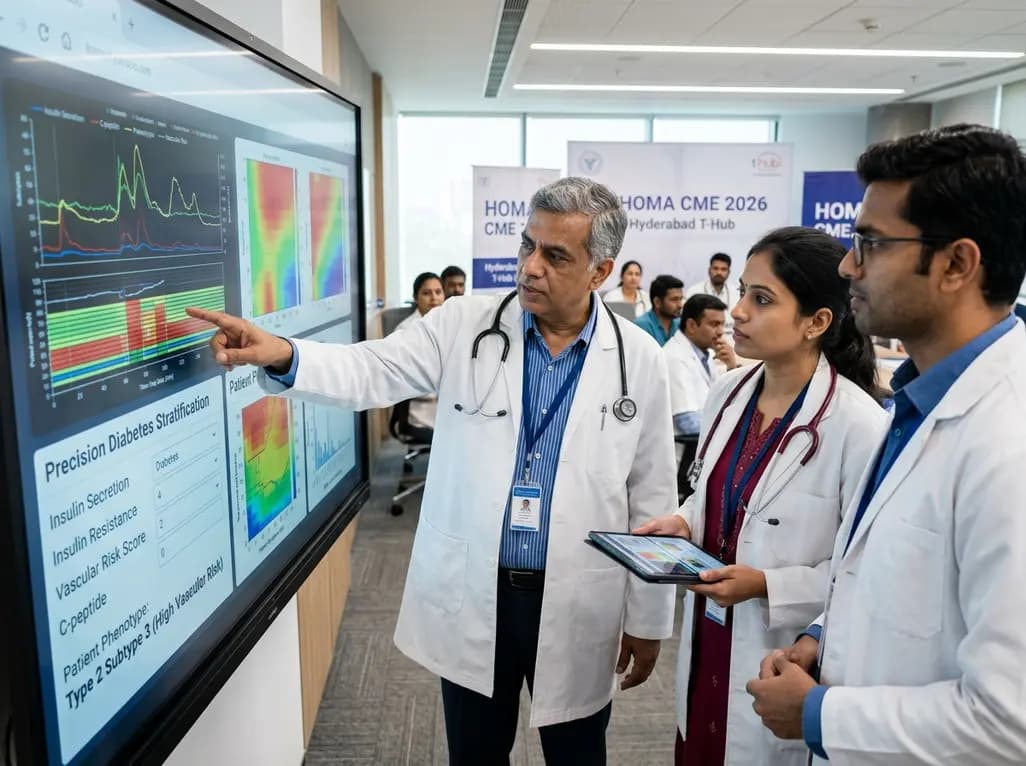
At Homa CME 2026 at Hyderabad's T-Hub, healthcare leaders emphasized moving beyond routine metrics through digital calculators and precision stratification. Discover why characterizing individual insulin secretion, resistance patterns, and vascular risks transforms chronic metabolic care in India.
Today
