.webp&w=384&q=75)

Loading, please wait...
Loading, please wait...

Managing patient handoffs remains one of the most critical challenges in acute care medicine. Recent clinical evidence demonstrates that structured pharmacy transitions of care significantly curb preventable hospital readmissions and improve patient outcomes. When clinical pharmacists actively oversee patient trajectories across the care continuum, therapeutic discrepancies drop sharply. Furthermore, systematic medication stewardship bridges the vulnerable gap between inpatient discharge and outpatient recovery. Consequently, healthcare institutions increasingly prioritize pharmacist-driven care models to protect vulnerable patients and optimize clinical resource allocation.
Modern healthcare delivery models increasingly prioritize value-based clinical outcomes over volume of services. For instance, bundled payment initiatives hold hospital systems accountable for post-discharge clinical complications. Within this demanding framework, medication misadventures represent a leading driver of avoidable 30-day hospital readmissions. Therefore, healthcare administrators must implement scalable interventions that reliably protect patients following discharge. Pharmacists possess specialized pharmacotherapeutic knowledge that enables them to coordinate these high-stakes care handoffs. In addition, pharmacist involvement mitigates duplicate therapy, incorrect dosing, and dangerous drug interactions. Recent clinical investigations confirm that structured pharmaceutical interventions directly lower readmission rates among acute care cohorts. Moreover, these multidisciplinary models establish standardized workflows that support attending physicians during busy discharge windows. As inpatient workloads expand, physicians often face severe time constraints that hinder comprehensive medication review. Thus, embedding clinical pharmacists into care pathways provides vital redundancies that intercept prescribing errors early. Ultimately, dedicating specialized pharmacy resources to transitional care creates a sustainable foundation for superior patient care.
The clinical success of transitional pharmacy programs relies on a tripartite operational design. First, pharmacists obtain an accurate medication history upon hospital admission. This foundational step identifies pre-existing discrepancies before teams initiate inpatient drug regimens. Subsequently, pharmacists perform a comprehensive discharge medication review to align inpatient modifications with home prescriptions. During this review, clinicians resolve omitted therapies, adjust renal dosages, and discontinue redundant agents. Furthermore, pharmacists provide personalized bedside patient education to ensure full comprehension of new treatment regimens. Patients receive clear instructions regarding dosage schedules, potential adverse reactions, and expected treatment durations. Finally, pharmacists execute post-discharge telephone follow-up within seventy-two hours of discharge. This timely outreach identifies emergent adverse reactions, confirms prescription access at local pharmacies, and reinforces medication adherence. Therefore, the post-discharge call functions as an essential safety net during the vulnerable post-acute phase. Additionally, pharmacists collaborate with outpatient prescribers whenever clinical barriers arise. Consequently, patients navigate the transition home with continuous clinical guidance and greater therapeutic confidence.
A rigorous retrospective investigation evaluated over five thousand patients discharged from a large academic hospital. The investigators compared patients receiving comprehensive pharmacy transitional care against those receiving standard care. Notably, patients who completed the comprehensive protocol experienced a striking decrease in all-cause 30-day readmissions. The readmission rate dropped from 17.06% in the control cohort down to 12.63% among intervention patients. After multivariable logistic regression adjusted for baseline clinical risk, the odds ratio reached 0.70. Consequently, this intervention produced a statistically significant 30% reduction in readmission odds. Furthermore, survival analyses corroborated these findings through robust Cox proportional hazards modeling. Subgroup assessments revealed that post-discharge telephone follow-up within seventy-two hours contributed substantially to this protective benefit. Patients who engaged in follow-up calls demonstrated fewer emergency visits and improved medication persistence. Similarly, high-risk patients with multimorbidity experienced the greatest absolute benefit from pharmacist-led oversight. Therefore, empirical evidence decisively validates comprehensive transitional pharmacy services as an effective clinical tool against post-discharge deterioration.
Care handoffs present inherent clinical vulnerabilities that jeopardize patient safety. When patients transition between hospital and home, communication lapses frequently occur. For instance, discharge summaries often fail to clearly explain why inpatient teams stopped chronic medications. Consequently, confused patients frequently resume discontinued drugs alongside newly prescribed therapies, precipitating toxicities. In addition, socioeconomic barriers often prevent patients from filling vital prescriptions immediately after hospital discharge. Pharmacists systematically address these failure points by identifying financial hurdles and securing affordable medication alternatives. Furthermore, pharmacists verify that outpatient laboratories schedule necessary therapeutic monitoring. For example, patients starting anticoagulants or antiarrhythmic therapies require rapid laboratory surveillance to prevent adverse events. Pharmacists also evaluate polypharmacy burdens and deprescribe non-essential medications whenever feasible. By streamlining drug regimens, clinicians substantially decrease pill burden and improve long-term adherence. Therefore, proactive pharmacist oversight bridges critical communication gaps and safeguards vulnerable patients throughout their outpatient recovery.
Integrating dedicated transitional pharmacy services requires strategic operational planning and multidisciplinary cooperation. First, healthcare institutions should implement risk-stratification tools within electronic health records to identify high-risk individuals. By triaging patients based on disease complexity, polypharmacy, and social vulnerability, teams maximize clinical impact. Second, clinical departments must establish standardized communication workflows connecting hospitalists, ward pharmacists, and primary care physicians. Transparent documentation within shared electronic records ensures all care team members track medication alterations seamlessly. Moreover, hospital leadership must allocate adequate staffing to ensure pharmacists complete post-discharge outreach within seventy-two hours. Standardized telephone questionnaires help clinicians systematically detect unresolved symptoms, adherence obstacles, and pharmacy dispensing delays. Furthermore, hospitals should cultivate partnerships with community pharmacies to ensure rapid prescription fulfillment. Regular performance auditing also enables iterative protocol refinement and sustains institutional buy-in across clinical departments. Ultimately, structured transitional pharmacy programs enhance interprofessional teamwork, protect patient safety, and elevate healthcare quality across acute care settings.
Pharmacy transitions of care lower readmissions by resolving medication discrepancies across care handoffs. Pharmacists reconcile home medications upon admission, review discharge prescriptions for safety, and provide targeted bedside counseling. Furthermore, conducting telephone follow-ups within seventy-two hours allows pharmacists to identify adverse effects, resolve pharmacy access barriers, and ensure treatment adherence. Consequently, these systematic interventions prevent adverse drug events that commonly drive patients back to acute care hospitals.
The initial seventy-two hours following hospital discharge represent the highest risk period for medication mismanagement. During this window, patients often encounter difficulty filling new prescriptions, misunderstand altered dosages, or experience unexpected adverse drug effects. A structured follow-up call allows clinical pharmacists to evaluate therapeutic response, reinforce administration instructions, and answer family questions. Therefore, timely pharmacist outreach detects emergent clinical complications rapidly and prevents avoidable emergency department visits before conditions worsen.
Patients with severe polypharmacy, advanced age, or multiple chronic conditions such as heart failure, chronic obstructive pulmonary disease, and diabetes gain the most benefit. In addition, patients facing health literacy challenges or socioeconomic vulnerabilities experience elevated risks during transitions. Pharmacists provide critical clinical value by simplifying complicated drug regimens, coordinating with outpatient prescribers, and navigating prescription affordability barriers. Consequently, proactive transitional oversight shields these high-risk cohorts from preventable post-discharge deterioration.
Disclaimer: This content is for informational and educational purposes only and does not constitute formal medical advice. Healthcare professionals should exercise their independent clinical judgment and institutional protocols when making management decisions. Refer to the latest local and national guidelines for clinical practice.
References

Read summarized clinical updates, watch expert medical content, and earn CME certifications right from your smartphone.
Open your smartphone camera to scan and install.





A retrospective cohort study demonstrates that comprehensive pharmacy transitions of care—including admission medication history, discharge review, and 72-hour telephone follow-up—significantly reduced 30-day readmission rates in acute care patients, highlighting the value of pharmacist-led clinical interventions.
Today
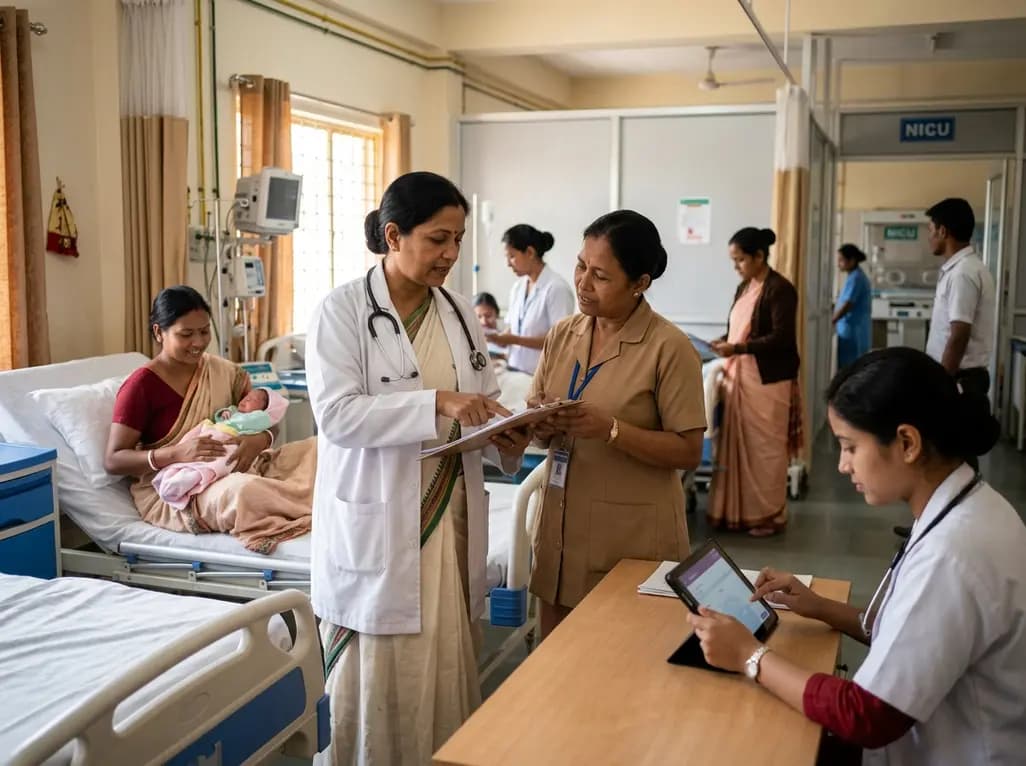
Meghalaya recorded a historic 55% reduction in maternal deaths, dropping from 244 to 107 over five years. Through the MOTHER app, dedicated transit homes, and expanded infrastructure like the 150-bed Tura Maternity Hospital with its first public NICU, the state demonstrates an effective public health model.
Today

Explore modern perioperative management protocols for clinical xenotransplantation. Learn how costimulation blockade, anti-inflammatory perfusion, and coagulopathy rescue overcome interspecies hurdles.
Today

North India's first Centre of Excellence for Brain and Spine at Amrita Hospital Faridabad integrates Brainlab's Loop-X mobile robot. This landmark facility combines cone-beam computed tomography with surgical navigation to elevate precision, optimize operative workflows, and enhance specialized clinician training.
Today
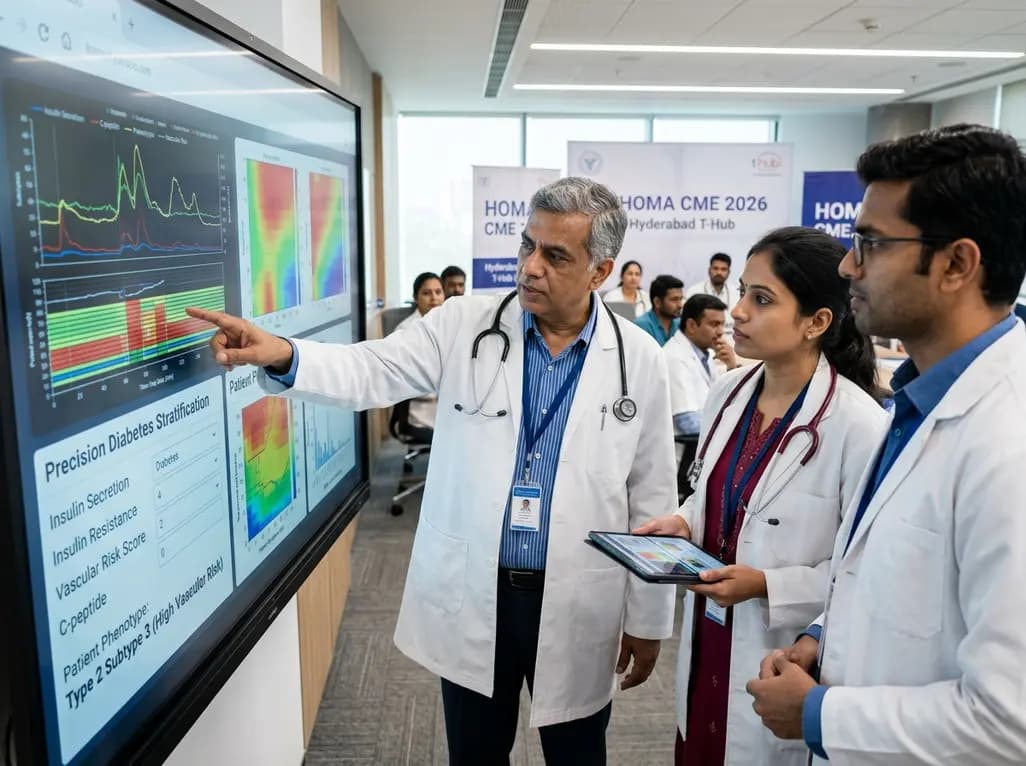
At Homa CME 2026 at Hyderabad's T-Hub, healthcare leaders emphasized moving beyond routine metrics through digital calculators and precision stratification. Discover why characterizing individual insulin secretion, resistance patterns, and vascular risks transforms chronic metabolic care in India.
Today
