.webp&w=384&q=75)

Loading, please wait...
Loading, please wait...
Psychological resilience and positive expectations play a pivotal role in determining health outcomes, particularly among populations facing chronic illness or social marginalization. The Future Orientation Scale (FOS) has emerged as a critical tool for measuring these constructs. Recently, researchers conducted a comprehensive psychometric evaluation of this six-item scale. Their study focused on its performance across three distinct health-vulnerable groups: racially minoritized undergraduates, individuals with fibromyalgia, and sexual and gender minority (SGM) individuals. By utilizing advanced statistical methods like exploratory and confirmatory factor analyses, the team sought to confirm whether the FOS remains a reliable instrument in diverse settings. Consequently, they found that a single-factor solution consistently fits the data across all tested groups. This suggests that the scale captures a unified psychological construct centered on positive future perspectives. Furthermore, the brevity of the instrument makes it exceptionally useful for busy clinical environments. Therefore, physicians can quickly assess a patient's outlook without imposing a significant burden on their time or cognitive resources. While many psychological tools are long and complex, the FOS offers a streamlined alternative that does not sacrifice statistical rigor or clinical relevance.
Chronic pain conditions like fibromyalgia often lead to a diminished sense of hope and a constricted view of the future. Within the recent study, participants with fibromyalgia exhibited the lowest latent levels of future orientation compared to other groups. This finding is significant because a low Future Orientation Scale score may correlate with poor treatment adherence and reduced physical functioning. Moreover, patients who struggle to envision a positive future often find it harder to engage in long-term rehabilitation or lifestyle modifications. Consequently, rheumatologists and internal medicine specialists should consider psychological outlook as a vital sign of patient progress. By identifying those with low future orientation early, healthcare providers can tailor their interventions to include more robust psychological support. Additionally, enhancing a patient's future orientation might directly improve their ability to cope with persistent pain and hardship. Therefore, integrating this simple six-item scale into routine rheumatological assessments could bridge the gap between physical treatment and mental health support. Ultimately, fostering a more positive future outlook may serve as a protective factor against the debilitating psychological impact of chronic musculoskeletal disorders and systemic pain.
A primary challenge in psychometrics is ensuring that a scale measures the same construct across different demographic groups. The research by Altier and colleagues addressed this by testing for multigroup measurement invariance within the Future Orientation Scale. Specifically, they looked for configural, metric, and scalar invariance among SGM individuals and other vulnerable samples. Their results supported full invariance, which means that the FOS scores can be meaningfully compared across these diverse populations. For clinicians working with SGM patients, this validation is crucial because this group often faces unique stressors that can impact their psychological well-being. Furthermore, the study demonstrated that SGM individuals had higher future orientation than those with fibromyalgia but lower than the undergraduate sample. Consequently, these findings allow for a more nuanced understanding of how different types of vulnerability affect one's perspective. In addition, the scale’s sensitivity to substantive variation makes it a powerful asset for research into health disparities. By using a validated tool, researchers can more accurately track how social support and affirmative care might boost future orientation in SGM communities. Thus, the FOS provides a reliable baseline for evaluating mental health interventions tailored to marginalized identities.
Racially and ethnically minoritized populations often navigate systemic barriers that can influence their psychological outlook and subsequent health behaviors. The psychometric evaluation of the Future Orientation Scale included a large sample of minoritized undergraduates to ensure the tool's applicability in these contexts. Interestingly, this group showed the highest latent levels of future orientation, suggesting a degree of resilience despite potential societal hardships. Furthermore, the scale’s ability to capture this resilience is vital for clinicians who aim to provide culturally competent care. When doctors understand a patient's positive expectations for the future, they can leverage these strengths to promote better health outcomes. For instance, high future orientation is often associated with a greater willingness to persevere through medical challenges and adhere to complex medication regimens. Therefore, the FOS serves not only as a diagnostic tool but also as a way to identify patient strengths. Additionally, the scalar invariance found in the study confirms that the tool does not exhibit cultural bias in its measurement of future outlook. Consequently, healthcare providers in diverse urban centers can confidently use the FOS to screen for psychological risk factors across various ethnic and racial backgrounds.
In the evolving landscape of Indian healthcare, there is a growing recognition of the intersection between mental health and chronic physical conditions. Implementing the Future Orientation Scale within Indian clinical settings could provide significant benefits for primary care and specialty practices alike. Given the high prevalence of chronic diseases like diabetes and musculoskeletal disorders in India, a brief tool to assess patient outlook is invaluable. Moreover, the FOS can help identify patients at risk of developing depression or anxiety secondary to their physical ailments. Since the scale is only six items long, it can be easily translated and administered in various regional languages without losing its psychometric integrity. Therefore, clinicians in both urban and rural settings can utilize it to gauge the psychological resilience of their patient populations. Furthermore, as Indian healthcare shifts toward a more patient-centered model, understanding the psychosocial dimensions of health becomes paramount. Consequently, tools like the FOS empower doctors to look beyond the immediate symptoms and address the underlying psychological drivers of health. By integrating such metrics, the medical community can foster a more holistic approach that supports both the physical and emotional longevity of patients across the subcontinent.
The Future Orientation Scale identifies patients with a low psychological outlook, which is often linked to poor coping mechanisms and reduced treatment adherence. In chronic conditions like fibromyalgia, a positive future perspective is a key driver of resilience. By using this tool, clinicians can pinpoint individuals who may require additional psychological support to improve their long-term health outcomes and engagement with complex rehabilitation programs.
Measurement invariance ensures that the scale measures the same psychological construct across different groups, such as SGM individuals or minoritized students, without demographic bias. This allows clinicians and researchers to make fair comparisons between various populations. Without establishing invariance, differences in scores might reflect cultural or social misunderstandings rather than actual differences in future orientation, potentially leading to inaccurate clinical assessments or research findings.
Yes, the scale's brevity and single-factor structure make it ideal for the fast-paced Indian clinical environment. Its six questions can be quickly administered during routine consultations to screen for psychological vulnerability. Given the rising burden of chronic disease in India, using the scale helps doctors identify patients who lack the positive expectations necessary for successful long-term self-management, allowing for more holistic and personalized care strategies.
Disclaimer: This content is for informational and educational purposes only. It does not constitute medical advice or establish a doctor-patient relationship. Always seek the advice of a qualified healthcare provider regarding a medical condition. Refer to the latest local and national guidelines for clinical practice.
References
Altier HR et al. Future Orientation Scale: A Psychometric Evaluation Across Health-Vulnerable Samples. Assessment. 2026 Jun 24. doi: 10.1177/10731911261451782. PMID: 42343154.
Hirsch JK et al. Future orientation and health quality of life in primary care: Vitality as a mediator. Quality of Life Research. 2015;24(1):211-219.
Sirois FM. Positive orientation as a predictor of health behavior during chronic diseases. International Journal of Environmental Research and Public Health. 2019;16(18):3408.

Read summarized clinical updates, watch expert medical content, and earn CME certifications right from your smartphone.
Open your smartphone camera to scan and install.





The Future Orientation Scale (FOS) demonstrates strong psychometric validity across fibromyalgia patients, SGM individuals, and minoritized students. This 6-item tool effectively measures positive future expectations, providing clinicians with a brief yet robust method to evaluate psychological resilience.
3 months ago

Explore vital recurrent stroke predictors in lacunar stroke patients managed with intensive blood pressure lowering. This analysis examines trial findings from SPS3 to uncover residual vascular risks, metabolic factors, and targeted secondary prevention strategies for high-risk neurological patients.
Today

Odisha has established India's first state-level clinical protocol specifically tailored for pregnant women with sickle cell disease. Developed with NHM and UNICEF, the framework provides structured antenatal screening, crisis mitigation, standardized referral pathways, and specialized interdisciplinary care.
Today

The Directorate General of Health Services directs Indian states to halt the hazardous reuse and reprocessing of single-use medical devices. Discover regulatory implications under the Drugs and Cosmetics Act, critical infection risks, legal liabilities, and operational changes required across clinical specialties.
Today
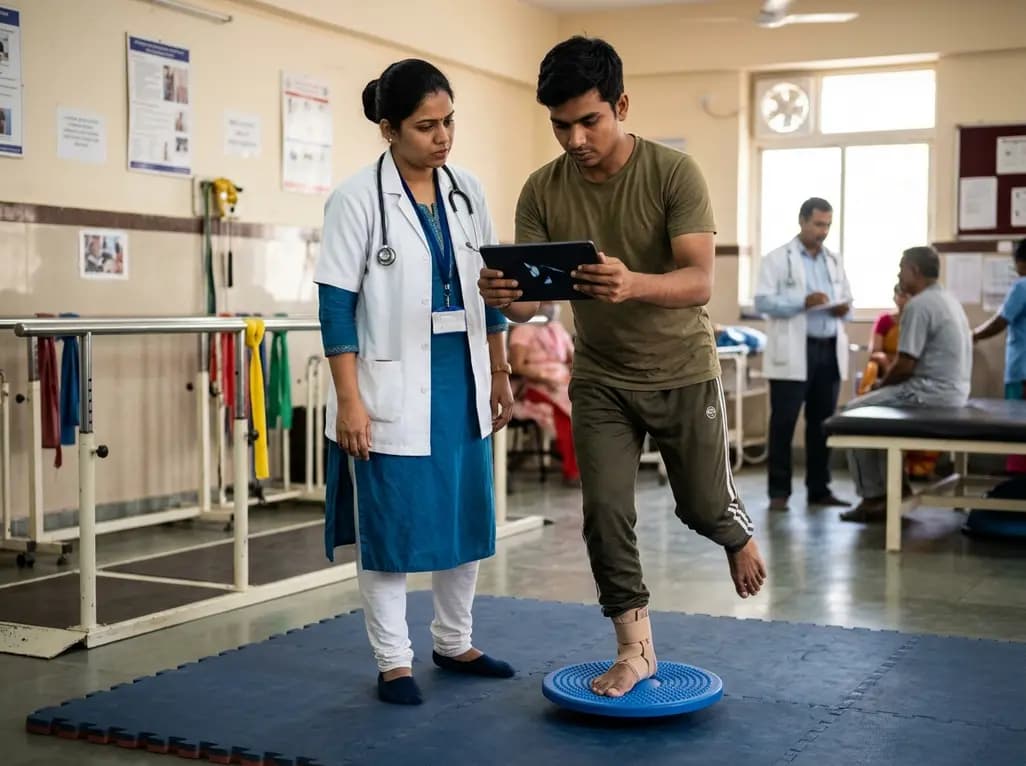
A randomized controlled trial demonstrates that an eight-week dual-task training intervention significantly improves static and dynamic postural control over standard balance exercises in individuals with chronic ankle instability, addressing critical neurocognitive deficits during athletic and daily activities.
Today

India is advancing preventive healthcare by integrating genomics, artificial intelligence, and quantum technologies. With the SANGAM programme sequencing one million Indian genomes, clinicians can unlock personalized therapies, detect cardiometabolic risks early, and curb the burden of diabetes and heart disease.
Today
