.webp&w=384&q=75)

Loading, please wait...
Loading, please wait...

Fungal dispersal ecology represents a cornerstone of modern biological research, yet many fundamental questions remain unanswered. Fungi play dual roles as essential decomposers and dangerous pathogens. Consequently, understanding how they move through landscapes is vital for managing both natural ecosystems and public health crises. A recent landmark study has now identified 100 core research questions. These questions aim to guide the next decade of mycological investigation, particularly as climate change alters traditional dispersal patterns.
Notably, the study emphasizes how fungal movement directly impacts the tracking of human disease outbreaks. For example, the rapid spread of multi-drug resistant fungi like Candida auris highlights the need for better dispersal models. Scientists categorized their 100 questions into ten distinct themes. These range from basic spore liberation mechanics to the complex role of dispersal in disease invasion. Therefore, this framework helps clinicians and researchers predict where new pathogens might emerge. Additionally, it integrates fungal life-history traits into existing ecological models used for plants and animals.
New technologies, such as high-throughput sequencing and environmental DNA (eDNA) monitoring, have reinvigorated this field. Researchers can now detect microscopic fungal propagules in the air and water with unprecedented accuracy. Furthermore, interdisciplinary approaches are bridging the gap between fundamental biology and applied management. This collaboration is essential for addressing the "One Health" challenges that link environmental health to human well-being. By focusing on these 100 unanswered questions, the scientific community can develop more robust strategies for pathogen surveillance and conservation.
Fungal dispersal is the primary mechanism through which respiratory pathogens like Aspergillus and Cryptococcus travel from environmental sources to human hosts. Understanding these patterns is essential for predicting and preventing infectious disease outbreaks.
The microscopic size of fungal spores and their cryptic life cycles make them difficult to track. However, new genetic tools and atmospheric modeling are now helping researchers overcome these traditional barriers.
Rising temperatures and shifting wind patterns can transport fungal pathogens to new geographical regions. Consequently, this change increases the risk of previously rare fungal infections appearing in new populations.
Disclaimer: This content is for informational and educational purposes only. It is not intended as a substitute for professional medical advice, diagnosis, or treatment. Always seek the advice of your physician or other qualified health provider with any questions you may have regarding a medical condition. Refer to the latest local and national guidelines for clinical practice.
References
1. Cuprewich SA et al. One hundred unanswered questions on the dispersal ecology of fungi. ISME J. 2026 Feb 19. doi: undefined. PMID: 41711080.
2. World Health Organization. WHO fungal priority pathogens list to guide research, development and public health action. Geneva: World Health Organization; 2022.
3. Fisher MC et al. Fungal dispersal across spatial scales. Annu Rev Ecol Evol Syst. 2022;53:69-85.

Read summarized clinical updates, watch expert medical content, and earn CME certifications right from your smartphone.
Open your smartphone camera to scan and install.





A new research agenda identifies 100 critical questions in fungal dispersal, impacting how we track infectious diseases and manage global ecosystems....
8 months ago
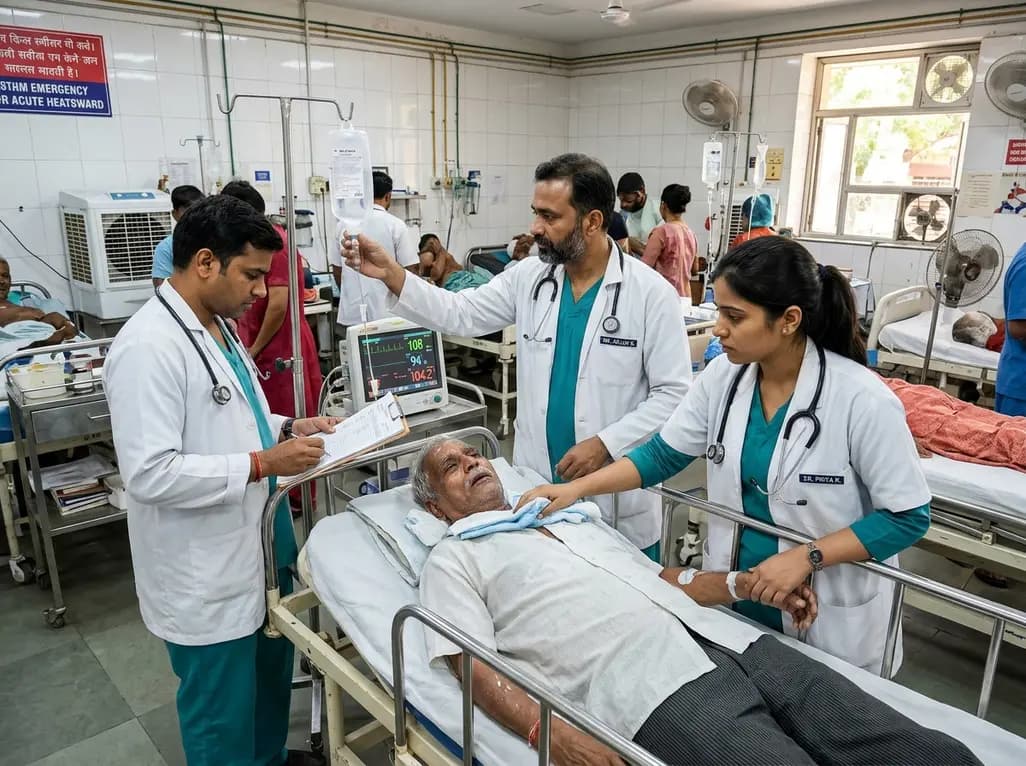
Recent epidemiological data reveals a dramatic surge in summer heat mortality driven by human-induced climate warming. This analysis explores the pathophysiological impacts on cardiac and renal systems, diagnostic dilemmas in death certification, and essential emergency cooling protocols for acute clinical care.
Today

Odisha has established India's first state-level clinical protocol specifically tailored for pregnant women with sickle cell disease. Developed with NHM and UNICEF, the framework provides structured antenatal screening, crisis mitigation, standardized referral pathways, and specialized interdisciplinary care.
Today

India is advancing preventive healthcare by integrating genomics, artificial intelligence, and quantum technologies. With the SANGAM programme sequencing one million Indian genomes, clinicians can unlock personalized therapies, detect cardiometabolic risks early, and curb the burden of diabetes and heart disease.
Today

A randomized controlled trial demonstrates that an eight-week dual-task training intervention significantly improves static and dynamic postural control over standard balance exercises in individuals with chronic ankle instability, addressing critical neurocognitive deficits during athletic and daily activities.
Today

A retrospective cohort study of 7,716 ICU patients from the MIMIC-IV database demonstrates that Gradient Boosting Decision Trees significantly outperform traditional SOFA scores in predicting in-hospital mortality among patients with sepsis and diabetes, with SHAP analysis providing clinical interpretability.
Today
