.webp&w=384&q=75)

Loading, please wait...
Loading, please wait...

Specifically, a major clinical study recently exposed critical limitations in fungal disease diagnosis within the state of Odisha, India. Additionally, published in the Indian Journal of Medical Microbiology, the research evaluated nineteen medical colleges and two corporate hospitals. Consequently, the findings revealed a stark contrast between available basic facilities and advanced testing capabilities. Although over ninety percent of these medical colleges maintain independent mycology departments, none actually employ full-time, dedicated staff. Additionally, only fifty-seven percent of these facilities rely on part-time personnel. This lack of specialized human resources severely compromises timely clinical interventions.
Furthermore, laboratory utilization remains worryingly low across the analyzed institutions. Specifically, more than ninety percent of the laboratories process fewer than fifty samples each week. In fact, this low sample volume strongly points to widespread clinical underdiagnosis or a severe lack of patient referrals. While basic microscopic tools exist in most facilities, only sixty-six percent of these centers regularly perform fungal cultures. Consequently, clinicians often struggle to identify specific pathogens, which leads to delayed targeted treatments. Therefore, improving the overall quality of fungal disease diagnosis is vital for reducing patient mortality.
More importantly, advanced diagnostic technologies are completely missing in almost all evaluated centers. None of the laboratories in the study offered crucial immunodiagnostic assays, such as beta-D-glucan or Histoplasma antigen detection. Moreover, only a tiny fraction of the labs participated in external quality assurance systems. Similarly, labs restricted antifungal susceptibility testing, making it available in less than forty-three percent of the facilities and limiting it strictly to yeast infections. In addition, testing for invasive mould infections was entirely unavailable. Therefore, public health infrastructure requires immediate targeted funding and training programs to bridge these severe gaps.
Q1: What did the recent study find regarding mycology labs in Odisha?
The study found that while over 90% of medical colleges in Odisha have independent mycology sections, none have full-time dedicated staff. Additionally, critical advanced tests are entirely absent, and lab utilization remains extremely low.
Q2: Why is the low volume of processed samples a major concern?
Processing fewer than 50 samples a week suggests severe underdiagnosis or a major lack of patient referrals. Consequently, many potentially life-threatening fungal infections remain undetected, worsening patient outcomes.
Q3: Which key advanced tests were found to be completely unavailable?
Vital diagnostic tests such as beta-D-glucan assays, Histoplasma antigen detection, and susceptibility testing for mould infections were completely unavailable across all evaluated facilities.
Disclaimer: This content is for informational and educational purposes only. It does not constitute medical advice or replace professional judgment. Refer to the latest local and national guidelines for clinical practice.
References

Read summarized clinical updates, watch expert medical content, and earn CME certifications right from your smartphone.
Open your smartphone camera to scan and install.





A study reveals severe gaps in fungal disease diagnosis in Odisha medical colleges, citing shortages of trained staff and lack of advanced clinical testing....
4 months ago
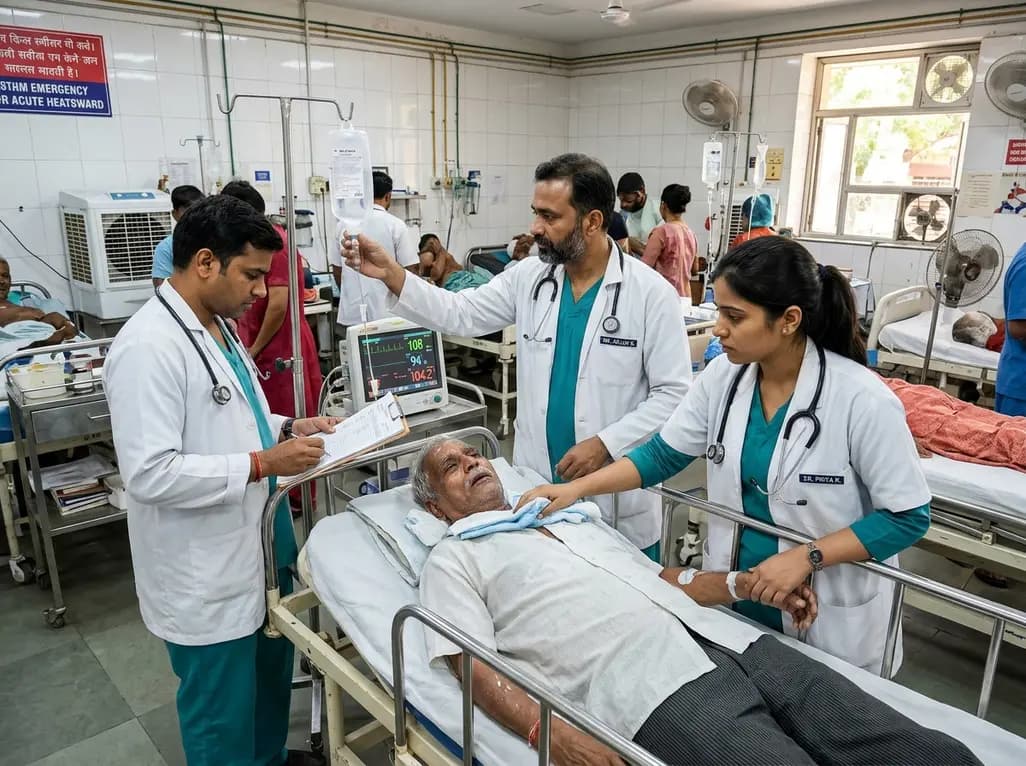
Recent epidemiological data reveals a dramatic surge in summer heat mortality driven by human-induced climate warming. This analysis explores the pathophysiological impacts on cardiac and renal systems, diagnostic dilemmas in death certification, and essential emergency cooling protocols for acute clinical care.
Today

Odisha has established India's first state-level clinical protocol specifically tailored for pregnant women with sickle cell disease. Developed with NHM and UNICEF, the framework provides structured antenatal screening, crisis mitigation, standardized referral pathways, and specialized interdisciplinary care.
Today

India is advancing preventive healthcare by integrating genomics, artificial intelligence, and quantum technologies. With the SANGAM programme sequencing one million Indian genomes, clinicians can unlock personalized therapies, detect cardiometabolic risks early, and curb the burden of diabetes and heart disease.
Today

A randomized controlled trial demonstrates that an eight-week dual-task training intervention significantly improves static and dynamic postural control over standard balance exercises in individuals with chronic ankle instability, addressing critical neurocognitive deficits during athletic and daily activities.
Today

A retrospective cohort study of 7,716 ICU patients from the MIMIC-IV database demonstrates that Gradient Boosting Decision Trees significantly outperform traditional SOFA scores in predicting in-hospital mortality among patients with sepsis and diabetes, with SHAP analysis providing clinical interpretability.
Today
