.webp&w=384&q=75)

Loading, please wait...
Loading, please wait...

Alkaline water safety has become a significant concern for regulators in India. Recently, the Food Safety and Standards Authority of India (FSSAI) took strict enforcement action against a Gujarat-based manufacturer. The regulator discovered that the company was selling 'alkaline water' containing non-permitted ingredients. This move highlights the FSSAI's commitment to maintaining high food standards across the country. Consequently, health professionals should remain vigilant about the products their patients consume.
The FSSAI's western regional office initiated the inspection following a consumer complaint. Initially, the Food Business Operator (FBO) failed to address grievances filed through the Food Safety Connect portal. Therefore, officials conducted a post-licence inspection at the manufacturing unit in Savli, Vadodara. Inspectors immediately identified several red flags regarding product quality and transparency.
During the site visit, inspectors found severe labelling violations. Specifically, the product name was missing from the front of the packaging. Moreover, the manufacturer did not include mandatory ingredient declarations. Most alarmingly, black particles were visible inside the finished water bottles. Such physical contaminants pose immediate risks to consumer health and safety. Therefore, the regulator seized stocks worth approximately Rs 31.61 lakh.
Further technical analysis revealed even deeper issues. Lab tests confirmed the presence of fulvic acid in the water. Under current FSSAI regulations, fulvic acid is a banned substance for this product category. Investigations showed that the firm added black mineral substances to the water manually. These minerals did not occur naturally in the raw water source. Consequently, the firm violated multiple food safety norms through intentional adulteration.
Healthcare providers must understand the risks of non-permitted additives. For instance, the presence of unexplained sediments and discolouration indicates poor filtration processes. Furthermore, contradictory descriptions between primary and secondary packaging can mislead consumers regarding health benefits. Proper hydration requires water that meets strict microbiological and chemical standards. When manufacturers bypass these rules, they jeopardize public health.
FSSAI remains committed to ensuring that all market products are safe and wholesome. They urge consumers to report suspicious food products through official channels. Meanwhile, the regulator has initiated formal legal proceedings under the Food Safety and Standards Act, 2006. This action serves as a warning to other operators in the alkaline water industry.
Q1: Why did FSSAI take action against the Gujarat-based firm?
The FSSAI took action due to misbranding, labelling violations, and the use of fulvic acid, which is a non-permitted ingredient in alkaline water. They also found visible black particles and sediments in the finished product.
Q2: Is fulvic acid allowed in bottled water in India?
No, fulvic acid is not a permitted substance under the current FSSAI regulations for bottled or alkaline water. Its presence in this case was due to the manual addition of mineral substances.
Disclaimer: This content is for informational and educational purposes only. It does not constitute medical advice or replace professional judgment. Refer to the latest local and national guidelines for clinical practice.
References

Read summarized clinical updates, watch expert medical content, and earn CME certifications right from your smartphone.
Open your smartphone camera to scan and install.





FSSAI seizes alkaline water from a Gujarat firm due to banned fulvic acid and misbranding. Learn about the regulatory action and safety concerns....
5 months ago
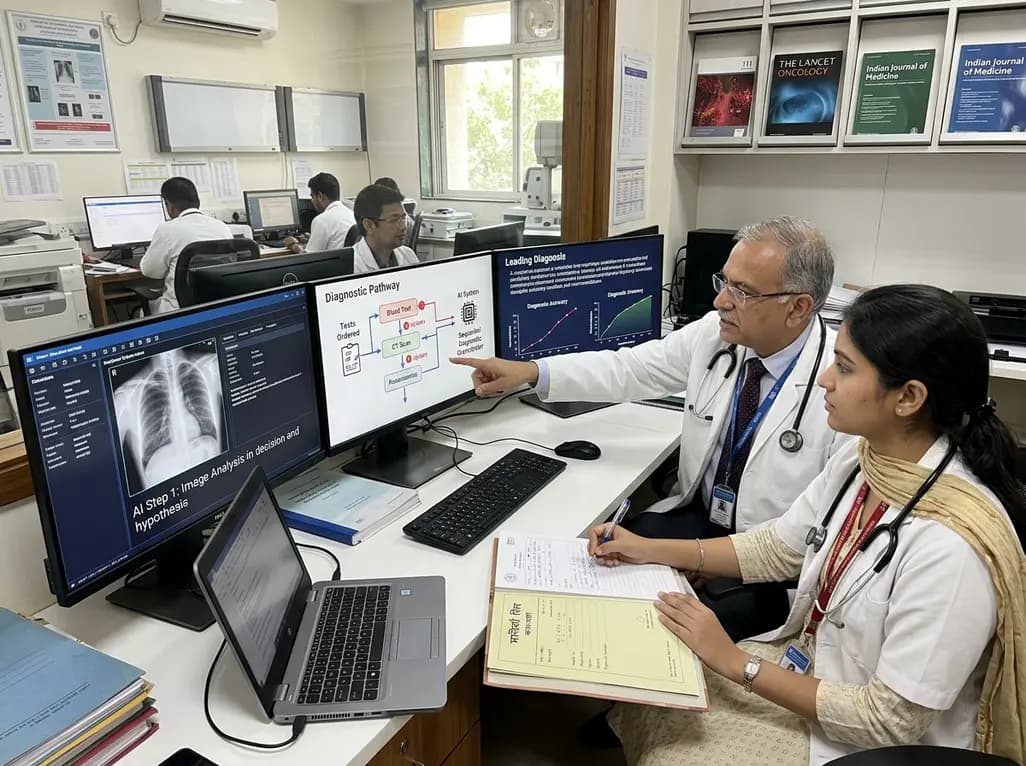
A breakthrough peer-reviewed study demonstrates that a sequential AI diagnosis system can mirror real-world clinical reasoning. By ordering stepwise tests and updating hypotheses dynamically, this multi-agent orchestrator achieved superior diagnostic accuracy while reducing investigative costs.
Today

A prenatal case highlights severe glutaric acidemia type II presenting as bilateral hyperechoic cystic kidneys at 18 weeks. Whole-exome sequencing revealed a novel homozygous ETFDH frameshift variant, demonstrating the power of rapid genetic testing in fetal renal anomalies.
Today

Review how tailored exercise programs benefit frail older patients with heart failure. Explore pathophysiological mechanisms, individualized training prescriptions, and strategies to overcome adherence barriers in clinical practice.
Yesterday

This comparative study evaluates posterior labral tears with and without glenohumeral instability, highlighting distinct demographic patterns, MRI underestimation in stable shoulders, and successful arthroscopic repair outcomes.
Yesterday

A clinical study demonstrates that early intervention with tocilizumab, either as monotherapy or bridged with corticosteroids, achieves significant proptosis reduction and resolves active inflammation in treatment-naive thyroid eye disease.
Yesterday
