.webp&w=384&q=75)

Loading, please wait...
Loading, please wait...
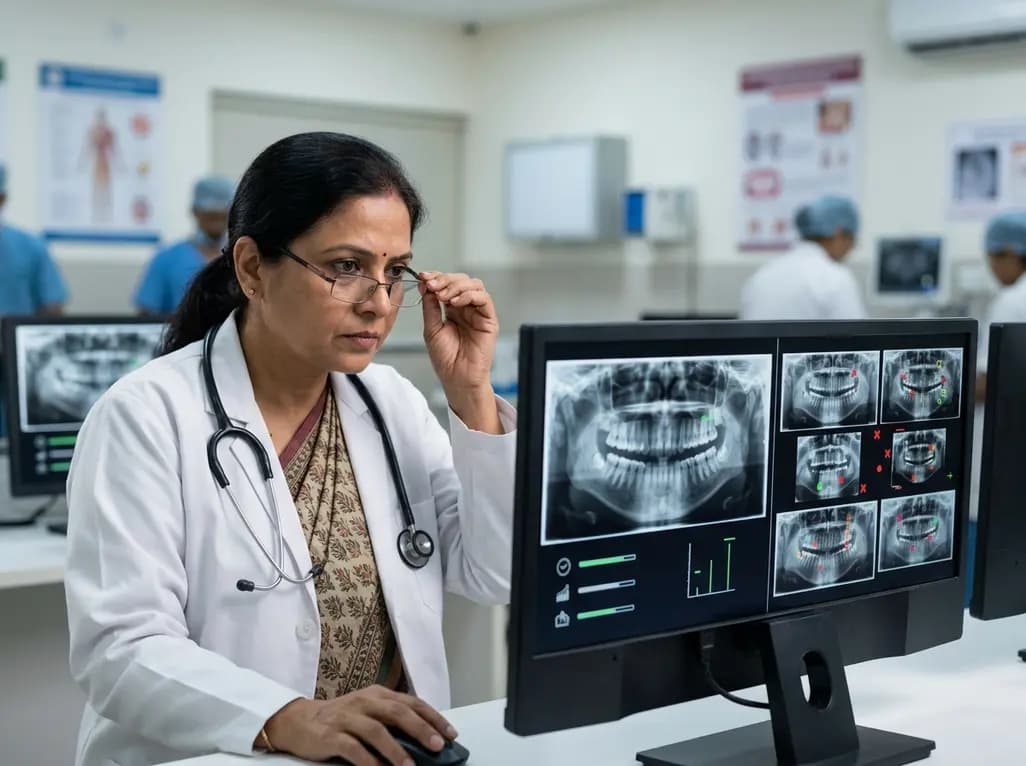
Determining the legal age of majority is a critical task in modern forensic medicine and legal proceedings. Specifically, the development of "Forensic Age Estimation AI" has emerged as a transformative advancement for clinicians and legal authorities worldwide. Traditionally, experts relied on manual assessments of third molar development using established radiographic scales. However, these methods often introduce subjectivity and inter-observer variability. Recent advancements in deep learning offer more objective and automated alternatives for analyzing dental structures. This study evaluates two prominent neural network architectures, Vision Transformer (ViT) and EfficientNetV2, for classifying individuals as being 18 years or older. Researchers utilized panoramic radiographs, which are ubiquitous in clinical practice, to train these models. The results indicate that transfer learning models can achieve high accuracy when identifying the threshold of legal majority. In addition, the study emphasizes the necessity of using diverse datasets to ensure model robustness across different populations. Consequently, this technology could standardize age assessment in various legal contexts, including immigration and criminal justice.
The researchers employed a comprehensive dataset consisting of panoramic radiographs from Bosnian and Lebanese individuals. This initial sample included 1764 images from subjects aged between 14 and 24.99 years. To improve the reliability of the models, the research team explored several different training configurations. These included pooled datasets as well as sex-specific datasets to account for biological variations in dental maturation. Furthermore, they applied data augmentation techniques to enhance the diversity and volume of the training images significantly. The study benchmarked binary classification against multiclass classification and regression models. While binary models focused exclusively on the 18-year threshold, the regression models were designed to predict specific chronological ages. Consequently, the researchers could evaluate whether thresholding continuous age predictions yielded better results than direct binary classification. External validation was also a core component of the study, utilizing a distinct dataset of 1579 Brazilian individuals to test the generalizability of the findings.
Analysis of the internal test set revealed significant differences in performance between the two deep learning architectures. EfficientNetV2, when combined with data augmentation on a pooled dataset, emerged as the superior model for this task. It achieved an impressive accuracy of 0.90 and an area under the receiver operating characteristic curve (ROC AUC) of 0.93. In contrast, the Vision Transformer (ViT) models generally lagged behind in several key performance metrics. For example, when using thresholded multiclass predictions, ViT's accuracy dropped to 0.73, compared to 0.84 for the EfficientNetV2 model. Moreover, the direct binary classification models outperformed both the regression and multiclass models in overall stability. This suggests that "Forensic Age Estimation AI" is most effective when the training objective is specifically aligned with the target classification task. Interestingly, the study found that sex-specific models did not provide a clear advantage over models trained on pooled male and female data, simplifying the implementation process.
A critical finding of this research involves the performance of these models on external validation sets from different geographical regions. When the models were applied to the Brazilian dataset, there was a noticeable decline in accuracy and specificity. For instance, the accuracy of the best performing EfficientNetV2 model fell from 0.90 to 0.81. Specifically, the specificity dropped significantly to 0.61, indicating a much higher rate of false positives in the external cohort. This degradation highlights the inherent challenges of "Forensic Age Estimation AI" when moving between different ethnic populations and radiographic protocols. The researchers used formal statistical tests, such as DeLong’s test, to confirm that the decline in ROC AUC was statistically significant. Despite these challenges, visualization techniques like Grad-CAM confirmed that the models were focusing on relevant dental structures rather than noise. These findings suggest that while AI is highly promising, models may require recalibration or fine-tuning when they are applied to new geographic regions or diverse ethnicities.
For medical and legal professionals in India, these findings are highly relevant to daily practice. Age estimation is frequently required in legal cases involving the Juvenile Justice Act and the POCSO Act. Currently, Indian courts and forensic experts often rely on the Ossification Test or manual dental maturity scales like Demirjian’s method. However, implementing "Forensic Age Estimation AI" could provide a more standardized and faster alternative to these traditional manual procedures. Utilizing AI could significantly reduce the subjectivity and time required for forensic reporting in crowded legal systems. Nevertheless, the study’s results regarding external validation suggest that Indian-specific datasets are absolutely essential for local implementation. Developing models trained specifically on Indian panoramic radiographs would likely yield much higher specificity and accuracy for the local population. Therefore, local research and data collection are necessary steps before these sophisticated AI tools can be fully integrated into the Indian medico-legal framework to ensure justice.
EfficientNetV2 demonstrated superior performance compared to Vision Transformers in this specific classification task. It achieved higher accuracy, sensitivity, and specificity metrics on both internal and external datasets. While Vision Transformer models are powerful for broad image recognition, the convolutional nature of EfficientNetV2 seems better suited for identifying the specific structural patterns found in panoramic radiographs. Consequently, EfficientNetV2 remains a more reliable choice for dental age classification until transformer models are further optimized.
External validation is vital because it reveals how well an AI model generalizes beyond its original training population. In this study, the models performed significantly better on Bosnian data than on Brazilian data. Variations in dental development, ethnicity, and radiographic equipment can impact model predictions. Therefore, validating a model on a diverse, independent dataset ensures that its performance is robust and provides a realistic assessment of its utility in global forensic applications.
Data augmentation plays a crucial role in enhancing the robustness of deep learning models. By artificially increasing the variety of training data through rotations, scaling, and flips, augmentation helps the model learn invariant features. In this research, models trained with augmented datasets consistently outperformed those without. This approach is particularly effective in medical imaging where datasets are often limited, allowing the model to handle variations in image quality and positioning.
Disclaimer: This content is for informational and educational purposes only. It is not intended to be a substitute for professional medical advice, diagnosis, or treatment. Always seek the advice of your physician or other qualified health provider with any questions you may have regarding a medical condition. Refer to the latest local and national guidelines for clinical practice.
References
Constantinou C et al. Classifying legal age of majority (≥18 years) from panoramic radiographs with transfer learning: Benchmarking ViT and EfficientNetV2. J Forensic Leg Med. 2026 Jul 15. doi: undefined. PMID: 42456231.

Read summarized clinical updates, watch expert medical content, and earn CME certifications right from your smartphone.
Open your smartphone camera to scan and install.





This research benchmarks EfficientNetV2 and ViT models for forensic age estimation using panoramic radiographs. While EfficientNetV2 showed high internal accuracy, external validation highlighted significant challenges in population generalizability, crucial for legal majority classification.
3 months ago

Novel glucose-responsive mPEG-PSA nanocarriers deliver insulin aspart on demand, achieving dual postprandial and basal glycemic control without hypoglycemia in diabetic models. This biomaterial breakthrough offers promising clinical implications for physiologic diabetes management.
Today
A novel folate-conjugated tecto-dendrimer nanoplatform successfully delivers siRNA to achieve targeted HK2 silencing, disrupting ovarian cancer glycolysis and suppressing lactate output.
Today
A comparative non-contact study reveals that high-power radiofrequency delivery with the QDOT MICRO catheter induces an artifactual contact force rise. Electrophysiologists must understand this power-dependent thermal and electrical phenomenon to avoid inadvertent catheter withdrawal and ineffective ablation.
Today
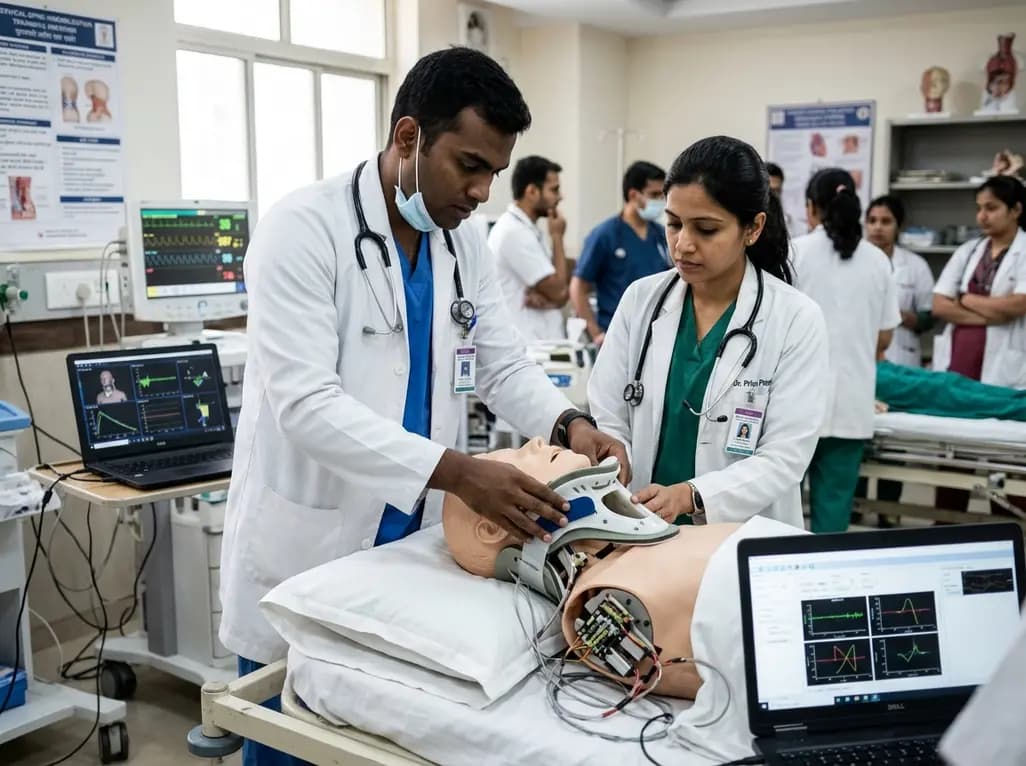
A novel proof-of-concept study presents a six-degree-of-freedom articulated manikin neck equipped with linear potentiometers. The system provides real-time kinematic motion feedback during cervical immobilisation, delivering sub-degree tracking accuracy to improve pre-hospital trauma training and patient safety.
Today

A retrospective comparative cohort study evaluated genitourinary safety in HFpEF between dapagliflozin and empagliflozin over six months. Rates of symptomatic UTI and asymptomatic bacteriuria showed no statistically significant differences, supporting comparable safety profiles across both SGLT2 inhibitors.
Today
