.webp&w=384&q=75)

Loading, please wait...
Loading, please wait...
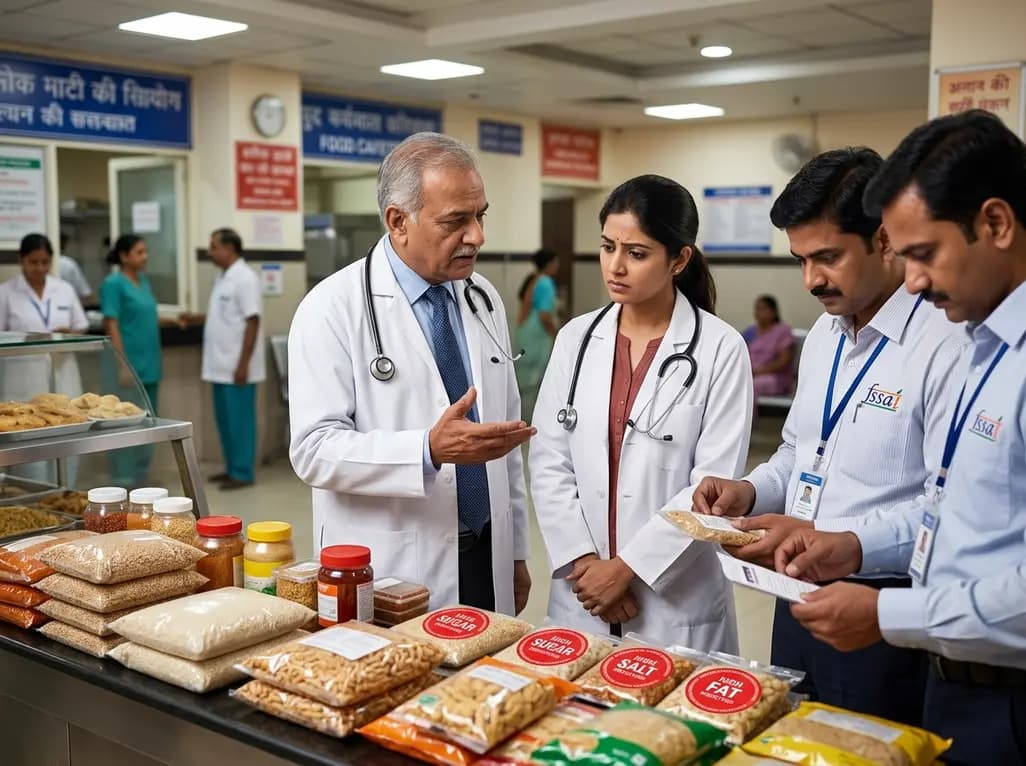
Public health authorities in India are orchestrating an unprecedented regulatory crackdown to overhaul commercial kitchens and packaged consumer goods. Consequently, the evolving landscape of food safety regulations India represents a decisive turning point for preventive medicine. For decades, Indian clinicians have managed chronic metabolic disorders and gastrointestinal infections stemming from ultra-processed diets and unhygienic practices. Today, however, intensified FSSAI surveillance and proposed front-of-pack warning labels enforce strict corporate accountability. As a result, healthcare professionals must understand these regulatory shifts to effectively counsel patients.
Ensuring dietary safety across a population of 1.4 billion people consuming 1.5 trillion meals annually presents monumental challenges. Historically, rampant adulteration and inadequate sanitation have compromised public health across India. Government laboratory records indicate that food safety inspectors analyze more than 100,000 commercial samples annually. Alarmingly, authorities find approximately one in every five tested samples to be unsafe, substandard, or deceptively mislabeled. Consequently, regulatory bodies have revoked nearly 8,000 commercial food business licenses over the last three years.
Recent high-profile enforcement operations illustrate the severe clinical risks confronting consumers. In northern Uttar Pradesh, for example, inspectors seized 1,300 kilograms of adulterated cottage cheese produced in unhygienic conditions. Corrupt manufacturers frequently adulterate staple items like paneer with toxic industrial starch, detergent residues, and non-edible synthetic fats. Clinically, these chemical contaminants trigger acute erosive gastritis, severe mucosal inflammation, and potential hepatorenal toxicity. Moreover, informal food stalls often lack potable running water, fostering pathogenic microbial transmission. Therefore, outpatient clinics continually treat acute bacterial gastroenteritis caused by Salmonella, Shigella, and virulent Escherichia coli strains. These persistent contamination risks require robust administrative vigilance.
In response to public outrage, state enforcement agencies have dramatically escalated on-the-ground operational inspections. Notably, Maharashtra Food Safety Commissioner Tukaram Mundhe has achieved nationwide visibility by leading thousands of surprise kitchen raids. His inspection teams have systematically inspected major international fast-food chains, dark stores, and upscale private establishments. Consequently, state regulators have suspended operating licenses for numerous non-compliant outlets, including Domino's, Pizza Hut, and McDonald's franchises.
During these rigorous inspections, officers regularly uncover unacceptable hygiene violations, such as heavy pest infestations and improper food refrigeration. Furthermore, enforcement authorities recently dismantled an illicit warehouse network that systematically falsified expiry dates and nutritional disclosures on packaged foods. Specifically, perpetrators altered labels on export-oriented goods manufactured by multinational corporations, including PepsiCo, Nestle, Coca-Cola, and Unilever. This high-profile operation prompted importing nations, including Canada, to launch immediate food safety risk assessments. By publishing graphic inspection findings directly to social media channels, authorities have garnered tremendous public support. Meanwhile, these decisive enforcement actions establish a vital deterrent against commercial negligence across the hospitality sector.
Beyond sanitizing commercial kitchens, authorities are updating food safety regulations India to tackle misleading commercial branding and beverage marketing. Unregulated commercial messaging frequently induces consumers to purchase ultra-processed beverages with deleterious nutritional profiles. Accordingly, the FSSAI has issued formal compliance notices to prominent multinational beverage companies for deceptive consumer representations. For instance, regulatory bodies heavily penalized energy drink manufacturers, including Red Bull, regarding unverified promotional statements and aggressive youth marketing.
Simultaneously, the central regulator took firm enforcement action against major multinational liquor firms like Diageo for non-compliant consumer packaging. These regulatory interventions carry substantial clinical relevance for practicing primary care physicians and pediatric specialists. Specifically, clinicians observe surging rates of caffeine dependency, cardiac palpitations, and enamel erosion directly linked to unmonitored energy drink consumption. Furthermore, elevated hidden concentrations of high-fructose corn syrup exacerbate visceral adiposity and pediatric insulin resistance. Therefore, stringent regulatory enforcement provides essential institutional backing to clinicians promoting adolescent cardiovascular wellness. By holding corporate manufacturers legally accountable, regulators help eliminate deceptive advertising practices that compromise community health.
While physical kitchen raids address acute sanitary hazards, chronic metabolic disease prevention requires transparent front-of-pack warning labels. India has debated interpretive labeling policies for years to curb excessive sugar, salt, and saturated fat consumption. Similar warning frameworks in Chile and Mexico have successfully reduced purchases of unhealthy ultra-processed products. However, domestic implementation previously stalled due to intensive corporate lobbying and industry resistance.
Following recent scrutiny by the Supreme Court of India, the FSSAI proposed a mandatory red hexagonal warning stamp. This framework adopts nutritional thresholds based on the Dietary Guidelines for Indians developed by the ICMR-National Institute of Nutrition. Under the current proposal, products exceeding established limits for two or more target nutrients must display prominent red warnings. Nevertheless, this specific criterion has ignited intense controversy among industry executives and public health advocates. Packaged food manufacturers argue that the strict limits will label too many products red, hurting traditional snack sales. Conversely, medical experts argue that requiring two nutrient violations creates an industry loophole, shielding single-nutrient offenders like high-sugar sodas. Consequently, health advocates are petitioning the Supreme Court for stricter, single-nutrient warning triggers.
For medical practitioners across India, these regulatory interventions directly reinforce clinical efforts against the worsening non-communicable disease epidemic. Cardiovascular disease, type 2 diabetes, and hypertension represent the foremost contributors to premature adult mortality nationwide. Epidemiological studies demonstrate that excessive dietary sodium accelerates arterial stiffness and resistant hypertension. Similarly, high saturated fat and trans-fat consumption drives atherogenic dyslipidemia and coronary artery disease. Moreover, excessive refined sugar intake promotes hepatic steatosis, metabolic syndrome, and early pancreatic beta-cell exhaustion.
Therefore, prominent front-of-pack warning labels serve as an indispensable clinical counseling tool for physicians and registered dietitians. During brief outpatient visits, doctors can instruct patients with hypertension or diabetes to avoid items with red warning stamps. Rather than struggling to interpret complex back-of-pack nutritional panels, patients gain an intuitive visual guide for grocery shopping. Additionally, strict administrative crackdowns on food adulteration minimize diagnostic confusion when managing toxic gastrointestinal presentations. Ultimately, primary care physicians must actively endorse these regulatory policies during patient consultations. Clinicians can effectively transform national regulatory momentum into meaningful, sustained metabolic risk reduction.
Q1: What specific front-of-pack warning label has FSSAI proposed for packaged foods?
The FSSAI has proposed a prominent red hexagonal warning stamp on the front of packaged foods exceeding established nutritional limits. These thresholds align with the ICMR-NIN Dietary Guidelines for Indians. In its Supreme Court proposal, the regulator mandates warnings when a product exceeds limits for two or more nutrients: saturated fat, sugar, or salt. The labels will state High Fat, High Sugar, High Salt, or Highly Sweetened Beverage.
Q2: Why are public health advocates criticizing the FSSAI two-nutrient warning threshold?
Public health advocates argue that requiring two exceeded thresholds creates an industry loophole that jeopardizes consumer safety. Under this framework, ultra-processed products containing dangerous amounts of added sugar or sodium evade warning labels if other nutrient parameters remain below the threshold. Consequently, medical organizations and health advocates are petitioning the Supreme Court to mandate warning stamps whenever any single nutrient exceeds safety limits, mirroring global best practices.
Q3: How do food adulteration and poor kitchen hygiene impact daily clinical practice?
Food adulteration and poor kitchen sanitation create severe diagnostic and therapeutic burdens for treating clinicians. Doctors routinely manage acute bacterial gastroenteritis and systemic toxicoinfections caused by contaminated water and spoiled ingredients. Furthermore, industrial chemical adulterants like detergent residues, synthetic oils, and unauthorized starches in dairy cause acute mucosal erosion, toxic hepatitis, and secondary renal dysfunction. These preventable toxic exposures complicate routine outpatient and inpatient clinical management.
Disclaimer: This content is for informational and educational purposes only. It does not constitute medical advice or replace professional judgment. Refer to the latest local and national guidelines for clinical practice.
References

Read summarized clinical updates, watch expert medical content, and earn CME certifications right from your smartphone.
Open your smartphone camera to scan and install.





Regulatory authorities across India have launched aggressive food safety crackdowns, suspending eatery licenses and targeting adulterated staples. Concurrently, FSSAI has proposed red front-of-pack warning labels for products high in sugar, salt, and fat to empower consumers and address chronic disease burdens.
last month

Explore vital recurrent stroke predictors in lacunar stroke patients managed with intensive blood pressure lowering. This analysis examines trial findings from SPS3 to uncover residual vascular risks, metabolic factors, and targeted secondary prevention strategies for high-risk neurological patients.
Today

Odisha has established India's first state-level clinical protocol specifically tailored for pregnant women with sickle cell disease. Developed with NHM and UNICEF, the framework provides structured antenatal screening, crisis mitigation, standardized referral pathways, and specialized interdisciplinary care.
Today

The Directorate General of Health Services directs Indian states to halt the hazardous reuse and reprocessing of single-use medical devices. Discover regulatory implications under the Drugs and Cosmetics Act, critical infection risks, legal liabilities, and operational changes required across clinical specialties.
Today

Mitochondria-targeted nanoparticles self-assembled from EGCG and L-glutamic acid effectively restore mitochondrial homeostasis, suppress synovial inflammation, and attenuate chondrocyte senescence in osteoarthritis, offering a promising disease-modifying nanotherapy.
Today

India is advancing preventive healthcare by integrating genomics, artificial intelligence, and quantum technologies. With the SANGAM programme sequencing one million Indian genomes, clinicians can unlock personalized therapies, detect cardiometabolic risks early, and curb the burden of diabetes and heart disease.
Today
