.webp&w=384&q=75)

Loading, please wait...
Loading, please wait...

Food insecurity often leads to more than just hunger; it frequently triggers complex psychological challenges. Recently, new clinical data explored the connection between food insecurity, muscle dysmorphia and exercise addiction. Because individuals lack consistent food access, they may develop intense body image concerns. Consequently, they might turn to extreme exercise or specific eating behaviors to compensate for perceived physical inadequacies. Thus, this study highlights the urgent need for a multidisciplinary approach to patient care. Furthermore, identifying these risks early is essential for effective intervention.
The researchers analyzed 1,500 young Taiwanese adults to understand these behavioral pathways. First, they discovered that muscle dysmorphia mediates the link between food insecurity and maladaptive behaviors. Specifically, food insecurity creates distress that manifests as a drive for muscularity. Moreover, this preoccupation leads to a higher risk of exercise addiction and muscularity-oriented eating. For instance, males showed a higher risk for disordered eating, whereas females were more prone to exercise addiction. Similarly, these findings suggest that the psychological response to food scarcity is multifaceted. Therefore, clinicians must consider gender-specific treatment models when addressing body dissatisfaction.
Fortunately, psychological resilience can significantly alter these adverse outcomes. In particular, the study found that resilience moderates the relationship between muscle dysmorphia and behavioral addictions. Because individuals have higher resilience levels, they show a weaker link between body image concerns and harmful behaviors. Therefore, building mental toughness may protect young adults from the psychological risks of food insecurity. Ultimately, practitioners should prioritize resilience-building strategies when treating patients with security issues. However, systemic improvements in food access remain the primary solution. Nevertheless, mental health support provides a vital secondary defense for vulnerable populations.
Food insecurity creates psychological distress and a loss of control, which can manifest as a pathological drive for muscularity. Individuals may also prioritize gym memberships or supplements over high-quality nutrition to achieve an ideal physique.
Yes, research indicates that food-insecure males are more likely to engage in muscularity-oriented eating behavior. In contrast, females facing food insecurity show a significantly higher risk of developing exercise addiction.
Absolutely. High levels of psychological resilience act as a buffer. It weakens the connection between muscle dysmorphia and the development of addictive exercise or disordered eating patterns in young adults.
Disclaimer: This content is for informational and educational purposes only. It does not constitute professional medical advice, diagnosis, or treatment. Always seek the advice of your physician or other qualified health provider with any questions you may have regarding a medical condition. Refer to the latest local and national guidelines for clinical practice.
References
Chaimano S et al. Exploring the relationship between food insecurity, exercise addiction, and muscularity-oriented eating behavior: a moderated mediation analysis of muscle dysmorphia and resilience. J Eat Disord. 2026 Apr 04. doi: 10.1186/s40337-026-01595-w. PMID: 41935337.
Ganson KT, et al. Food insecurity is associated with muscle dysmorphia symptomatology among a sample of Canadian adolescents and young adults. Body Image. 2023 Dec;47:101628. doi: 10.1016/j.bodyim.2023.101628.
Hazzard VM, et al. Food insecurity and eating disorders: a review of emerging evidence. Curr Psychiatry Rep. 2020 Oct 30;22(12):74. doi: 10.1007/s11920-020-01200-0.

Read summarized clinical updates, watch expert medical content, and earn CME certifications right from your smartphone.
Open your smartphone camera to scan and install.





A study links food insecurity to muscle dysmorphia and exercise addiction, highlighting the role of resilience in protecting young adults from these risks....
6 months ago
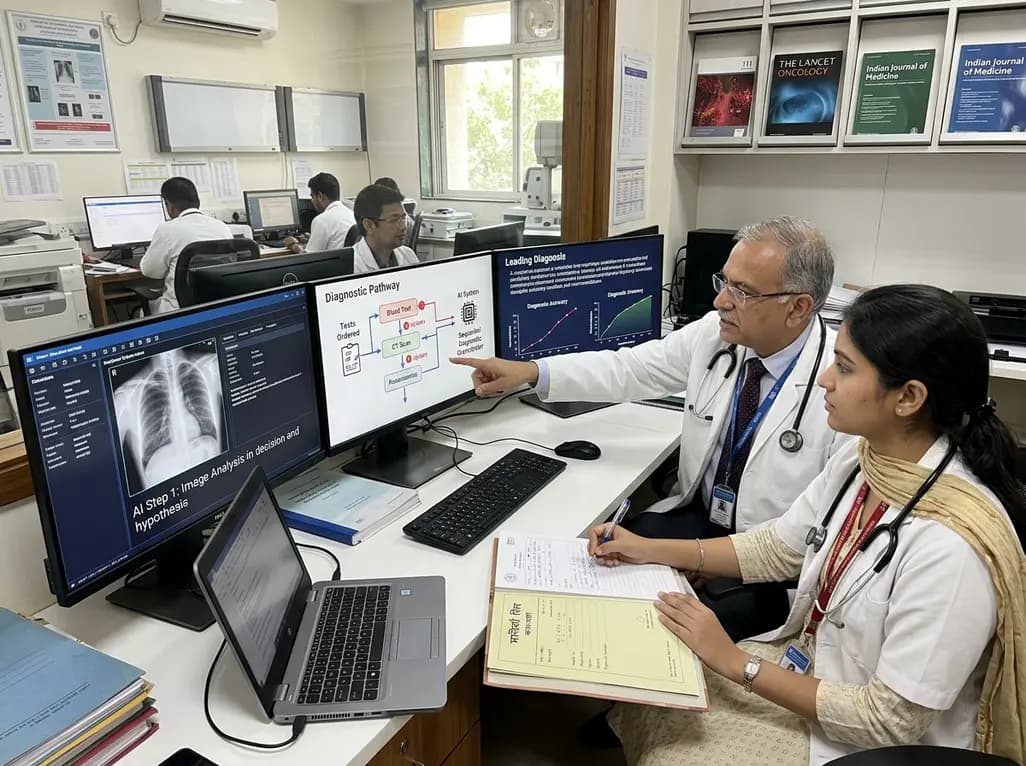
A breakthrough peer-reviewed study demonstrates that a sequential AI diagnosis system can mirror real-world clinical reasoning. By ordering stepwise tests and updating hypotheses dynamically, this multi-agent orchestrator achieved superior diagnostic accuracy while reducing investigative costs.
Today

A prenatal case highlights severe glutaric acidemia type II presenting as bilateral hyperechoic cystic kidneys at 18 weeks. Whole-exome sequencing revealed a novel homozygous ETFDH frameshift variant, demonstrating the power of rapid genetic testing in fetal renal anomalies.
Today

Review how tailored exercise programs benefit frail older patients with heart failure. Explore pathophysiological mechanisms, individualized training prescriptions, and strategies to overcome adherence barriers in clinical practice.
Yesterday

This comparative study evaluates posterior labral tears with and without glenohumeral instability, highlighting distinct demographic patterns, MRI underestimation in stable shoulders, and successful arthroscopic repair outcomes.
Yesterday

A clinical study demonstrates that early intervention with tocilizumab, either as monotherapy or bridged with corticosteroids, achieves significant proptosis reduction and resolves active inflammation in treatment-naive thyroid eye disease.
Yesterday
