

Loading, please wait...
Loading, please wait...

Clinicians prescribe antimicrobial agents daily to manage severe bacterial illnesses. However, longstanding regulatory warnings have linked fluoroquinolones and peripheral neuropathy, creating widespread concern among prescribers. Historical alerts prompted physicians to reconsider routine fluoroquinolone use for common infections. Consequently, doctors often worry about triggering disabling sensory symptoms or nerve injury. A landmark observational study published in Neurology provides significant epidemiological clarification. By analyzing millions of primary care patients, researchers evaluated whether systemic fluoroquinolones truly elevate peripheral neuropathy risks compared to cephalosporins.
For decades, regulatory agencies have highlighted neurotoxic risks associated with systemic quinolones. Specifically, spontaneous reporting systems identified rare cases of polyneuropathy and paresthesias following drug administration. As a result, health authorities mandated prominent black box warnings. However, spontaneous reporting suffers from notorious reporting biases and lacks unexposed control cohorts. Furthermore, early observational studies yielded conflicting results because of confounding by indication.
To address these critical limitations, investigators designed a rigorous comparative safety study. They examined whether systemic fluoroquinolones independently drive incident nerve damage when compared against cephalosporins. By choosing cephalosporins as an active comparator class, researchers minimized confounding related to infection severity. Moreover, cephalosporins treat similar outpatient infections without causing axonal degradation. Consequently, this comparative framework enabled investigators to isolate drug-specific hazards reliably. Ultimately, these insights help clinicians interpret safety warnings accurately while maintaining evidence-based antimicrobial stewardship.
The research team utilized two extensive United Kingdom primary care databases: CPRD Aurum and CPRD GOLD. Together, these clinical repositories capture decades of real-world medical records. The overall cohort included nearly four million adult patients between 1997 and 2019. Specifically, the study analyzed 2,933,982 individuals from Aurum and 995,457 individuals from GOLD. Women represented 64% of participants, and median age was approximately 50 years.
To eliminate baseline confounding, researchers implemented strict exclusion criteria. For example, they excluded all individuals with preexisting diabetes mellitus or prior neuropathy. Therefore, any newly identified neuropathy represented a true incident event occurring after antibiotic initiation. Furthermore, researchers applied stabilized inverse probability of treatment weighting within Cox regression models. This technique balanced demographic variables, comorbidities, and healthcare utilization. In addition, scientists calculated risk differences using a weighted Aalen-Johansen estimator and pooled estimates via fixed-effects meta-analysis.
The study yielded clear epidemiological findings regarding relative and absolute risks. Among patients receiving their first antibiotic prescription, over one million individuals in Aurum and nearly 400,000 in GOLD received fluoroquinolones. However, the association between fluoroquinolones and incident peripheral neuropathy within 60 days remained close to the null. Specifically, the pooled adjusted hazard ratio at first treatment episode was 0.96 with a 95% confidence interval of 0.77 to 1.20.
Furthermore, investigators assessed whether repeated prescriptions altered neurological outcomes over time. Across all treatment episodes, the pooled adjusted hazard ratio remained neutral at 1.05 with a 95% confidence interval of 0.92 to 1.20. Consequently, fluoroquinolones demonstrated no substantive increase in incident peripheral neuropathy compared to cephalosporins. Moreover, weighted risk differences confirmed that excess absolute incidence was virtually nonexistent. These findings strongly indicate that earlier reported associations reflected diagnostic detection bias rather than authentic neurotoxicity.
Observational drug studies often face skepticism regarding whether null findings reflect true safety or inadequate statistical power. To validate their methodological architecture, investigators prespecified a recognized positive control outcome: incident tendon rupture within 60 days. Extensive clinical literature demonstrates that fluoroquinolones impair collagen structures and cause tendinopathy. Therefore, an elevated hazard ratio for tendon rupture would confirm that the databases could detect authentic drug-induced adverse events.
Notably, the positive control outcome performed exactly as hypothesized. For the first treatment episode, the pooled adjusted hazard ratio for tendon rupture reached 1.98 with a 95% confidence interval of 1.55 to 2.53. Similarly, across all treatment episodes, the pooled hazard ratio remained elevated at 1.76. This significant elevation confirms the analytical validity of the study design. In contrast, the neuropathy signal remained completely flat. Consequently, clinicians can trust that the absence of excess peripheral neuropathy was not a methodological artifact.
These findings provide practical perspectives for everyday clinical practice and antibiotic decision-making. In outpatient settings, clinicians frequently encounter complicated urinary tract infections or resistant respiratory pathogens. In such scenarios, oral fluoroquinolones like ciprofloxacin, levofloxacin, and moxifloxacin represent highly bioavailable options. When clinicians avoid these essential drugs solely fearing peripheral neuropathy, they may select less effective agents or unnecessary parenteral treatments.
Nevertheless, physicians must integrate these reassuring data within broader antimicrobial stewardship principles. Fluoroquinolones carry other well-documented adverse effects that require continued clinical vigilance. For instance, prescribers must monitor risks of QT prolongation, dysglycemia, aortic aneurysm, and Clostridioides difficile colitis. Furthermore, excessive fluoroquinolone prescribing accelerates resistance in critical gram-negative pathogens. Therefore, physicians should not interpret these results as justification for indiscriminate prescribing. Instead, clinicians should reserve fluoroquinolones for situations where microbiological benefits clearly outweigh potential musculoskeletal and resistance hazards.
Regulatory drug monographs and clinical guidelines evolve as sophisticated observational evidence accumulates. While black box warnings rightfully alert prescribers to potential toxicities, real-world comparative studies refine our understanding of true risk magnitude. This primary care analysis demonstrates that peripheral neuropathy occurs at comparable rates among patients receiving cephalosporins and fluoroquinolones. Hence, acute nerve damage appears far less common than initial case reports suggested.
However, healthcare professionals should maintain transparent communication with patients during antimicrobial therapy. Specifically, doctors should advise patients to report unusual tingling, burning, or numbness promptly. If a patient experiences genuine sensory symptoms, clinicians should immediately discontinue the medication and evaluate alternative causes. Concurrently, prescribers must remember established musculoskeletal risks, particularly in elderly individuals or patients receiving concurrent corticosteroids. By synthesizing rigorous epidemiological data with individualized clinical monitoring, physicians can optimize patient outcomes while minimizing avoidable drug-induced harm.
Recent large-scale electronic health record data show that systemic fluoroquinolones do not substantively increase peripheral neuropathy risk compared to cephalosporins. The pooled adjusted hazard ratio remained near unity across millions of primary care patients. While regulatory warnings highlight rare individual cases, population-level evidence indicates that acute drug-induced nerve damage occurs very infrequently.
Regulatory agencies issued black box warnings based on post-marketing spontaneous adverse event reports and initial epidemiological signals. These alerts emphasized disabling, potentially irreversible toxicities, including peripheral neuropathy, tendinitis, and tendon rupture. Spontaneous reporting systems prioritize rapid signal detection, but subsequent large comparative cohort studies help distinguish true causal hazards from background disease incidence.
Clinicians must advise patients to discontinue fluoroquinolones immediately if they develop sudden burning pain, paresthesias, numbness, or muscle weakness in the extremities. Additionally, sudden tendon pain, joint swelling, or cardiac palpitations warrant rapid drug cessation. Prompt medical evaluation prevents permanent structural injury and allows physicians to switch patients safely to alternative antimicrobial therapies.
Disclaimer: This content is for informational and educational purposes only and should not be considered professional medical advice. Always consult with a qualified healthcare professional regarding any medical condition or treatment. Refer to the latest local and national guidelines for clinical practice.
References

Read summarized clinical updates, watch expert medical content, and earn CME certifications right from your smartphone.
Open your smartphone camera to scan and install.





A massive UK primary care cohort study of nearly 4 million adults found no substantive difference in peripheral neuropathy risk between systemic fluoroquinolones and cephalosporins, providing vital safety clarification while positive controls confirmed elevated tendon rupture risks.
Today

Review how tailored exercise programs benefit frail older patients with heart failure. Explore pathophysiological mechanisms, individualized training prescriptions, and strategies to overcome adherence barriers in clinical practice.
Today
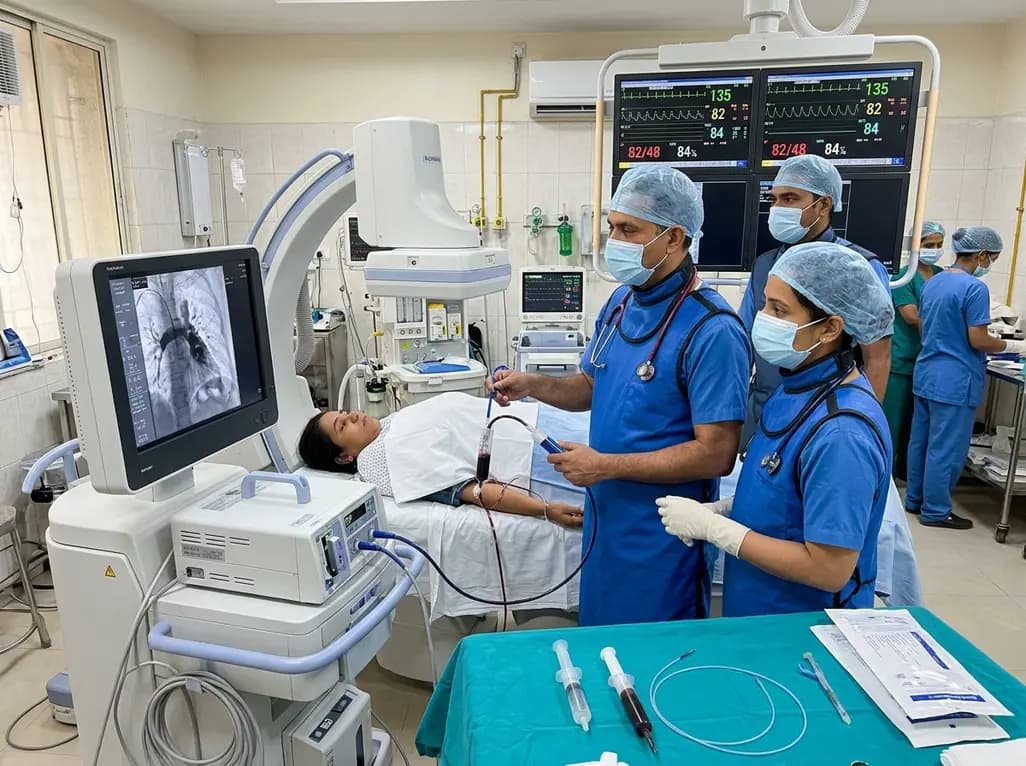
In high-risk pulmonary embolism complicated by severe anemia and active uterine bleeding, systemic thrombolysis is contraindicated. Large-bore aspiration thrombectomy provides rapid hemodynamic rescue without fibrinolysis, supported by inferior vena cava filter placement and multidisciplinary critical care.
Today

A cross-sectional study in Zanzibar reveals that 46.5% of adults with type 2 diabetes experience multidomain autonomic dysfunction on the COMPASS-31 tool, primarily orthostatic intolerance, while 45.9% exhibit cardiovascular autonomic neuropathy, highlighting the urgent need for structured clinical screening.
Today

This comparative study evaluates posterior labral tears with and without glenohumeral instability, highlighting distinct demographic patterns, MRI underestimation in stable shoulders, and successful arthroscopic repair outcomes.
Today

A recent case-control study reveals that urinary clusterin provides superior diagnostic performance for early diabetic kidney disease detection in pediatric type 1 diabetes mellitus, identifying tubular damage before conventional microalbuminuria occurs.
Today
