.webp&w=384&q=75)

Loading, please wait...
Loading, please wait...

In fact, flumazenil in acute poisoning serves as a vital antidote for reversing severe benzodiazepine-induced coma. Historically, however, many medical experts discouraged its routine use due to potential seizure risks. Nevertheless, current research suggests a major change in clinical perspective. For instance, a new study highlights greatly improved outcomes for comatose patients. Consequently, flumazenil helps clinicians avoid several invasive procedures. Moreover, it reduces the need for prolonged respiratory monitoring. In addition, it facilitates a much more rapid neurological diagnosis. Because of this, patient management becomes more efficient. Indeed, this approach preserves hospital capacity.
Initially, the study analyzed adult patients with very low Glasgow Coma Scale scores. Following this, researchers matched 98 treated patients with a control group. Subsequently, they measured a hierarchical composite endpoint. As a result, the flumazenil group achieved a win ratio of 1.68. Specifically, ICU admission rates fell from 69.4% to 42.9% in the matched cohort. Furthermore, mechanical ventilation needs decreased significantly. In particular, rates dropped from 65.3% to 35.7%. Therefore, the drug provides major clinical benefits for emergency departments. In contrast, those without treatment required more resources. Notably, this study clarifies the drug's utility.
On the other hand, safety remains a primary concern for most physicians. Nevertheless, clinicians attributed no deaths in the study to flumazenil itself. Furthermore, the occurrence of rapid-onset pneumonia did not increase among treated patients. In fact, safety profiles remained quite similar between both study groups. By comparison, those who did not receive the drug required far more intensive supportive interventions. Thus, flumazenil appears safe for carefully selected patients. Similarly, other recent poison center studies confirm a low incidence of major adverse events. In summary, flumazenil optimizes critical care resources effectively. Ultimately, clinicians should consider its use in standard emergency protocols. In other words, data clearly demonstrates its utility in severe poisoning cases. In addition, early intervention is key. Basically, the evidence is compelling.
According to the latest research, while flumazenil significantly reduces ICU admissions and mechanical ventilation, it does not necessarily shorten the overall length of the hospital stay. The primary benefit lies in avoiding invasive supportive care and preserving ICU beds.
Clinicians must exercise caution. While recent studies show a low rate of adverse events, flumazenil can precipitate seizures in patients with chronic benzodiazepine dependence or those who have co-ingested pro-convulsant drugs like tricyclic antidepressants.
Yes, flumazenil is effective for both benzodiazepines and certain nonbenzodiazepine \"Z-drugs\" like zolpidem. This is because it competitively binds to the same GABA-A receptor sites to reverse sedation.
Disclaimer: This content is for informational and educational purposes only. It does not constitute medical advice or establish a doctor-patient relationship. Always seek the advice of a qualified healthcare provider regarding a medical condition. Refer to the latest local and national guidelines for clinical practice.
References
Choi SY et al. Flumazenil use in acute poisoning: improved composite clinical outcomes in a propensity-matched retrospective cohort study. Clin Toxicol (Phila). 2026 May 19. doi: 10.1080/15563650.2026.2665214. PMID: 42154489.
Vohra V, et al. Low risk of adverse events associated with flumazenil administration: a retrospective poison center analysis of acutely poisoned patients. Clin Toxicol (Phila). 2025. doi: 10.1080/15563650.2025.2516130.
StatPearls. Flumazenil. February 2024. Treasure Island (FL): StatPearls Publishing. Available from: https://www.ncbi.nlm.nih.gov/books/NBK448186/
"
Read summarized clinical updates, watch expert medical content, and earn CME certifications right from your smartphone.
Open your smartphone camera to scan and install.





New research shows flumazenil use in acute benzodiazepine poisoning significantly reduces ICU admissions and the need for mechanical ventilation in comatose...
5 months ago
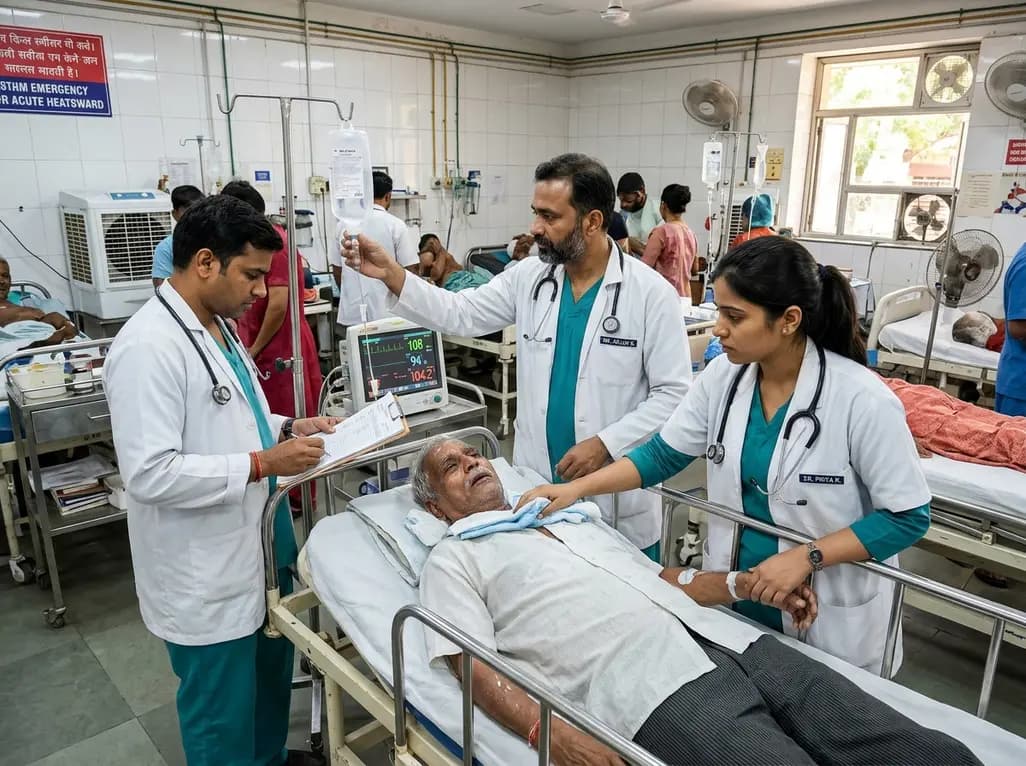
Recent epidemiological data reveals a dramatic surge in summer heat mortality driven by human-induced climate warming. This analysis explores the pathophysiological impacts on cardiac and renal systems, diagnostic dilemmas in death certification, and essential emergency cooling protocols for acute clinical care.
Today
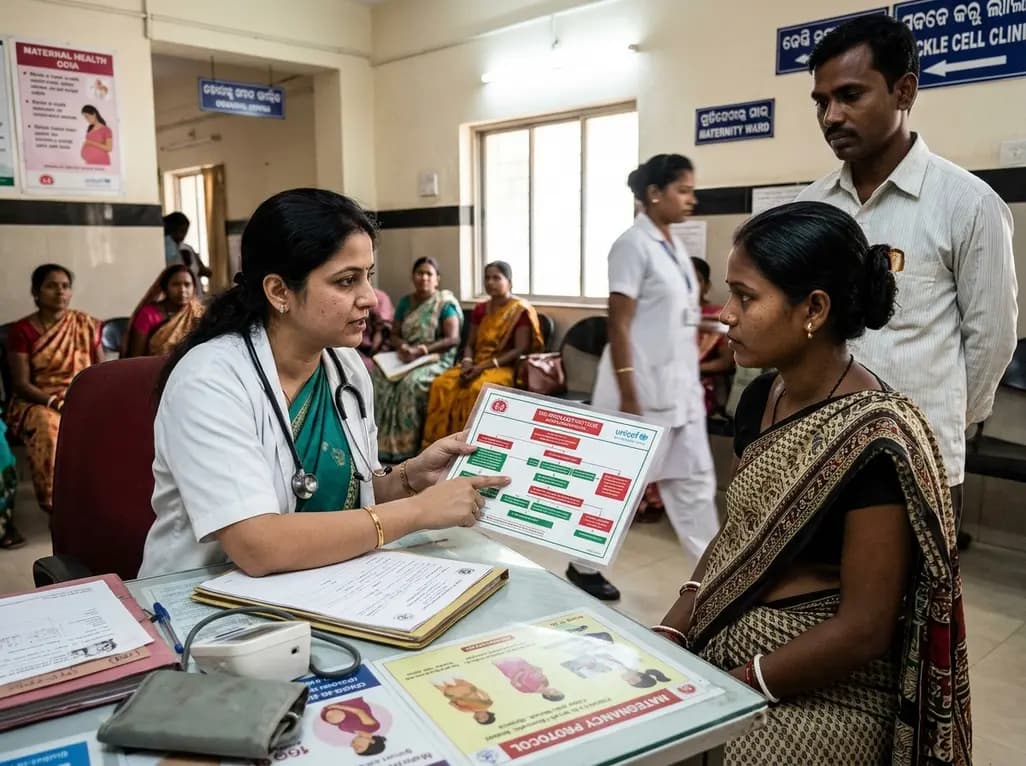
Odisha has established India's first state-level clinical protocol specifically tailored for pregnant women with sickle cell disease. Developed with NHM and UNICEF, the framework provides structured antenatal screening, crisis mitigation, standardized referral pathways, and specialized interdisciplinary care.
Today

India is advancing preventive healthcare by integrating genomics, artificial intelligence, and quantum technologies. With the SANGAM programme sequencing one million Indian genomes, clinicians can unlock personalized therapies, detect cardiometabolic risks early, and curb the burden of diabetes and heart disease.
Today

A randomized controlled trial demonstrates that an eight-week dual-task training intervention significantly improves static and dynamic postural control over standard balance exercises in individuals with chronic ankle instability, addressing critical neurocognitive deficits during athletic and daily activities.
Today

A retrospective cohort study of 7,716 ICU patients from the MIMIC-IV database demonstrates that Gradient Boosting Decision Trees significantly outperform traditional SOFA scores in predicting in-hospital mortality among patients with sepsis and diabetes, with SHAP analysis providing clinical interpretability.
Today
