.webp&w=384&q=75)

Loading, please wait...
Loading, please wait...

Researchers introduced a breakthrough in flexible transparent electrodes using silver nanowires (Ag NWs) and hydroxyl-rich cellulose. These advanced materials address the mechanical instability often found in conventional indium tin oxide (ITO) substitutes. Consequently, the development offers a promising path for creating more durable wearable health monitors. This innovation ensures high electrical conductivity while maintaining structural integrity during physical movement.
The study highlights how strong coordination bonding between Ag NWs and hydroxyethyl cellulose (HEC) enhances stability. Therefore, the embedded micromesh structure effectively reduces junction resistance and light scattering. Furthermore, the electrodes maintained their photoelectric performance even under extreme physical stress. This stability is crucial for medical devices that must withstand bending, folding, and peeling during daily use.
Beyond electronics, these electrodes enable the construction of electro- and thermo-dual responsive devices. These systems can generate heat rapidly and provide multicolor switching capabilities. For instance, such technology could revolutionize smart bandages that monitor and treat wounds simultaneously. Moreover, the flexibility allows these sensors to conform to the human skin, providing more accurate physiological data. This development marks a significant step toward the integration of advanced optoelectronics in clinical practice.
Coordination bonding between silver nanowires and cellulose creates a robust interface. Consequently, this prevents the metal nanowires from peeling off and enhances the mechanical durability of the flexible electrode.
These electrodes are essential for wearable sensors and epidermal electronics. Therefore, they allow for continuous, comfortable health monitoring and can even integrate therapeutic functions like localized heating.
Disclaimer: This content is for informational and educational purposes only. It does not constitute professional medical advice, diagnosis, or treatment. Always seek the advice of your physician or other qualified healthcare provider with any questions you may have regarding a medical condition. Refer to the latest local and national guidelines for clinical practice.
References
Sui Q et al. Coordination-Bonded Ag NWs Micromesh-Based Transparent Electrodes for Electro- and Thermo- Dual Responsive Chromatic Devices. Nano Lett. 2026 Mar 06. doi: 10.1021/acs.nanolett.6c00356. PMID: 41790465.
Ravikumar K, Dangate MS. Advancements in stretchable organic optoelectronic devices and flexible transparent conducting electrodes: Current progress and future prospects. Heliyon. 2024 Jun 19;10(13):e33002. doi: 10.1016/j.heliyon.2024.e33002.
He L et al. Recent Developments in Flexible Transparent Electrode. Materials. 2021 May 05;14(9):2434. doi: 10.3390/ma14092434.

Read summarized clinical updates, watch expert medical content, and earn CME certifications right from your smartphone.
Open your smartphone camera to scan and install.





Researchers develop flexible, stable transparent electrodes using Ag NWs and cellulose, paving the way for advanced wearable medical sensors and devices....
7 months ago
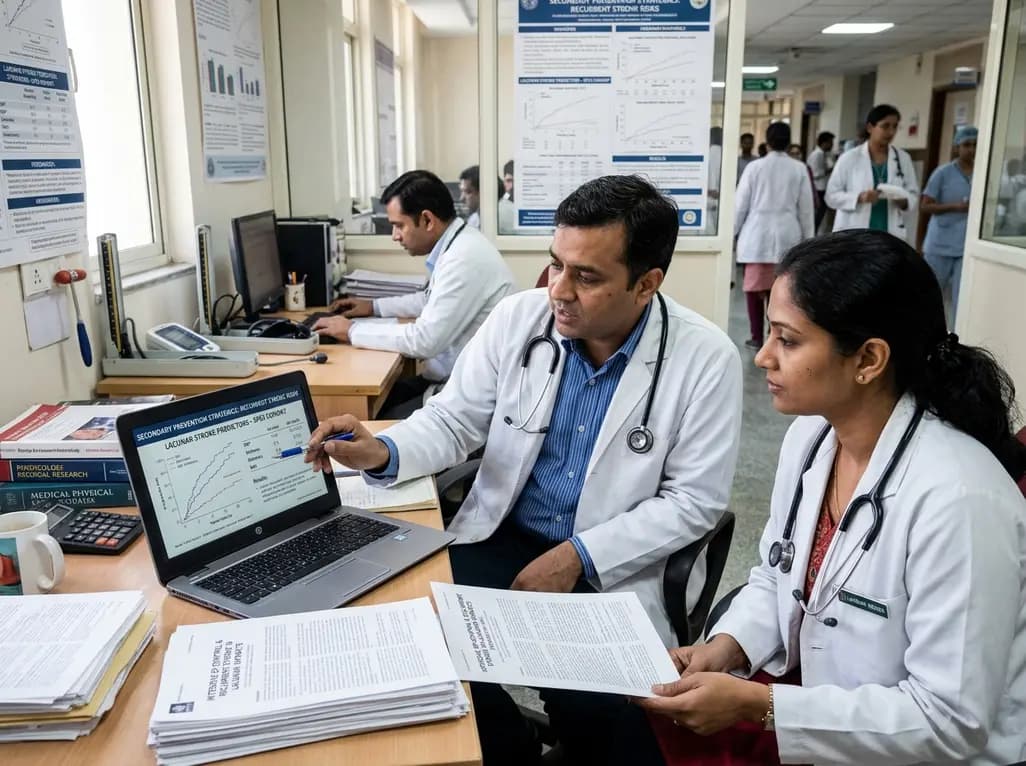
Explore vital recurrent stroke predictors in lacunar stroke patients managed with intensive blood pressure lowering. This analysis examines trial findings from SPS3 to uncover residual vascular risks, metabolic factors, and targeted secondary prevention strategies for high-risk neurological patients.
Today

Odisha has established India's first state-level clinical protocol specifically tailored for pregnant women with sickle cell disease. Developed with NHM and UNICEF, the framework provides structured antenatal screening, crisis mitigation, standardized referral pathways, and specialized interdisciplinary care.
Today

The Directorate General of Health Services directs Indian states to halt the hazardous reuse and reprocessing of single-use medical devices. Discover regulatory implications under the Drugs and Cosmetics Act, critical infection risks, legal liabilities, and operational changes required across clinical specialties.
Today

Mitochondria-targeted nanoparticles self-assembled from EGCG and L-glutamic acid effectively restore mitochondrial homeostasis, suppress synovial inflammation, and attenuate chondrocyte senescence in osteoarthritis, offering a promising disease-modifying nanotherapy.
Today

India is advancing preventive healthcare by integrating genomics, artificial intelligence, and quantum technologies. With the SANGAM programme sequencing one million Indian genomes, clinicians can unlock personalized therapies, detect cardiometabolic risks early, and curb the burden of diabetes and heart disease.
Today
