.webp&w=384&q=75)

Loading, please wait...
Loading, please wait...

Recent advancements in materials science have introduced a breakthrough in energy storage for wearable healthcare technology. Researchers have developed a novel electrospun supramolecular fabric, designated as P-PC@β-CD@PANI, which significantly improves the performance of flexible electrode materials. By integrating polyacrylonitrile (PAN) with camphorsulfonic acid-doped polyaniline and cyclodextrin derivatives, the team created a robust nanofibrous assembly. This innovation addresses the growing demand for durable, high-capacity components in flexible electronic devices.
The manufacturing process involves electrospinning a supramolecular assembly followed by in situ polyaniline polymerization. Specifically, the inclusion of β-cyclodextrin (β-CD) facilitates superior electrochemical properties. Tests show that this layered electrode delivers an areal capacitance 353 times higher than conventional PAN and PANI mixtures. Consequently, this fabric offers a scalable solution for powering long-term monitoring sensors without sacrificing comfort or conductivity.
Durability remains a critical factor for any material used in wearable applications. The P-PC@β-CD@PANI electrode demonstrates exceptional resilience, maintaining 97.0% of its capacitance even after 100 cycles of 180° bending. Furthermore, it retains 94.0% capacity after 1000 cycles. These results suggest that the fabric can withstand the rigorous mechanical stress typical of daily human movement. Additionally, the material remains stable under various environmental conditions, including high humidity and body temperature (37°C).
Moreover, the researchers successfully demonstrated the electrode's practical utility by using it to power a light-emitting diode (LED). This stable power delivery highlights the potential for integrating these supramolecular assemblies into diverse clinical and fitness-tracking tools. Ultimately, this work provides new insights into how electrospinning-based assembly can refine electrochemical performance for the next generation of wearable medical devices.
Cyclodextrins, particularly the β-CD variant, act as molecular hosts that optimize the supramolecular assembly of the fibers. This interaction enhances the surface area and conductivity of the polyaniline layer, leading to a massive increase in areal capacitance compared to standard fiber blends.
Yes, the electrode exhibits excellent stability at 37°C and 75% relative humidity, retaining over 98% of its capacitance. This environmental robustness, combined with high mechanical flexibility, makes it ideal for continuous wearable monitoring applications.
Disclaimer: This content is for informational and educational purposes only. It does not constitute medical advice or professional endorsements. Refer to the latest local and national guidelines for clinical practice.
References
Zhang X et al. Electrospinning Achieving Supramolecular Cyclodextrin-Polyaniline Layered Fabric for Expanding Conductive Performance of Flexible Electrode. Macromol Rapid Commun. 2026 May 03. doi: 10.1002/marc.70299. PMID: 42070305.
Chen D et al. Electrically conductive polyaniline/polyimide nanofiber membranes prepared via a combination of electrospinning and subsequent in situ polymerization growth. ACS Appl Mater Interfaces. 2013 Feb 15. doi: 10.1021/am303292y.
PatSnap Insights. Wearable continuous health monitors: Technology Clusters Driving the Field. 2026 Apr 22.

Read summarized clinical updates, watch expert medical content, and earn CME certifications right from your smartphone.
Open your smartphone camera to scan and install.





Researchers develop a high-performance supramolecular nanofibrous fabric for flexible electrodes, enhancing energy storage for wearable medical devices....
5 months ago
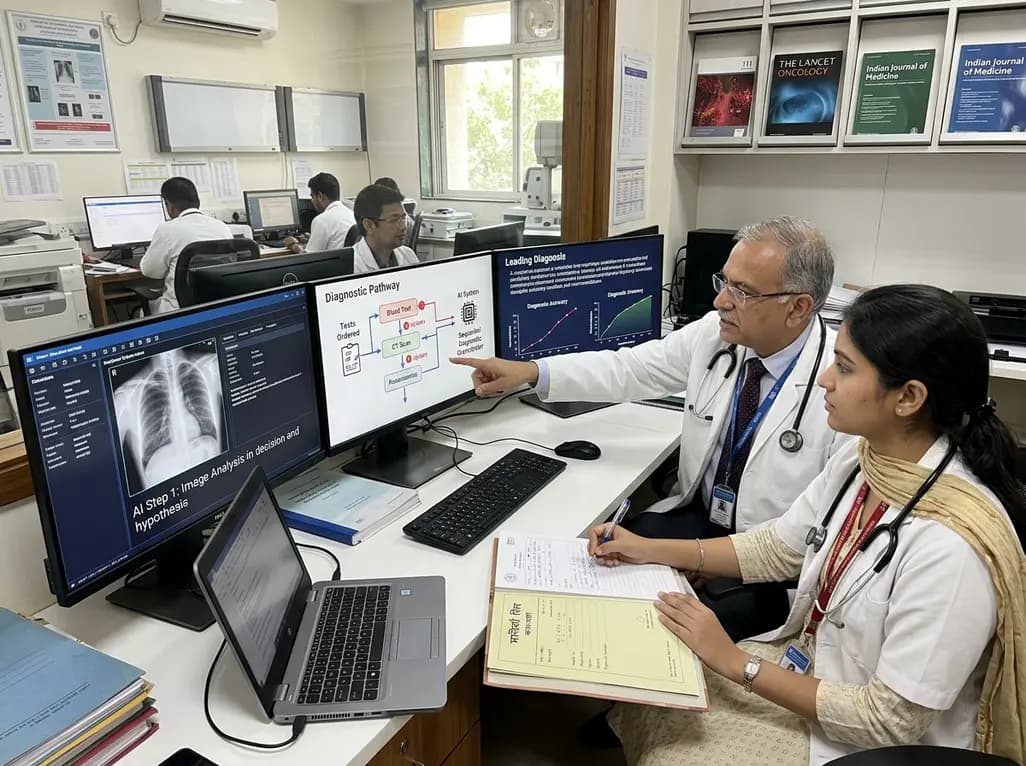
A breakthrough peer-reviewed study demonstrates that a sequential AI diagnosis system can mirror real-world clinical reasoning. By ordering stepwise tests and updating hypotheses dynamically, this multi-agent orchestrator achieved superior diagnostic accuracy while reducing investigative costs.
Today

A prenatal case highlights severe glutaric acidemia type II presenting as bilateral hyperechoic cystic kidneys at 18 weeks. Whole-exome sequencing revealed a novel homozygous ETFDH frameshift variant, demonstrating the power of rapid genetic testing in fetal renal anomalies.
Today

Review how tailored exercise programs benefit frail older patients with heart failure. Explore pathophysiological mechanisms, individualized training prescriptions, and strategies to overcome adherence barriers in clinical practice.
Yesterday

This comparative study evaluates posterior labral tears with and without glenohumeral instability, highlighting distinct demographic patterns, MRI underestimation in stable shoulders, and successful arthroscopic repair outcomes.
Yesterday

A clinical study demonstrates that early intervention with tocilizumab, either as monotherapy or bridged with corticosteroids, achieves significant proptosis reduction and resolves active inflammation in treatment-naive thyroid eye disease.
Yesterday
