.webp&w=384&q=75)

Loading, please wait...
Loading, please wait...
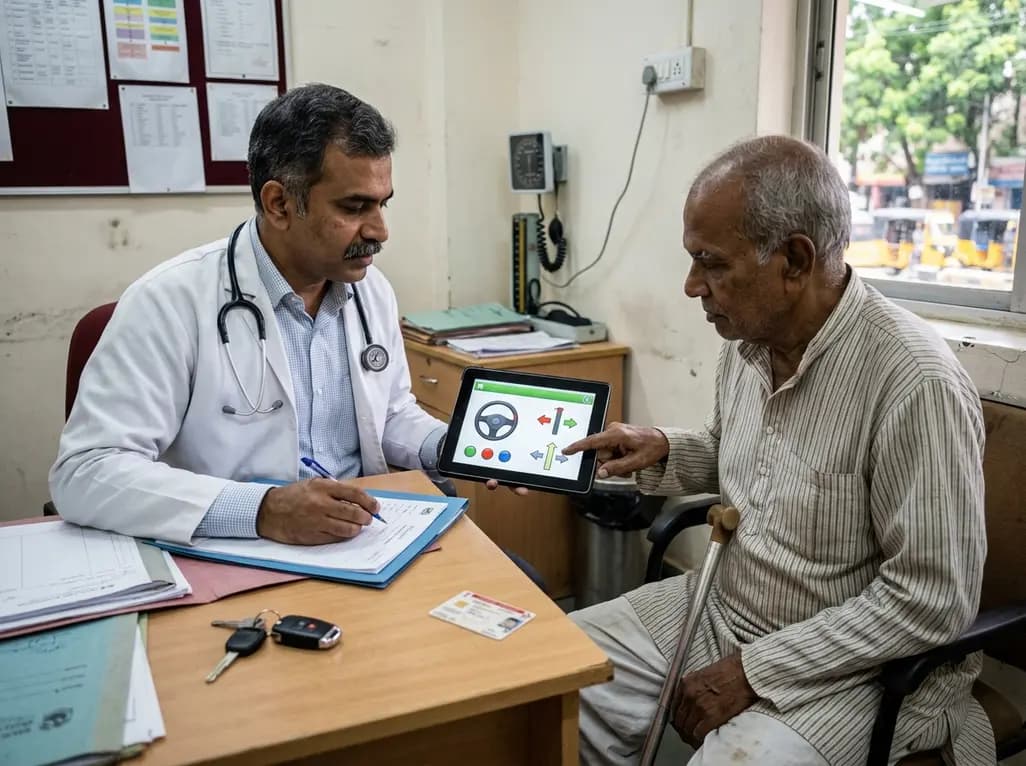
Evaluating a patient's capacity to operate a motor vehicle is a high-stakes responsibility that often places clinicians at the intersection of public safety and individual autonomy. A thorough fitness to drive assessment involves more than a cursory physical examination; it requires a nuanced understanding of how various medical conditions impact a driver's ability to process information and react in real-time. In the Indian context, this responsibility is becoming increasingly formalised as digital platforms like the Sarathi portal require medical professionals to provide definitive certifications for a growing demographic of older drivers. While traditional assessments focus heavily on vision and motor function, emerging evidence suggests that cognitive integrity is a far more critical predictor of safety behind the wheel. Consequently, doctors must now look beyond obvious physical disabilities and consider the subtle, often invisible, cognitive deficits that can arise from neurological events such as a stroke or the early stages of neurodegeneration. Therefore, integrating more robust cognitive screening tools into routine clinical practice is no longer just an academic pursuit but a practical necessity for improving road safety across the country.
In India, the legal requirements for medical fitness are governed by the Ministry of Road Transport and Highways (MoRTH) through the Motor Vehicles Act. Specifically, applicants over the age of 40 or those applying for a commercial transport license must submit a Medical Certificate in Form 1A. This document requires a registered medical practitioner to certify that the applicant does not suffer from any condition that would make their driving a source of danger to the public. Recently, many states have transitioned to a digital system where doctors must register on the Sarathi portal to issue these certificates electronically. This shift aims to reduce the prevalence of fraudulent certificates and ensure that a legitimate clinician has personally examined the applicant. However, the standard Form 1A remains relatively limited in its scope regarding cognitive health. It primarily addresses vision, hearing, and locomotor disabilities. This gap in the regulatory framework means that the burden of identifying cognitive impairment often falls entirely on the clinician's judgment. Consequently, there is a pressing need for clearer guidelines on how to evaluate mental agility and executive function within the time constraints of a standard primary care consultation.
One of the most significant challenges in any fitness to drive assessment is the identification of "invisible" symptoms. Unlike a hemiparesis or a visual field defect, cognitive impairments such as slowed processing speed, poor spatial awareness, and executive dysfunction are not always apparent during a brief office visit. For patients who have experienced a mild stroke or a transient ischaemic attack (TIA), their motor recovery might be excellent, yet their ability to navigate complex traffic scenarios may be severely compromised. Research consistently shows that currently used neuropsychological tests often have only moderate diagnostic accuracy when used in isolation. This lack of sensitivity can lead to inconsistent clinical decisions, where some unfit drivers are cleared for the road while others lose their independence unnecessarily. Moreover, the emotional and financial impact of losing a driving license can be devastating for patients, particularly in urban Indian environments where public transport for the elderly or disabled is often inadequate. Thus, clinicians require more reliable, evidence-based models that can quantify cognitive risk without relying solely on subjective observation.
A recent prospective study involving stroke patients has offered a promising alternative to traditional, binary assessment methods. Researchers developed a validated model that combines multiple neuropsychological tests with a logistic regression framework to calculate driving fitness. Notably, this model explicitly accounts for uncertainty. Instead of forcing a categorical "fit" or "unfit" decision in every instance, the system identifies borderline cases where the data is insufficient for a definitive judgment. In these scenarios, clinicians are encouraged to refrain from making a final call until further evaluation or on-road testing can be conducted. This nuanced approach is particularly relevant for the Indian medical landscape, where the volume of patients often prevents lengthy, one-on-one neurocognitive evaluations. By using a battery of shorter, validated tests that target attention and visuospatial skills, practitioners can achieve a higher level of diagnostic confidence. Furthermore, the use of statistical models helps to standardise the assessment process, reducing the risk of bias and providing a clear rationale for the clinician’s recommendation, which is essential if a licensing decision is ever legally challenged.
While the latest research has focused heavily on stroke survivors, the principles are easily adaptable to the broader population of older drivers. As life expectancy in India continues to rise, the prevalence of age-related cognitive decline will inevitably increase. Future research must prioritise the selection and validation of age-specific cognitive tests that are both culturally and linguistically appropriate for the diverse Indian population. These tools would ideally be simple enough to be administered by a general practitioner or a family physician during a routine health check-up. Implementing such measures at the primary care level would allow for earlier detection of cognitive issues before they manifest as traffic accidents. Additionally, the integration of these models into the digital Sarathi portal could streamline the certification process for both doctors and citizens. Ultimately, the goal is to create a supportive environment where driving cessation is not seen as a sudden penalty but as a managed transition based on objective health data. This proactive strategy would significantly enhance public safety while respecting the dignity and individual interests of the aging driver.
For doctors currently tasked with issuing Form 1A certificates, a high index of suspicion for cognitive impairment is vital. If a patient presents with a history of stroke, Parkinson’s disease, or early-stage dementia, a standard physical check is insufficient. Clinicians should consider incorporating brief tools like the Mini-Mental State Examination (MMSE) or specific clock-drawing tests as part of their fitness to drive assessment. Furthermore, it is advisable to document the patient's cognitive status clearly in their medical records. If a case is borderline, do not hesitate to refer the patient to a neurologist or a professional driving rehabilitation specialist if available. Engaging the family in the discussion can also provide valuable insights into the patient's day-to-day driving habits and any "near misses" they may have had. By taking these extra steps, practitioners can better fulfil their legal and ethical obligations while ensuring the safety of both their patients and the general public.
In India, any Registered Medical Practitioner (RMP) can technically issue a Form 1A certificate. However, under recent updates to the Sarathi and Vahan portals, many states now require the doctor to be registered on the national portal to provide digital authorisation. This usually involves verifying the doctor's credentials through the National Medical Commission or State Medical Council. It is essential for clinicians to check their specific state’s guidelines on the Parivahan website before issuing certificates.
Warning signs include difficulty following simple instructions, frequent confusion in familiar environments, slowed reaction times, and poor distance estimation. During an assessment, if a patient demonstrates significant deficits in attention, memory, or spatial orientation, they may be at a higher risk for accidents. Clinicians should be particularly cautious with patients who show impulsive behaviour or lack insight into their medical condition, as these traits are strongly associated with poor driving performance post-stroke.
Most international and regional guidelines recommend a mandatory waiting period, often one month, following a stroke or TIA before resuming driving. During this period, the risk of recurrence is highest, and subtle cognitive deficits may still be resolving. A follow-up medical evaluation is mandatory after this interval. The clinician must ensure that the patient has regained sufficient motor control and that their cognitive processing is stable enough to manage the complex and unpredictable nature of modern traffic.
Disclaimer: This content is for informational and educational purposes only and does not constitute medical or legal advice. Driving regulations and medical certification requirements vary by state and are subject to change by the Ministry of Road Transport and Highways (MoRTH). Refer to the latest local and national guidelines for clinical practice.
References
Szabó G et al. [Fitness to drive: legal context and new opportunities for cognitive assessment]. Orv Hetil. 2026 Jul 12. doi: 10.1556/650.2026.33599. PMID: 42437471.
Ministry of Road Transport and Highways (MoRTH). The Motor Vehicles Act and Central Motor Vehicles Rules. Government of India. 2026.
Stroke Support India. Guidelines for driving after stroke: A resource for survivors and families in India. 2023.
"
Read summarized clinical updates, watch expert medical content, and earn CME certifications right from your smartphone.
Open your smartphone camera to scan and install.





Fitness to drive evaluations pose a complex challenge for Indian doctors. This article explores new cognitive assessment models for stroke patients and the legal framework for Form 1A medical certificates in India, emphasizing the need for objective tools in primary care.
3 months ago
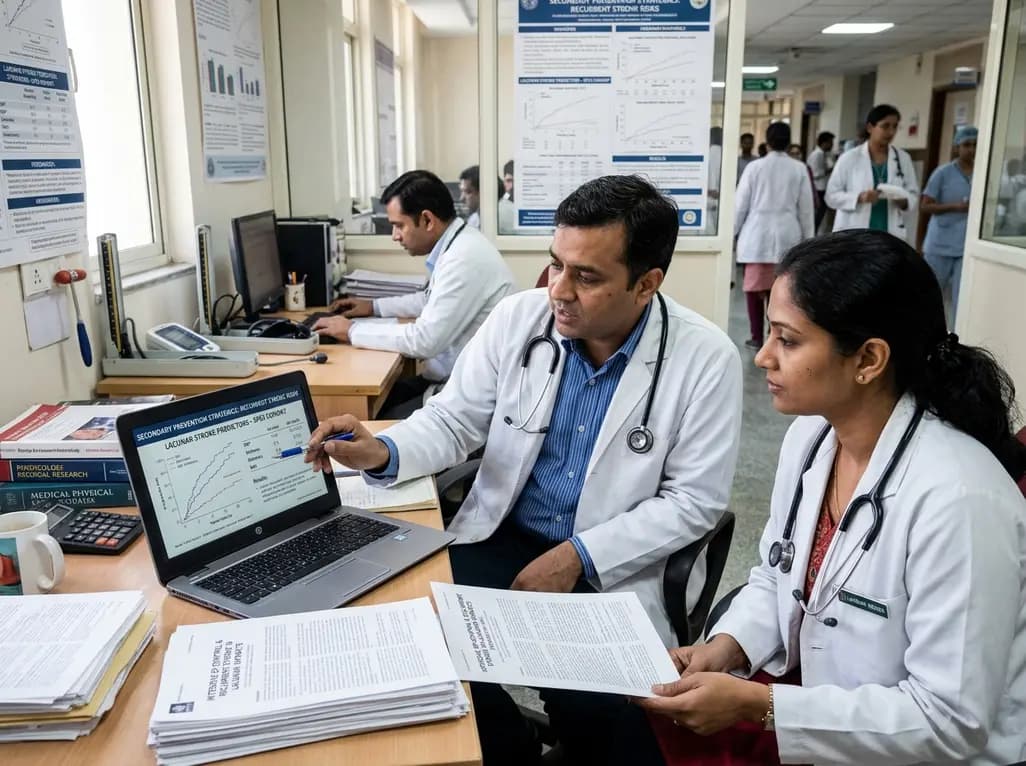
Explore vital recurrent stroke predictors in lacunar stroke patients managed with intensive blood pressure lowering. This analysis examines trial findings from SPS3 to uncover residual vascular risks, metabolic factors, and targeted secondary prevention strategies for high-risk neurological patients.
Today

A comprehensive scoping review synthesises evidence linking prenatal maternal mental health to long-term offspring neurodevelopment, evaluating neuroendocrine, inflammatory, and epigenetic pathways while highlighting clinical screening and future research priorities.
Today
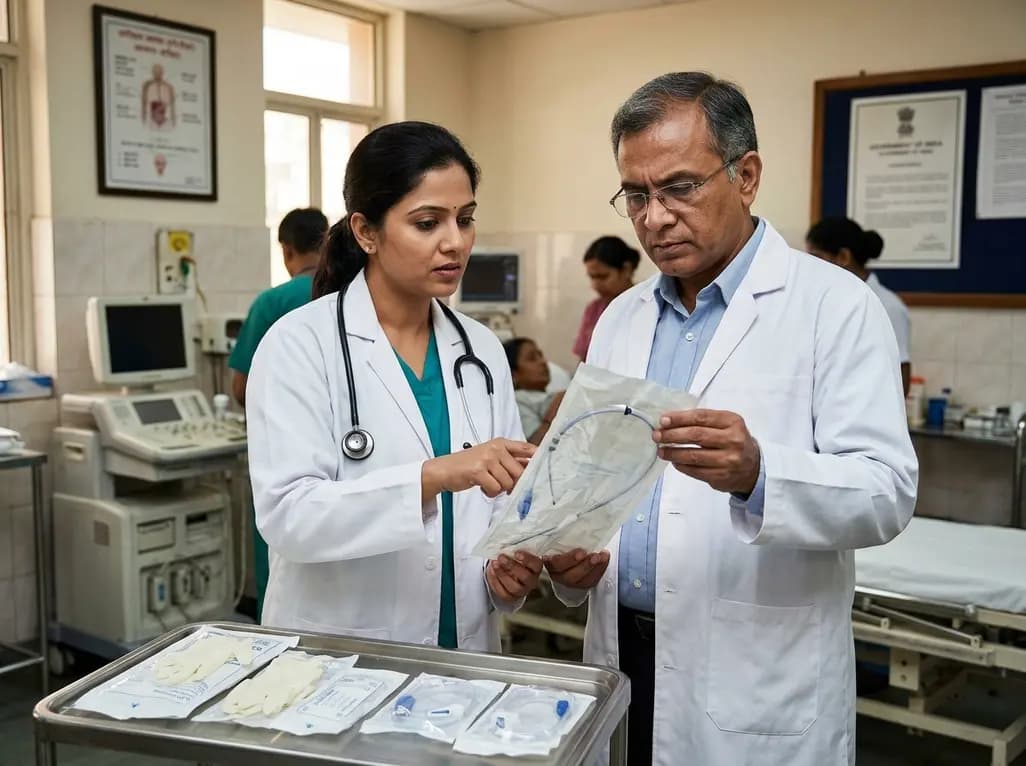
The Directorate General of Health Services directs Indian states to halt the hazardous reuse and reprocessing of single-use medical devices. Discover regulatory implications under the Drugs and Cosmetics Act, critical infection risks, legal liabilities, and operational changes required across clinical specialties.
Today
Mitochondria-targeted nanoparticles self-assembled from EGCG and L-glutamic acid effectively restore mitochondrial homeostasis, suppress synovial inflammation, and attenuate chondrocyte senescence in osteoarthritis, offering a promising disease-modifying nanotherapy.
Today

India is advancing preventive healthcare by integrating genomics, artificial intelligence, and quantum technologies. With the SANGAM programme sequencing one million Indian genomes, clinicians can unlock personalized therapies, detect cardiometabolic risks early, and curb the burden of diabetes and heart disease.
Today
