.webp&w=384&q=75)

Loading, please wait...
Loading, please wait...

Researchers at Spain's University of Granada have developed a fish scale artificial cornea. This innovative medical device utilizes scales from several common fish species found in local markets. Consequently, it provides a promising, lower-cost alternative to traditional donor transplants for patients with severe eye diseases.
The cornea is the eye's transparent front layer. However, it is remarkably difficult to repair when badly damaged because it lacks blood vessels and has limited regenerative capacity. Doctors often treat severe corneal conditions with donor transplants. Unfortunately, these procedures are frequently limited by organ availability and long waiting lists.
Scientists from the university's Tissue Engineering Group created these corneal implants to be highly biocompatible, transparent, and resistant. Furthermore, this biological product is very accessible and inexpensive to obtain. It could also help boost the local fishing industry by utilizing byproducts. Testing suggests the material is highly useful for corneal repair and tissue regeneration. Nevertheless, the technology remains far from clinical use in humans until human trials are complete.
The research team reported good functional results in both laboratory studies and animal models. Although standard transplants usually offer good results, we must develop new effective regeneration methods. These methods should not depend solely on organ donation. A 2016 peer-reviewed paper from Antwerp University also confirmed that fish-scale-derived corneas were compatible with human tissues. Therefore, this innovation marks a significant step forward in regenerative medicine.
Q1: Why are fish scales used for artificial corneas?
Fish scales are naturally transparent, durable, and highly biocompatible. They provide a cost-effective scaffold that mimics the protein structure of the human cornea.
Q2: When will this treatment be available for patients?
While laboratory and animal trials are successful, human clinical trials must be completed before the treatment is approved for general medical use.
Disclaimer: This content is for informational and educational purposes only. It does not constitute medical advice or replace professional judgment. Refer to the latest local and national guidelines for clinical practice.
References

Read summarized clinical updates, watch expert medical content, and earn CME certifications right from your smartphone.
Open your smartphone camera to scan and install.





Spanish researchers develop a low-cost artificial cornea from fish scales, offering a biocompatible alternative to donor transplants for severe eye diseases...
7 months ago
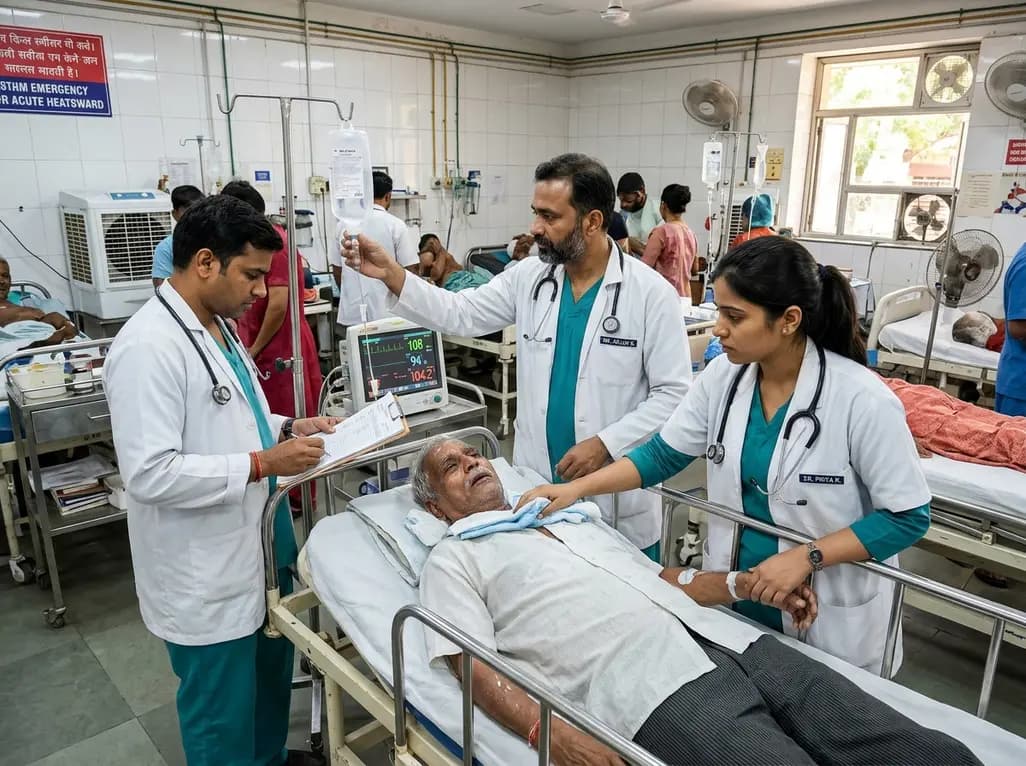
Recent epidemiological data reveals a dramatic surge in summer heat mortality driven by human-induced climate warming. This analysis explores the pathophysiological impacts on cardiac and renal systems, diagnostic dilemmas in death certification, and essential emergency cooling protocols for acute clinical care.
Today

Odisha has established India's first state-level clinical protocol specifically tailored for pregnant women with sickle cell disease. Developed with NHM and UNICEF, the framework provides structured antenatal screening, crisis mitigation, standardized referral pathways, and specialized interdisciplinary care.
Today

India is advancing preventive healthcare by integrating genomics, artificial intelligence, and quantum technologies. With the SANGAM programme sequencing one million Indian genomes, clinicians can unlock personalized therapies, detect cardiometabolic risks early, and curb the burden of diabetes and heart disease.
Today

A randomized controlled trial demonstrates that an eight-week dual-task training intervention significantly improves static and dynamic postural control over standard balance exercises in individuals with chronic ankle instability, addressing critical neurocognitive deficits during athletic and daily activities.
Today

A retrospective cohort study of 7,716 ICU patients from the MIMIC-IV database demonstrates that Gradient Boosting Decision Trees significantly outperform traditional SOFA scores in predicting in-hospital mortality among patients with sepsis and diabetes, with SHAP analysis providing clinical interpretability.
Today
