

Loading, please wait...
Loading, please wait...

For decades, neurodevelopmental pediatrics and child psychiatry operated under the assumption that autism spectrum disorder affects males disproportionately. Epidemiological textbooks frequently cited a male-to-female ratio of four to one. However, contemporary epidemiological investigations indicate that true prevalence ratios are closer to three to one or even two to one. Despite growing awareness, female representation in autism research remains persistently low across clinical studies. This ongoing disparity restricts our scientific understanding of the neurodevelopmental phenotype in women and girls. Consequently, diagnostic tools, early interventions, and behavioral support protocols have largely developed around male-typical presentations. A landmark systematic review and meta-analysis published in 2026 evaluated 250 studies to investigate why this persistent gender gap continues in academic research.
The comprehensive meta-analysis evaluated a randomly selected sample of 250 studies published between 2000 and 2025, encompassing 81,333 participants. Across the entire sampled literature, female participants constituted only 19.3 percent of the study cohorts. Therefore, overall recruitment numbers closely mirror the historic four-to-one ratio rather than reflecting updated prevalence estimates. Nevertheless, the researchers observed a clear temporal trajectory. In studies relying on standardized diagnostic cutoffs, predicted female participation increased from 12.5 percent in 2000 to 19.4 percent in 2025. This gradual upward shift confirms that the academic community increasingly recognizes the necessity of enrolling female participants. However, the overall proportion still falls substantially short of real-world community prevalence. This persistent gap demonstrates that passive awareness alone cannot correct structural recruitment disparities.
Critically, the meta-analysis revealed that diagnostic confirmation procedure serves as the strongest predictor of female recruitment in clinical investigations. Study type and design did not produce statistically significant differences. Instead, the specific protocol utilized to confirm an autism diagnosis determined participant demographics. Studies requiring strict cutoff scores on the Autism Diagnostic Observation Schedule enrolled significantly fewer females. Conversely, research designs accepting community-based clinical diagnoses or comprehensive multi-method evaluations included substantially higher proportions of girls and women. Consequently, methodological choices in the laboratory directly filter out female participants before research even begins. When investigators enforce rigid psychometric thresholds as absolute inclusion criteria, they inadvertently exclude authentic female autistic phenotypes from scientific investigation.
The Autism Diagnostic Observation Schedule represents the gold standard in behavioral neurodevelopmental assessment. However, clinicians must recognize that psychometricians initially developed and validated this instrument using cohorts dominated by boys and young men. As a result, the scoring algorithms prioritize externalizing behaviors and classic male autistic features. These features include overt social aloofness, rigid motor mannerisms, and stereotyped fixations. In contrast, autistic females often exhibit sophisticated social camouflaging and masking behaviors. Girls frequently maintain superficial social reciprocity, utilize compensatory non-verbal gestures, and focus on culturally typical interests such as literature, animals, or psychology. Because the standardized observation schedule does not adequately capture internalizing distress or subtle communicative friction, many autistic females score just below the diagnostic threshold.
These research findings carry profound implications for daily pediatric and psychiatric practice in community clinics. Relying exclusively on single-instrument cutoffs introduces severe diagnostic delay for female patients. In clinical settings, girls who mask their social vulnerabilities frequently receive misdiagnoses of generalized anxiety, borderline personality traits, or major depressive disorder. Moreover, these secondary emotional difficulties often stem directly from the chronic exhaustion of unassisted camouflaging. Clinicians must therefore avoid using structured observational tools as sole arbiters of neurodevelopmental diagnosis. Comprehensive evaluations must incorporate longitudinal developmental histories, collateral parent and teacher accounts, and targeted assessments of sensory sensitivities and compensatory exhaustion. Holistic clinical judgment must guide decisions rather than rigid adherence to a single numerical score.
To establish true parity, academic investigators and practicing specialists must actively reform diagnostic paradigms. Future clinical trials should deliberately implement flexible inclusion criteria that combine expert clinical opinion with validated dimensional scales. Furthermore, psychometricians must refine screening instruments to detect the nuanced female phenotype across different life stages. Clinicians working in outpatient pediatrics should deliberately probe for subtle signs of social masking, intense internalized anxiety, and selective mutism in young girls. Similarly, healthcare institutions must educate primary care doctors on female-specific manifestations of neurodevelopmental diversity. By dismantling procedural barriers, medicine can finally reflect the true diversity of the autistic community.
Historical research predominantly recruited male participants, creating a diagnostic framework centered on male-typical behaviors. Consequently, standard diagnostic tests reflect externalizing features, while girls frequently demonstrate compensatory social camouflaging. This mismatch causes clinicians to overlook autistic females or misdiagnose them with mood disorders, directly limiting their recruitment into formal scientific studies.
The Autism Diagnostic Observation Schedule relies on behavioral scoring criteria calibrated largely on male presentations. Because autistic girls often display stronger superficial communication skills, typical special interests, and effective social imitation, they frequently fail to meet rigid instrument score cutoffs despite experiencing significant daily functional distress and developmental challenges.
Clinicians should never rely solely on a single observational score to exclude autism spectrum disorder in females. Instead, specialists must conduct thorough multidimensional assessments that explore developmental history, social exhaustion, internalizing psychiatric symptoms, sensory sensitivities, and camouflaging behaviors, complementing standardized tools with nuanced clinical judgment.
Disclaimer: This content is for informational and educational purposes only and does not constitute medical advice. It is not intended to substitute for professional medical advice, diagnosis, or treatment. Refer to the latest local and national guidelines for clinical practice.
References

Read summarized clinical updates, watch expert medical content, and earn CME certifications right from your smartphone.
Open your smartphone camera to scan and install.





A meta-analysis of 250 studies reveals that female representation in autism research hovers around 19%, heavily influenced by diagnostic methods. Relying solely on standardized tools like the ADOS restricts female inclusion, underscoring the urgent need for comprehensive clinical evaluations.
Today

Patients with cardiovascular conditions face heightened health risks during extreme heatwaves. Discover findings from the ESC Patient Forum on climate change impacts, medication dilemmas, and actionable strategies for proactive heatwave preparedness in clinical practice.
Today
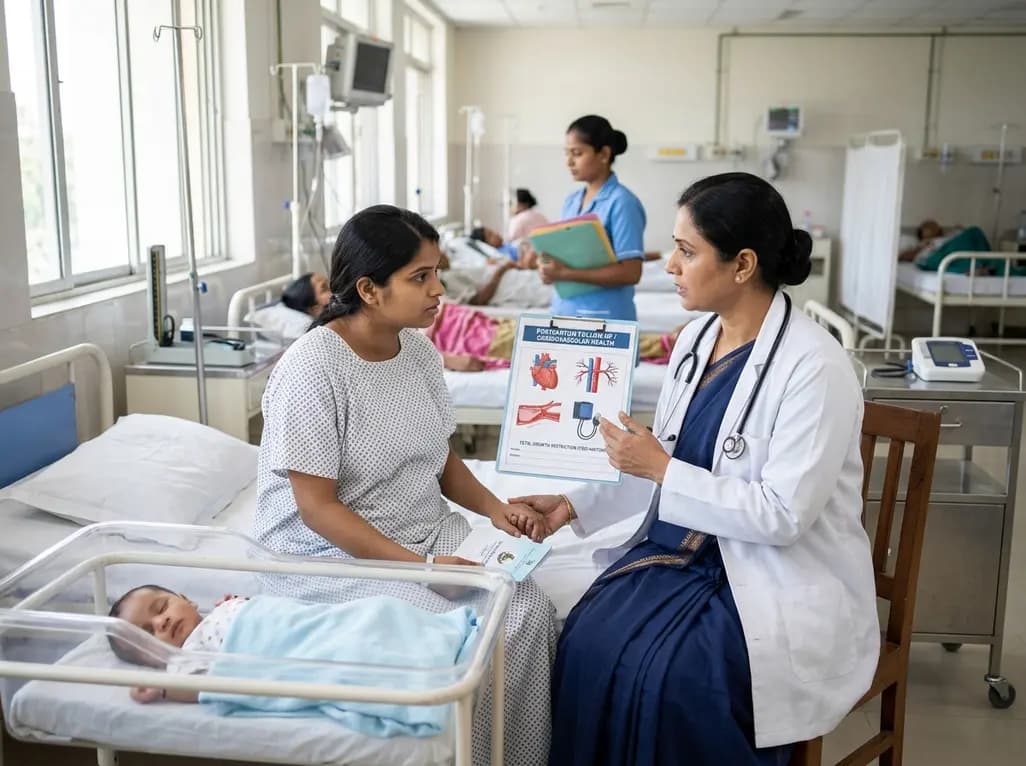
A large cohort study demonstrates that fetal growth restriction in a first pregnancy raises maternal cardiovascular risk within five years postpartum, including elevated rates of heart failure, stroke, and myocardial infarction. Clinicians must initiate proactive postpartum screening and cardiovascular prevention.
Today

Cardiovascular surgery is transforming rapidly across India as tertiary hospitals embrace robotic assistance and AI-driven planning. Delhi-NCR now spearheads this shift, demonstrating higher procedural volumes, lower tissue trauma, and accelerated patient recovery compared to conventional sternotomy approaches.
Today
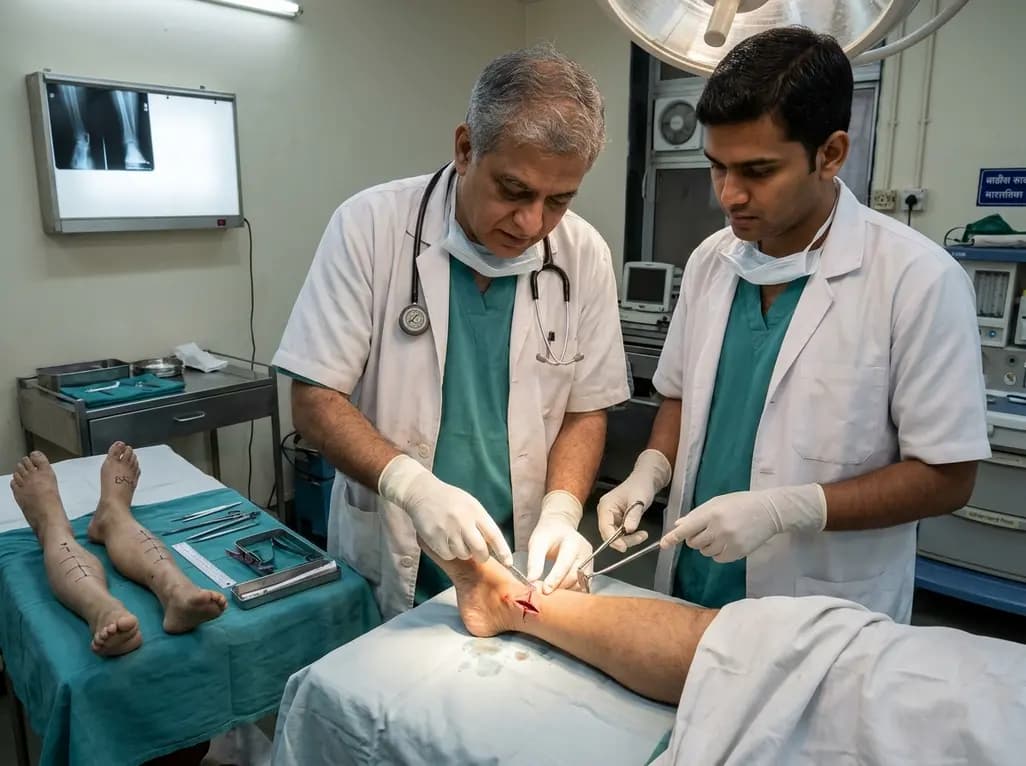
A paired cadaveric study compared triple and quintuple percutaneous Achilles tendon lengthening. While quintuple hemisection showed numerically greater elongation, differences were not statistically significant.
Yesterday
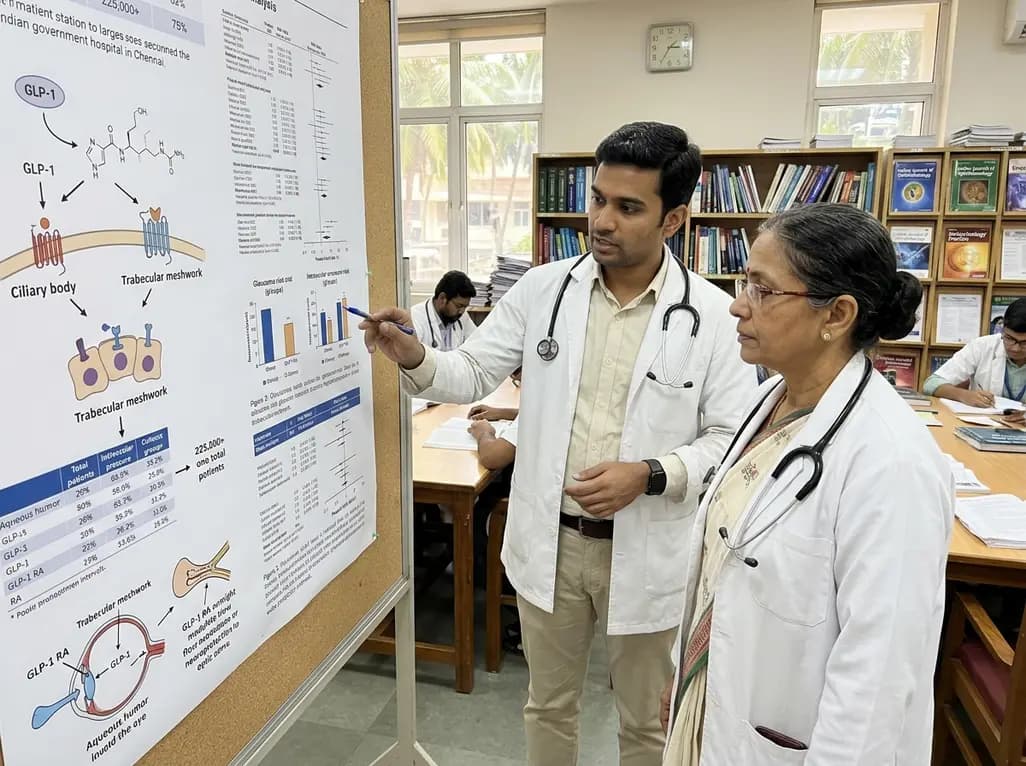
A systematic review and meta-analysis of over 225,000 patients explores whether GLP-1 receptor agonists reduce the risk of glaucoma and ocular hypertension. While pooled data show a 31% lower risk, low certainty and wide prediction intervals urge cautious optimism and further randomized trial evaluation.
Today
