

Loading, please wait...
Loading, please wait...
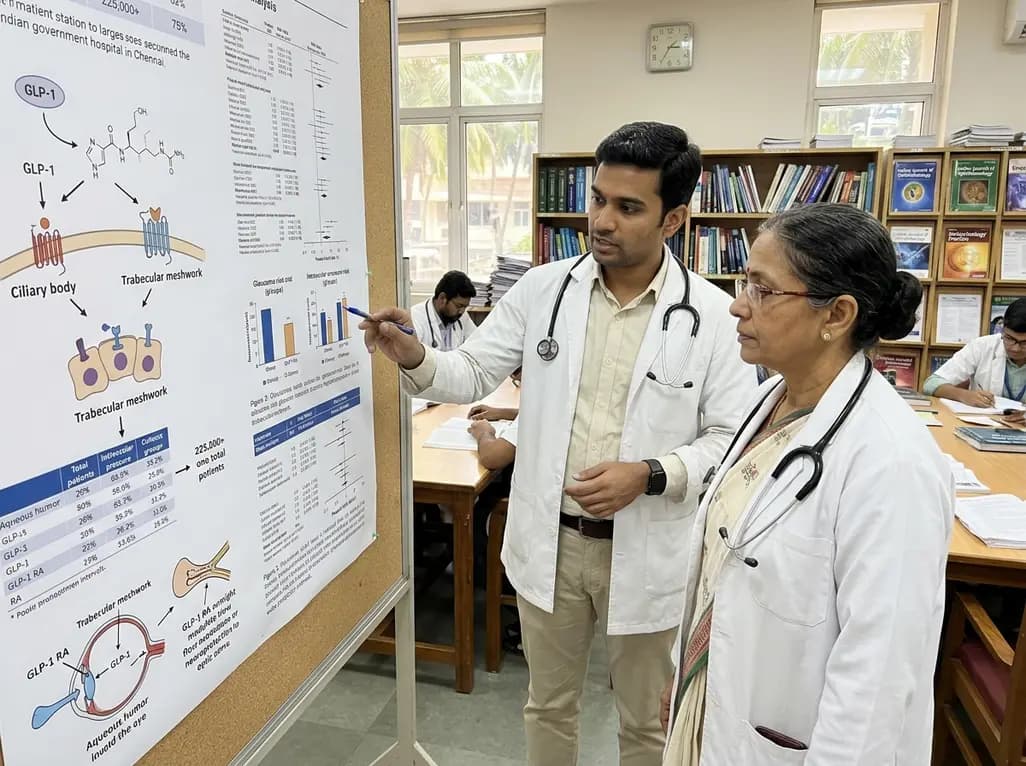
Glaucoma remains the primary cause of irreversible blindness worldwide, creating immense clinical challenges. Because standard ophthalmic treatments exclusively lower intraocular pressure, they do not protect retinal ganglion cells directly. Meanwhile, clinicians prescribe incretin-based medications across millions of individuals for diabetes and obesity management. Recently, scientific interest has focused on GLP-1 receptor agonists glaucoma outcomes and neuroprotective pathways. Glucagon-like peptide-1 receptors exist throughout retinal structures, raising hopes for pressure-independent therapy. However, past meta-analyses produced mixed conclusions by pooling non-equivalent comparators. A newly published systematic review now synthesizes contemporary cohort evidence to clarify this important association.
GLP-1 receptor agonists exert extensive metabolic actions, yet their potential ocular neuroprotection has generated considerable scientific enthusiasm. Incretin receptors populate several retinal tissues, including retinal ganglion cells and surrounding microvasculature. Preclinical studies indicate that these agents mitigate microvascular dysfunction, oxidative stress, and neuroinflammation. Consequently, incretin signaling may interrupt apoptotic cascades that destroy retinal ganglion cells during glaucomatous progression. Moreover, animal models demonstrate that GLP-1 agonists diminish retinal glial activation and preserve axonal integrity. Because standard ocular treatments only address intraocular fluid dynamics, discovering medications that directly shield optic neurons represents a major clinical milestone. Additionally, systemic glycemic stabilization and vascular tone improvement could enhance ocular perfusion. Therefore, researchers hypothesize that incretin pharmacotherapy provides both cellular defense and microvascular support. Although animal findings look promising, translating experimental outcomes into clinical practice requires rigorous human investigations. Determining whether GLP-1 therapies alter glaucoma risk carries profound clinical relevance for endocrinologists, ophthalmologists, and primary care physicians caring for vulnerable patients.
To evaluate human observational data, researchers conducted a comprehensive systematic review adhering strictly to PRISMA 2020 guidelines. They registered their scientific protocol prospectively on PROSPERO to maintain analytical transparency. Furthermore, investigators interrogated multiple medical databases, including PubMed, Europe PMC, and the Cochrane Central Register of Controlled Trials. They updated their literature search through August 2026 to capture the most recent comparative cohort studies. Eligible publications included retrospective cohort designs and nested case-control studies reporting incident glaucoma, ocular hypertension, or intraocular pressure variations. Two independent reviewers screened citations, extracted comparative endpoints, and appraised study quality using the ROBINS-I risk-of-bias tool. Additionally, the team applied DerSimonian-Laird random-effects models alongside the Hartung-Knapp-Sidik-Jonkman adjustment to ensure conservative variance calculations. They also computed a ninety-five percent prediction interval to gauge expected treatment effects in future clinical settings. Finally, the authors implemented the GRADE framework to evaluate evidence certainty. This structured approach allowed investigators to synthesize real-world outcomes across diverse international cohorts.
From an initial pool of over four hundred screened records, investigators identified ten eligible studies. Specifically, they pooled data from six distinct retrospective cohorts encompassing 225,814 matched or analyzed adult patients. The primary pooled analysis revealed that GLP-1RA therapy was associated with a thirty-one percent reduction in recorded glaucoma or ocular hypertension. The pooled hazard ratio reached 0.69, demonstrating a statistically significant protective trend in initial random-effects modeling. Furthermore, the Hartung-Knapp-Sidik-Jonkman confidence interval remained significant, ranging from 0.56 to 0.85. Notably, sensitivity analyses confirmed that this favorable association persisted even after excluding all data derived from the TriNetX network. When investigators restricted their analysis exclusively to open-angle glaucoma outcomes, the hazard ratio remained remarkably stable at 0.66. However, substantial statistical heterogeneity surfaced across the pooled studies, reaching 58.5 percent. Most importantly, the ninety-five percent prediction interval spanned from 0.44 to 1.08, cleanly crossing the line of no effect. Consequently, despite encouraging point estimates, the GRADE assessment classified the overall evidence as low certainty.
Clinicians must interpret these findings with measured caution because observational studies present unavoidable methodological vulnerabilities. First, electronic health records inherently introduce diagnostic coding errors and outcome misclassification. Because many databases rely on billing diagnostic codes rather than standardized visual field metrics, true disease onset often remains obscured. Moreover, confounding by indication poses a substantial hurdle in observational pharmacoepidemiology. Patients prescribed GLP-1 receptor agonists frequently possess distinct metabolic baselines, socioeconomic resources, and clinical monitoring patterns compared to control subjects. Additionally, diabetes status, comparator drug classes, and specific data platforms were completely intertwined across the included cohorts. Consequently, researchers could not isolate the independent influence of glycemic control from direct drug effects. Furthermore, the wide prediction interval suggests that identical prescribing patterns might fail to demonstrate protective effects in differing patient populations. Although real-world evidence provides valuable preliminary insights, it cannot establish definitive biological causation. Therefore, while these meta-analytic findings provide reassuring safety signals, they cannot substantiate clinical claims of therapeutic neuroprotection.
The synthesis of available evidence offers two immediate, practical conclusions for daily patient care. First, the data provide strong reassurance regarding ocular safety. Healthcare providers can comfortably prescribe incretin therapies without fearing an increased risk of ocular hypertension or incident glaucoma. This reassurance proves invaluable, especially amidst heightened awareness of potential visual complications like optic neuropathy during intensive metabolic management. Second, physicians should not prescribe GLP-1 therapies with the primary intention of preventing or managing glaucomatous neuropathy. Because current proof derives solely from low-certainty retrospective observations, conventional ocular hypotensive agents remain the indisputable standard of care. Nevertheless, these encouraging epidemiological trends emphasize the urgent necessity for well-designed, prospective randomized controlled trials. Several ongoing trials are currently evaluating incretin-mediated optic nerve protection under controlled conditions. In the meantime, multidisciplinary collaboration between endocrinologists, general practitioners, and ophthalmologists remains paramount. Clinicians should ensure that high-risk diabetic patients receive routine comprehensive eye examinations. Ultimately, maintaining balanced metabolic control while monitoring intraocular pressures will optimize long-term visual outcomes.
Current epidemiological evidence indicates that GLP-1 receptor agonists do not increase the risk of developing glaucoma or ocular hypertension. In fact, large meta-analyses show that patients taking these medications experience a thirty-one percent lower incidence of recorded glaucoma compared to other agents. Therefore, physicians and patients can feel thoroughly reassured that incretin-based diabetes or weight loss regimens do not accelerate glaucomatous optic nerve damage or elevate intraocular pressure.
Experimental laboratory research demonstrates that glucagon-like peptide-1 receptors are widely distributed within human retinal ganglion cells and ocular microvasculature. When activated, these receptors reduce harmful oxidative stress, suppress microglial neuroinflammation, and prevent cellular apoptosis. Furthermore, improved systemic glycemic control and microvascular endothelial functioning enhance ocular blood flow. Consequently, incretin therapies may offer direct neuroprotective benefits that help preserve retinal nerve fiber layer thickness independently of intraocular pressure reduction.
Patients receiving GLP-1 receptor agonists must continue all scheduled comprehensive eye examinations without interruption. Although observational studies indicate a reduced incidence of glaucoma, the underlying certainty of evidence remains low. Furthermore, individuals with diabetes or obesity face substantial risks of other sight-threatening ocular conditions, including diabetic retinopathy and macular edema. Therefore, routine ophthalmic evaluations remain essential for early detection, intraocular pressure monitoring, and proper visual preservation across all treated patients.
Disclaimer: This content is for informational and educational purposes only and should not be taken as medical advice. Clinical decisions must rely on direct healthcare provider judgment. Refer to the latest local and national guidelines for clinical practice.
References

Read summarized clinical updates, watch expert medical content, and earn CME certifications right from your smartphone.
Open your smartphone camera to scan and install.





A systematic review and meta-analysis of over 225,000 patients explores whether GLP-1 receptor agonists reduce the risk of glaucoma and ocular hypertension. While pooled data show a 31% lower risk, low certainty and wide prediction intervals urge cautious optimism and further randomized trial evaluation.
Today

Discover how high-sensitivity testing detects trace drug residues in athletes, differentiating deliberate doping from unintentional exposure through food, supplements, and environmental contamination.
Today

A large cohort study demonstrates that fetal growth restriction in a first pregnancy raises maternal cardiovascular risk within five years postpartum, including elevated rates of heart failure, stroke, and myocardial infarction. Clinicians must initiate proactive postpartum screening and cardiovascular prevention.
Today
An NHANES analysis reveals that meeting 24-hour movement guidelines significantly lowers the odds of cardiovascular disease, obesity, hypertension, and diabetes among adults with disabilities, emphasizing the power of combined physical activity, sleep, and limited sedentary time.
Today

A paired cadaveric study compared triple and quintuple percutaneous Achilles tendon lengthening. While quintuple hemisection showed numerically greater elongation, differences were not statistically significant.
Today
