

Loading, please wait...
Loading, please wait...

Transitioning back into society after incarceration represents a turbulent period marked by severe social, psychological, and systemic barriers. Clinicians recognize that mental health during reentry demands vigilant, continuous clinical attention rather than one-time evaluations. Historically, correctional systems have treated psychiatric screening as an isolated intake or discharge procedure. However, such static evaluations routinely miss evolving crises that emerge once individuals return home. A prospective cohort study from Santiago, Chile, provides essential empirical insights into how psychological distress unfolds over time. Tracking formerly incarcerated women across their first year of release revealed critical patterns in psychiatric symptoms, suicide risk, and addiction. Consequently, these findings offer a vital roadmap for healthcare providers striving to bridge gaps in continuity of care.
Female prisoners represent a uniquely vulnerable yet frequently overlooked demographic within carceral systems worldwide. Although women constitute a minority of the global prison population, their incarceration rates have climbed dramatically in recent decades. Furthermore, justice-involved women experience substantially higher rates of psychiatric morbidity and trauma compared to their male peers. In this prospective investigation, researchers recruited two hundred adult women who completed custodial sentences in Santiago, Chile. The investigators conducted structured clinical evaluations across five distinct waves: immediately before release, and then at one week, two months, six months, and twelve months post-release. Specifically, researchers measured overall psychological distress with the Symptom Checklist 90-Revised (SCL-90-R) alongside formal assessments for substance dependence and suicidal behavior. Consequently, this longitudinal framework allowed investigators to observe temporal fluctuations that single-point assessments consistently fail to capture. Moreover, the study focused on understanding how prior adverse life events influence successful reintegration. Therefore, the findings illuminate critical clinical targets for healthcare teams managing complex female patients returning to vulnerable social environments.
To decipher patterns of post-release psychiatric distress, the researchers performed latent class growth analysis on the Global Severity Index. Interestingly, the analytical model differentiated the women into three distinct trajectory groups over the twelve-month observation period. The vast majority of participants, accounting for 85.8 percent of the cohort, maintained a consistently low level of symptom severity. In contrast, 7.4 percent of the women exhibited persistent, severe psychological distress across every evaluation interval. Furthermore, an alarming 6.8 percent of participants belonged to an increasing symptom trajectory group. Members of this worsening subset left prison with mild symptoms but experienced sharp escalations in distress as community reintegration pressures accumulated. Thus, cross-sectional discharge screenings would categorize these individuals as clinically stable, dangerously obscuring their impending decompensation. In addition, women with escalating distress reported substantial functional impairment in daily living. Therefore, clinicians must recognize that baseline stability inside a structured correctional facility does not guarantee post-release resilience. Routine longitudinal reassessments during the initial months of freedom remain essential to identify deteriorating psychological health.
In addition to general distress trajectories, the study revealed alarming rates of self-harm and addictive disorders. Overall, nearly one in five women—specifically 19.3 percent of the entire cohort—attempted suicide during the one-year follow-up period. This staggering statistic underscores the profound despair and crisis vulnerability that formerly incarcerated women confront during community reentry. Similarly, substance use dependence presented an enduring clinical challenge throughout the study period. Exactly 18.9 percent of the women met formal diagnostic criteria for substance dependence both at baseline and at twelve months. Consequently, substance misuse remained chronic and unremitting for nearly one-fifth of the participants, driving further functional decline. Furthermore, statistical analysis demonstrated that persistent substance dependence closely correlated with repeated arrests and secondary legal entanglements. Women coping with untreated addiction also experienced markedly elevated rates of physical victimization following release. Because substance dependence and suicidal ideation frequently co-occur, they create a lethal combination of clinical vulnerability. Therefore, addiction medicine specialists and mental health providers must prioritize integrated dual-diagnosis treatment protocols during the immediate post-release window.
Multivariate regression analyses revealed potent structural and personal predictors that drove negative psychological outcomes. Specifically, the number of prior criminal convictions strongly predicted higher psychiatric symptom severity, repeated suicide attempts, and substance dependence. Furthermore, past and ongoing experiences of victimization emerged as a devastatingly uniform correlate across all measured endpoints. Incarcerated women frequently share extensive histories of intimate partner violence, severe childhood neglect, and physical abuse. When these individuals return to unstable environments, revictimization often triggers acute trauma reactivation and severe affective dysregulation. Moreover, the social dislocation caused by imprisonment frequently separates mothers from their children and destroys informal support systems. Consequently, the compounding stressors of economic deprivation, interpersonal violence, and legal precarity rapidly overwhelm coping reserves. Therefore, psychiatric interventions that ignore the reality of interpersonal trauma will likely fail to achieve durable recovery. Healthcare professionals must implement trauma-informed care frameworks that address personal safety alongside symptom management. By validating these traumatic realities, clinicians can better support emotional stabilization and prevent destructive behavioral spirals.
Despite the extraordinary burden of psychiatric illness and suicidal behavior, healthcare engagement remained profoundly inadequate. Remarkably, ten percent or fewer of the women received formal mental health services at any measurement point during the entire year. This pervasive service void exposes severe systemic fissures between correctional institutions and community healthcare networks. Although many women desperately required clinical support, structural barriers prevented them from accessing appropriate medical resources. For instance, formerly incarcerated individuals frequently lack health insurance, financial resources, and reliable transportation. In addition, severe social stigma surrounding both incarceration and addiction discourages women from seeking timely medical assistance. Bureaucratic hurdles within public healthcare systems further exacerbate non-attendance, leaving vulnerable patients completely unassisted during acute crises. Consequently, the disconnect between immense clinical need and minimal service uptake represents a catastrophic failure of public health coordination. To resolve this crisis, correctional systems must replace static evaluations with dynamic, longitudinal risk monitoring. In addition, primary care physicians must adopt trauma-informed communication and partner with peer navigators to sustain post-release psychiatric engagement.
Symptoms often worsen because women encounter intense community stressors, including economic instability, social stigma, housing insecurity, and trauma reactivation. Furthermore, the abrupt loss of carceral structure combined with unaddressed substance dependence can trigger severe psychological distress, especially when community mental healthcare resources remain inaccessible or uncoordinated.
Cross-sectional evaluations only capture psychological symptoms at a single moment within a highly controlled prison environment. Consequently, these static screenings fail to detect women who appear stable before discharge but subsequently experience escalating distress, acute substance relapse, or emergent suicidal behavior once facing chaotic post-release real-world conditions.
Community physicians should proactively screen for carceral history, interpersonal trauma, and substance use disorders using compassionate, non-judgmental communication. Furthermore, clinicians must coordinate integrated dual-diagnosis treatment, establish direct links to community social services, and schedule frequent follow-up consultations during the critical initial twelve months following release.
Disclaimer: This content is for informational and educational purposes only... Refer to the latest local and national guidelines for clinical practice.
References

Read summarized clinical updates, watch expert medical content, and earn CME certifications right from your smartphone.
Open your smartphone camera to scan and install.





A prospective cohort study reveals longitudinal mental health trajectories, suicide attempt rates, and persistent substance dependence among women after prison release, highlighting severe healthcare utilization gaps and the urgent need for continuous community-based mental health monitoring.
Today

The 2025 Australian meningococcal surveillance report shows a 13% decline in invasive meningococcal disease notifications to 118 cases. Genogroup B accounted for 82.2% of typed infections, predominantly impacting infants and young adults, highlighting critical vaccination and rapid diagnostic imperatives.
Today

Doctors at AIIMS New Delhi have achieved a historic milestone by performing India's first open prenatal myelomeningocele repair on a 25-week unborn fetus. This landmark multidisciplinary procedure provides vital neuroprotective benefits, lowers hydrocephalus risks, and transforms maternal-fetal medicine nationwide.
Today

The ACE-PAS registry evaluated 21,612 patients fitted with the ASSURE wearable cardioverter defibrillator. The study demonstrated a 100% ventricular arrhythmia conversion rate, an inappropriate shock incidence of 0.0065 per patient-month, and high daily compliance of 23.1 hours, confirming real-world safety.
Today
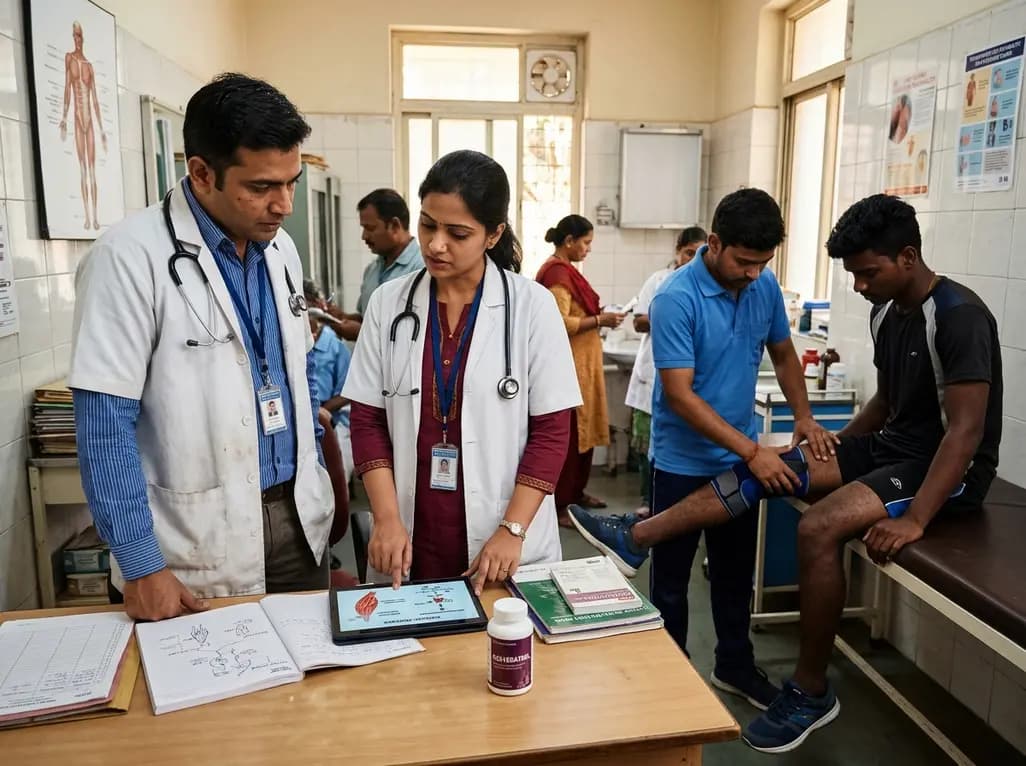
A clinical overview of resveratrol supplementation in mitigating exercise-induced muscle damage. This narrative review explores physiological mechanisms, reductions in soreness markers like creatine kinase, dosage strategies, and bioavailability enhancements for sports medicine and nutrition practitioners.
Today

Childhood insulinoma is a rare cause of recurrent hyperinsulinemic hypoglycemia that often eludes early diagnosis. Advanced GLP-1 receptor-targeted PET/CT imaging using 68Ga-exendin-4 complements anatomic MRI to localize occult pancreatic lesions, facilitating focused, curative surgical enucleation.
Today
