.webp&w=384&q=75)

Loading, please wait...
Loading, please wait...

As children transition through their elementary school years, they encounter increasingly complex social and academic environments. Consequently, many students begin to experience a psychological phenomenon known as fear of negative evaluation. This condition involves a persistent dread regarding the potential disapproval or unfavorable judgment of others. It acts as a significant threat to psychological well-being and can manifest in academic life, affecting cognitive, emotional, and behavioral growth. Therefore, understanding the underlying structure of these fears is essential for medical professionals and educators who aim to support healthy development. Recent research using network analysis has provided deeper insights into how this fear integrates with a child's internal self-confidence and their external family environment. By examining 734 elementary school students, experts have mapped the specific symptoms that define this distress. This approach allows for a more nuanced understanding of pediatric mental health within the Indian context, where academic pressure and social standing are often prioritized. Ultimately, addressing these concerns early can prevent long-term psychiatric comorbidities.
The study specifically identified several core symptoms that serve as the foundation for fear of negative evaluation in younger populations. Notably, children frequently reported a profound fear of not being recognized or validated by their peers and authority figures. Additionally, they often expressed worry that others would actively search for faults in their performance or character. When interacting with others, these students frequently find themselves preoccupied with how they are perceived in the moment. Furthermore, a constant anxiety regarding the overall impression they leave on others remains a dominant feature of their social experience. These symptoms are not merely isolated thoughts; rather, they form a tightly connected network of distress that can paralyze a child's social initiative. Because these core symptoms are so central, they often drive other secondary behaviors, such as social withdrawal or academic underachievement. Clinicians should observe these specific worries during pediatric consultations to identify students at risk. Recognizing these patterns early allows for targeted interventions that address the most central fears first, leading to more efficient recovery outcomes for the child.
Self-confidence plays a pivotal role in how a child navigates the challenges of social evaluation. The research highlights that specific internal factors, such as positive psychological capital and self-doubt, act as critical bridges between a child's self-perception and their fear of negative evaluation. For instance, children with high levels of self-doubt are significantly more likely to interpret neutral social cues as negative judgments. Conversely, positive psychological capital, which includes resilience and optimism, serves as a protective buffer. However, when self-concern bias becomes dominant, the child focuses excessively on their own perceived inadequacies. This internal focus further reinforces the fear of being judged, creating a self-sustaining cycle of anxiety. Medical professionals must understand that self-confidence is not a static trait but a dynamic component of a child's psychological network. Therefore, strengthening a child's belief in their own capabilities can directly reduce the intensity of their social fears. By targeting bridge nodes like self-doubt, therapists can effectively disrupt the connection between low self-esteem and social anxiety, fostering a more robust and confident psychological profile in elementary students.
A child's home environment serves as the primary lens through which they view the world and themselves. The network analysis revealed that family atmosphere is inextricably linked to how children process fear of negative evaluation. Positive childhood experiences within the family, such as emotional support and open communication, are vital for developing social resilience. In contrast, negative factors like family violence or a high-conflict atmosphere act as significant bridge nodes that increase a child's vulnerability to social anxiety. Specifically, children who experience instability or criticism at home are more likely to project these expectations onto their school environment. Consequently, they become hyper-vigilant toward any sign of disapproval from teachers or peers. This suggests that a child's fear in the classroom is often a reflection of their security, or lack thereof, at home. Therefore, any clinical strategy to address social fears in children must involve a thorough assessment of the family dynamic. Supporting parents in creating a nurturing and non-judgmental atmosphere can significantly alleviate the psychological burden on the student, leading to better social and emotional integration.
The use of network analysis in this research provides a modern framework for understanding complex psychological interactions. Instead of viewing fear of negative evaluation as a single diagnosis, this method treats it as a system of interacting symptoms and environmental factors. One of the most important findings involves the identification of bridge nodes. These are specific variables, such as family violence or self-concern bias, that connect different clusters of the network. For example, a bridge node might connect the 'family atmosphere' cluster to the 'social anxiety' cluster. By identifying these bridges, clinicians can pinpoint the most effective areas for intervention. If a bridge node like self-doubt is successfully addressed, the entire network of fear may begin to deconstruct. This approach is particularly useful in pediatric care, where symptoms are often multifaceted and influenced by various external pressures. Understanding these connections helps healthcare providers move beyond symptomatic treatment toward a more holistic and systemic form of care. It also underscores the importance of coordinated efforts between families and schools to target these influential nodes effectively.
In the Indian context, where the education system is highly competitive, the prevalence of fear of negative evaluation is a significant concern for pediatricians and family physicians. Addressing this issue requires a multi-tiered approach involving the family, school, and community. First, schools should be encouraged to foster environments that prioritize effort over perfection, thereby reducing the perceived threat of failure. Second, pediatricians can play a vital role by screening for core symptoms during routine check-ups and educating parents on the impact of family atmosphere. Moreover, group therapy sessions that focus on building positive psychological capital can help students develop the resilience needed to face social evaluations. Transitioning from a culture of criticism to one of constructive feedback is essential. Furthermore, clinicians should remain mindful of the bridge nodes identified in recent studies, such as the destructive impact of family violence on a child's social confidence. By implementing these coordinated strategies, we can help elementary students develop a healthier relationship with social evaluation. Ultimately, this leads to improved psychological well-being and a more successful academic journey for the younger generation.
In elementary students, this fear typically manifests as a constant worry about being judged or found lacking by peers and teachers. Children may avoid raising their hands in class, fear being the center of attention, or express significant anxiety about not being liked. These core symptoms often lead to social withdrawal or a repetitive need for reassurance from adults regarding their performance or social standing.
Bridge nodes are critical connection points between different psychological domains, such as family environment and personal self-confidence. In this study, factors like family violence and self-doubt were identified as bridges. This means they are the primary pathways through which family stress translates into social anxiety. Targeting these specific nodes in therapy can effectively disrupt the spread of anxiety across the child's entire psychological network.
Parents can help by fostering a supportive family atmosphere that prioritizes emotional safety over academic or social perfection. Encouraging positive childhood experiences and minimizing criticism helps build a child's resilience. Additionally, parents should be mindful of how their own reactions to a child's mistakes can influence the child's self-perception. Creating a non-judgmental home environment reduces the likelihood of the child developing a persistent fear of external evaluation.
Disclaimer: This content is for informational and educational purposes only and does not constitute professional medical advice, diagnosis, or treatment. Always seek the advice of your physician or other qualified health provider with any questions you may have regarding a medical condition. Refer to the latest local and national guidelines for clinical practice.
References
Yan J et al. The core symptoms of elementary school students' fear of negative evaluation and its network relationship with self-confidence and family atmosphere. Acta Psychol (Amst). 2026 Jul 03. doi: undefined. PMID: 42398156.
"
Read summarized clinical updates, watch expert medical content, and earn CME certifications right from your smartphone.
Open your smartphone camera to scan and install.





A study on 734 elementary students identifies core symptoms of fear of negative evaluation (FNE) and its link to family atmosphere and self-confidence. Discover key bridge nodes like family violence and self-doubt that offer targets for clinical and educational interventions.
3 months ago

Explore vital recurrent stroke predictors in lacunar stroke patients managed with intensive blood pressure lowering. This analysis examines trial findings from SPS3 to uncover residual vascular risks, metabolic factors, and targeted secondary prevention strategies for high-risk neurological patients.
Today
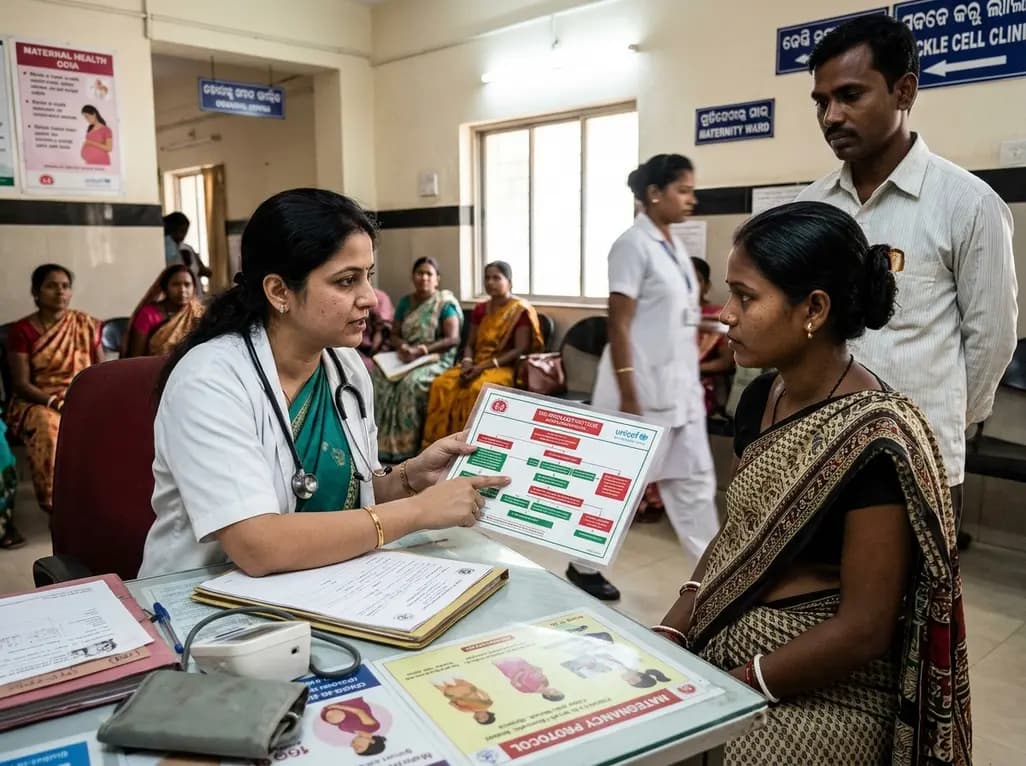
Odisha has established India's first state-level clinical protocol specifically tailored for pregnant women with sickle cell disease. Developed with NHM and UNICEF, the framework provides structured antenatal screening, crisis mitigation, standardized referral pathways, and specialized interdisciplinary care.
Today

The Directorate General of Health Services directs Indian states to halt the hazardous reuse and reprocessing of single-use medical devices. Discover regulatory implications under the Drugs and Cosmetics Act, critical infection risks, legal liabilities, and operational changes required across clinical specialties.
Today

Mitochondria-targeted nanoparticles self-assembled from EGCG and L-glutamic acid effectively restore mitochondrial homeostasis, suppress synovial inflammation, and attenuate chondrocyte senescence in osteoarthritis, offering a promising disease-modifying nanotherapy.
Today

India is advancing preventive healthcare by integrating genomics, artificial intelligence, and quantum technologies. With the SANGAM programme sequencing one million Indian genomes, clinicians can unlock personalized therapies, detect cardiometabolic risks early, and curb the burden of diabetes and heart disease.
Today
