.webp&w=384&q=75)

Loading, please wait...
Loading, please wait...
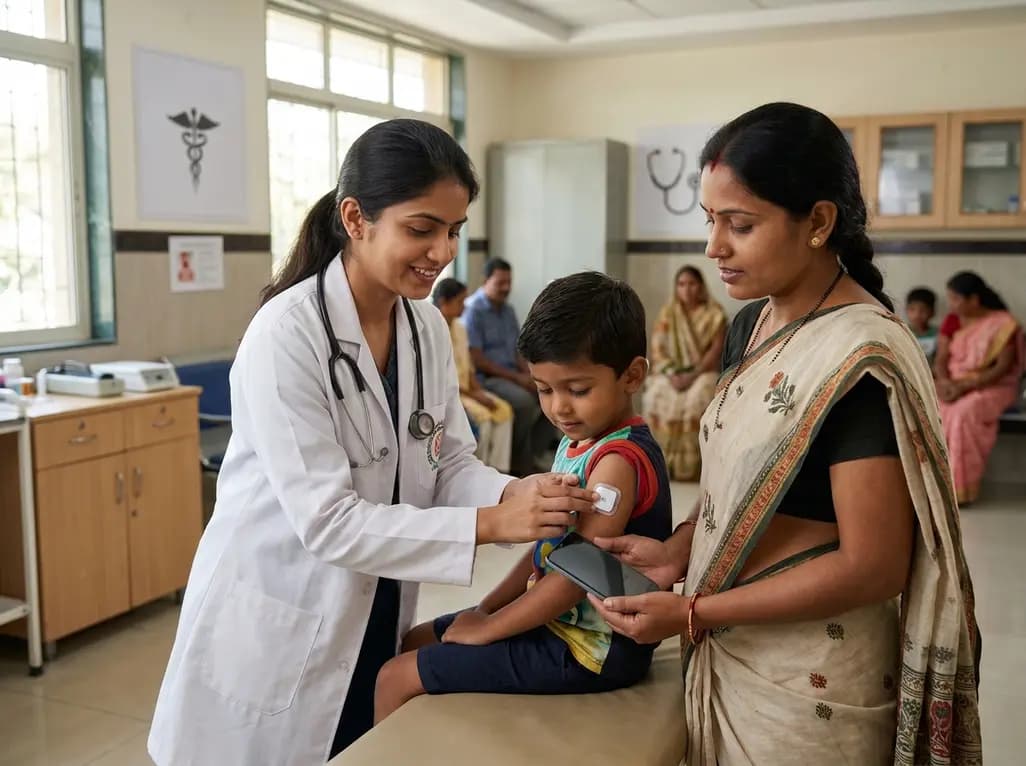
The U.S. Food and Drug Administration (FDA) has cleared the first OTC glucose monitor for pediatric use. Specifically, the regulatory agency expanded the authorization of Dexcom's Stelo Glucose Biosensor System. Consequently, the device is now available for children aged two years and older who do not use insulin. Previously, the FDA approved Stelo only for adults aged 18 and older in March 2024. Therefore, this decision marks a significant milestone in accessible pediatric healthcare.
The Stelo system uses a wearable sensor and a smartphone app to measure glucose levels. Furthermore, the device updates readings and tracks trends every 15 minutes. Each sensor lasts up to 15 days under normal conditions. However, the FDA noted that sensor wear time may be shorter in children due to physiological and behavioral reasons. Consequently, parents must monitor the adhesive and placement of the sensor regularly.
This device helps children and their caregivers understand how lifestyle choices affect blood sugar. Specifically, it reveals the immediate impacts of meals, exercise, and daily routines. Importantly, pediatric patients must use this device under direct adult supervision. Healthcare providers should advise parents to consult a professional before altering any medications. Moreover, the device is not suitable for individuals with problematic low blood sugar because it lacks hypoglycemia alerts.
Q1: Who is eligible to use the pediatric Dexcom Stelo system?
The device is cleared for children aged two years and older who do not use insulin.
Q2: Does the Stelo glucose monitor alert users about low blood sugar?
No. The device does not alert users about problematic low blood sugar.
Q3: How long does each Stelo sensor last?
Each sensor lasts up to 15 days. However, pediatric wear time may be shorter.
Disclaimer: This content is for informational and educational purposes only. It does not constitute medical advice or replace professional judgment. Refer to the latest local and national guidelines for clinical practice.
References

Read summarized clinical updates, watch expert medical content, and earn CME certifications right from your smartphone.
Open your smartphone camera to scan and install.





The FDA has cleared Dexcom's Stelo Glucose Biosensor System as the first over-the-counter continuous glucose monitor for pediatric use. The device is approved for children aged two and older who do not use insulin, helping caregivers track real-time glucose trends.
4 months ago

Novel diimide and hydrazone scaffolds, particularly compound #C4, synergistically reactivate latent HIV-1 when combined with JQ1 or PKC activators. Demonstrating donor-matched proviral transcription ex vivo and non-canonical signaling, these findings advance shock and kill strategies toward reservoir eradication.
Today

A comparative cohort study evaluates vNOTES vs TLH hysterectomy for benign conditions, demonstrating shorter operative duration, faster return to daily activities, and equivalent female sexual function scores without increased dyspareunia.
Today

Review how tailored exercise programs benefit frail older patients with heart failure. Explore pathophysiological mechanisms, individualized training prescriptions, and strategies to overcome adherence barriers in clinical practice.
Yesterday

This comparative study evaluates posterior labral tears with and without glenohumeral instability, highlighting distinct demographic patterns, MRI underestimation in stable shoulders, and successful arthroscopic repair outcomes.
Yesterday

A clinical study demonstrates that early intervention with tocilizumab, either as monotherapy or bridged with corticosteroids, achieves significant proptosis reduction and resolves active inflammation in treatment-naive thyroid eye disease.
Today
