.webp&w=384&q=75)

Loading, please wait...
Loading, please wait...

Postoperative gastrointestinal complications present a significant challenge in cardiothoracic care. A recent large-scale observational study investigated exploratory laparotomy cardiac surgery outcomes among 17,362 patients. This research, published in 2026, aimed to clarify the incidence and risk factors associated with this rare but often fatal event. Although only 0.5% of patients required an exploratory laparotomy, the clinical impact was profound. Consequently, identifying high-risk individuals early remains a priority for surgical teams and intensivists.
The study utilized multivariable logistic regression to isolate specific predictors. Preoperative factors play a major role in determining patient vulnerability. Notably, a history of chronic dialysis, previous cerebrovascular accidents, and the use of a preoperative intra-aortic balloon pump (IABP) showed strong associations with the need for abdominal surgery. Furthermore, white race appeared as a demographic risk factor in this specific cohort. Additionally, the intensity of postoperative care served as a significant indicator. Patients requiring a higher total number of pressors or specific rescue therapies, such as methylene blue or hydroxocobalamin, faced a greater risk of abdominal complications.
The outcomes for patients undergoing an exploratory laparotomy were significantly worse than those who did not. Specifically, the surgery group experienced higher rates of operative mortality, stroke, and sepsis. They also required prolonged ventilation and more frequent dialysis initiation. Most importantly, the research identified exploratory laparotomy as an independent risk factor for operative mortality. These patients faced an odds ratio of 3.67 compared to their peers. Long-term survival also suffered significantly. The five-year survival rate for the laparotomy group was only 58.9%, compared to 84.4% in the no-laparotomy group. Therefore, surgeons must maintain high vigilance when managing patients with these identified risk profiles.
Based on a study of over 17,000 patients, the incidence is very low, occurring in approximately 0.5% of cases. Despite being rare, it is associated with high morbidity and nearly fourfold mortality risk.
The strongest predictors include the postoperative use of multiple vasopressors, the need for rescue therapies like methylene blue, and preoperative factors such as chronic dialysis or history of a stroke.
Disclaimer: This content is for informational and educational purposes only. It does not constitute medical advice or a professional physician-patient relationship. Always seek the advice of a qualified healthcare provider regarding any medical condition. Refer to the latest local and national guidelines for clinical practice.
References

Read summarized clinical updates, watch expert medical content, and earn CME certifications right from your smartphone.
Open your smartphone camera to scan and install.





A study of 17,362 patients identifies risk factors like vasopressor use and dialysis for exploratory laparotomy after cardiac surgery, impacting survival....
6 months ago
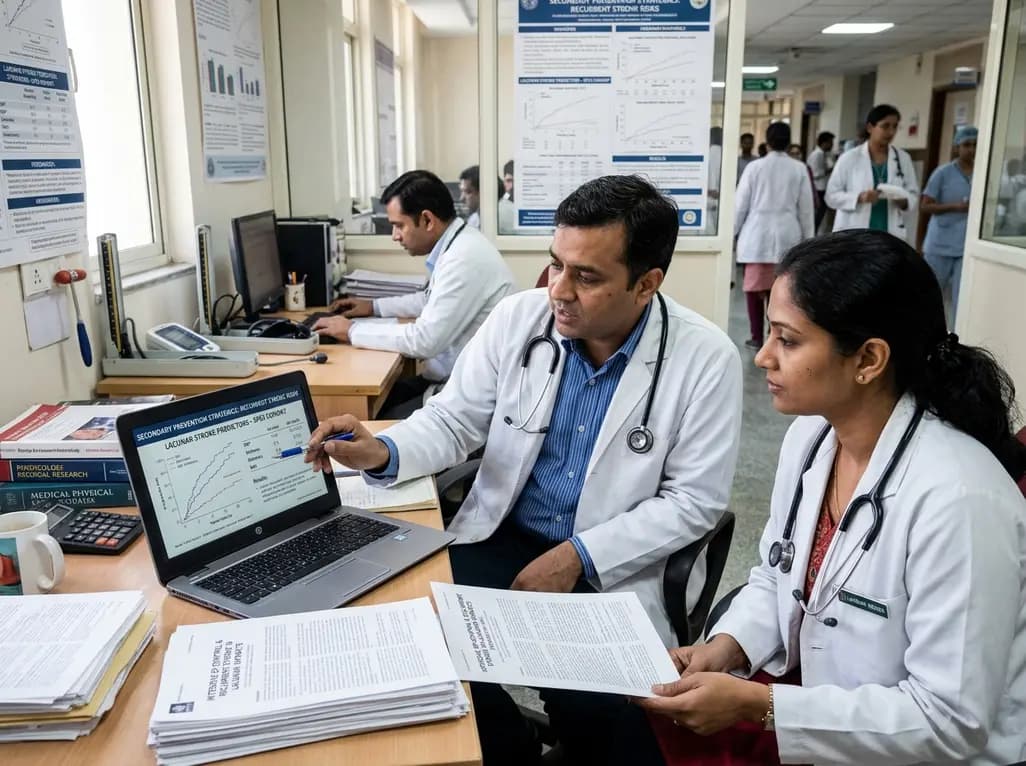
Explore vital recurrent stroke predictors in lacunar stroke patients managed with intensive blood pressure lowering. This analysis examines trial findings from SPS3 to uncover residual vascular risks, metabolic factors, and targeted secondary prevention strategies for high-risk neurological patients.
Today

Odisha has established India's first state-level clinical protocol specifically tailored for pregnant women with sickle cell disease. Developed with NHM and UNICEF, the framework provides structured antenatal screening, crisis mitigation, standardized referral pathways, and specialized interdisciplinary care.
Today

The Directorate General of Health Services directs Indian states to halt the hazardous reuse and reprocessing of single-use medical devices. Discover regulatory implications under the Drugs and Cosmetics Act, critical infection risks, legal liabilities, and operational changes required across clinical specialties.
Today

Mitochondria-targeted nanoparticles self-assembled from EGCG and L-glutamic acid effectively restore mitochondrial homeostasis, suppress synovial inflammation, and attenuate chondrocyte senescence in osteoarthritis, offering a promising disease-modifying nanotherapy.
Today

India is advancing preventive healthcare by integrating genomics, artificial intelligence, and quantum technologies. With the SANGAM programme sequencing one million Indian genomes, clinicians can unlock personalized therapies, detect cardiometabolic risks early, and curb the burden of diabetes and heart disease.
Today
