.webp&w=384&q=75)

Loading, please wait...
Loading, please wait...

Oncologists frequently face significant challenges when assessing individual disease trajectories in men undergoing therapy for malignant prostatic neoplasms. Reliably predicting progression-free survival prostate cancer remains crucial for timing therapeutic switches and counseling patients. However, conventional statistical instruments often fail to capture complex, nonlinear interactions across longitudinal laboratory and clinical parameters. Modern artificial intelligence algorithms offer promising capabilities to address these historical shortcomings. A recent cohort investigation evaluated explainable machine learning architectures to deliver reliable, time-dependent individual risk stratification.
Traditional prognostic tools in oncology rely heavily on Cox proportional hazards regression and static risk calculators. Although these tools provide foundational insights, they assume linear relationships and constant hazard ratios over extended durations. Consequently, they struggle to accommodate dynamic physiological variations and irregular laboratory trends across multi-year follow-up intervals. Furthermore, standard nomograms frequently omit routine systemic biomarkers, focusing almost exclusively on baseline prostate-specific antigen, tumor stage, and histological Gleason scores.
In real-world oncology practice, patients present with heterogeneous comorbidities and varying therapeutic tolerances. Clinicians frequently observe that conventional survival models fail to alert them to insidious biochemical or radiographic progression until substantial disease burden emerges. Moreover, missing longitudinal entries in patient records routinely undermine classic multivariable regression. Because traditional statistical tools cannot adequately model multi-dimensional interactions among evolving hematological indices and treatment categories, clinicians require more robust analytical frameworks.
To overcome these prognostic limitations, investigators conducted an in-depth retrospective cohort study using nationwide data from the Brunei Cancer Centre. The research team harmonized comprehensive clinical, treatment, and laboratory metrics across 212 patients representing 478 longitudinal observations collected between 2018 and 2024. Subsequently, they applied extremely randomized trees to resolve missing variables without introducing systemic bias. To capture intricate temporal dependencies, researchers integrated a recurrent autoencoder that generated condensed latent representations of patient trajectories.
Using this processed dataset, the researchers evaluated four survival architectures: traditional Cox proportional hazards, random survival forest, gradient boosting survival, and deep neural network survival models. The primary endpoint centered on predicting progression-free survival prostate cancer across multi-year therapeutic windows. Model discrimination and calibration underwent rigorous validation using time-dependent area under the receiver operating characteristic curve, Harrell concordance index, and the integrated Brier score. This methodical design ensured transparent comparisons between classical biostatistics and modern machine learning algorithms.
The experimental findings revealed striking performance discrepancies across the competing prognostic frameworks. Specifically, the random survival forest model demonstrated outstanding discriminative power and balanced calibration. It achieved an exceptional Harrell concordance index of 0.906. Furthermore, its time-dependent area under the curve reached 0.941 at 4 years and 0.917 at 5 years, paired with an integrated Brier score of 0.0698, indicating minimal prediction error.
In stark contrast, the traditional Cox proportional hazards model exhibited poor predictive capability, yielding a concordance index of merely 0.531. Although its area under the curve reached 0.706 at 4 years and 0.833 at 5 years, its overall discriminative reliability remained deficient. Meanwhile, the deep neural survival architecture achieved an area under the curve of 0.941 at 4 years and a concordance index of 0.719. Similarly, gradient boosting survival displayed moderate utility with a concordance index of 0.844. Ultimately, tree-based ensemble methods proved far superior for deciphering complex oncological trajectories.
Historically, clinicians have resisted adopting artificial intelligence systems due to the uninterpretable "black box" nature of advanced algorithms. To resolve this critical barrier, researchers implemented Shapley additive explanations, commonly known as SHAP analysis. This mathematical method assigns exact contribution values to every input variable, illustrating precisely how specific clinical metrics drive individualized progression hazards.
Interestingly, the SHAP interpretation uncovered several systemic and metabolic parameters that strongly dictated disease progression. Rather than relying solely on conventional tumor metrics, the model highlighted serum sodium levels, alanine aminotransferase, mean corpuscular hemoglobin, and platelet counts as dominant predictors. In addition, specific systemic therapy regimens significantly shifted baseline hazard curves. Consequently, clinicians gain clear biological rationales for each algorithmic forecast, which dispels skepticism and promotes trust during collaborative multidisciplinary tumor board evaluations.
These findings hold profound practical implications for clinicians managing prostate cancer across diverse healthcare environments, including India. Prostatic adenocarcinoma cases continue to increase across urban and semi-urban centers in India, with many patients presenting at advanced stages. Because resource allocation, financial constraints, and varied treatment protocols influence clinical outcomes, accurate risk stratification tools become essential to optimize sequential therapy.
Furthermore, the reliance on affordable, ubiquitous routine blood tests—such as complete blood counts, hepatic panels, and basic electrolytes—makes this predictive approach viable in resource-constrained environments. Clinicians do not need to mandate expensive, inaccessible genomic sequencing panels to attain high prognostic accuracy. However, before deploying such algorithms into routine Indian hospital workflows, oncologists must perform prospective validation across diverse, multi-institutional regional cohorts. Establishing algorithmic generalizability ensures that variations in patient genetics, concurrent metabolic disorders, and local treatment patterns do not distort survival estimates.
Machine learning models analyze complex, nonlinear relationships among diverse clinical and laboratory parameters without assuming constant hazard ratios over time. By incorporating longitudinal observations and recurrent autoencoders, ensemble models capture dynamic physiological trends that traditional linear nomograms overlook. Consequently, tree-based algorithms achieve substantially higher discrimination and lower prediction error across multi-year intervals.
The SHAP interpretability analysis identified serum sodium, alanine aminotransferase, mean corpuscular hemoglobin, and platelet counts as paramount drivers of progression risk alongside specific treatment classifications. These routine hematological and biochemical markers reflect systemic inflammation, nutritional status, and organ reserve, demonstrating that overall physiological resilience strongly interacts with prostate cancer biology.
Although the random survival forest model achieved high statistical accuracy, it originated from a single-center retrospective cohort in Brunei Darussalam. Therefore, researchers must conduct external prospective validation across larger multi-institutional cohorts. Furthermore, software integration into hospital electronic medical records and regulatory clearances remain necessary steps before routine clinical adoption can safely proceed.
Disclaimer: This content is for informational and educational purposes only. It is not intended to replace professional medical advice, diagnosis, or treatment. Always seek the advice of a qualified healthcare provider with any questions you may have regarding a medical condition. Clinicians should use their professional judgment and consider individual patient factors when making treatment decisions. Refer to the latest local and national guidelines for clinical practice.
References
Tun HM et al. Explainable Machine Learning-Based Prediction of Progression-Free Survival in Prostate Cancer: Retrospective Cohort Study. JMIR Cancer. 2026 Oct 05. doi: 10.2196/91510. PMID: 42832781.
Lee C, Light A, Alaa A, Thurtle D, van der Schaar M, Gnanapragasam VJ. Application of machine learning to predict survival and optimize treatment strategies in prostate cancer: a systematic review and clinical guide. BJU Int. 2024;133(1):22-34.
Zheng H, Shi Y, Wang J, et al. Machine-learning-based survival prediction in castration-resistant prostate cancer: a multi-model analysis using a comprehensive clinical dataset. Cancers. 2026;18(3):432-445.

Read summarized clinical updates, watch expert medical content, and earn CME certifications right from your smartphone.
Open your smartphone camera to scan and install.





A nationwide cohort study demonstrates that tree-based machine learning, notably random survival forests with SHAP interpretability, achieves high accuracy in predicting prostate cancer progression-free survival, outperforming traditional Cox proportional hazards models.
Today

Systemic amyloidosis management is undergoing a therapeutic revolution. This clinical review synthesizes updates from the International Society of Amyloidosis, detailing novel plasma cell therapies, TTR stabilizers, silencers, translational models, and artificial intelligence in drug development.
Today

A retrospective study of 824 patients undergoing over 2,200 intradetrusor onabotulinumtoxinA injections identifies sex- and etiology-specific predictors of 2-week post-void residual, highlighting the influence of baseline residual volumes, toxin dosage, and distinct urodynamic parameters on urinary retention risk.
Today
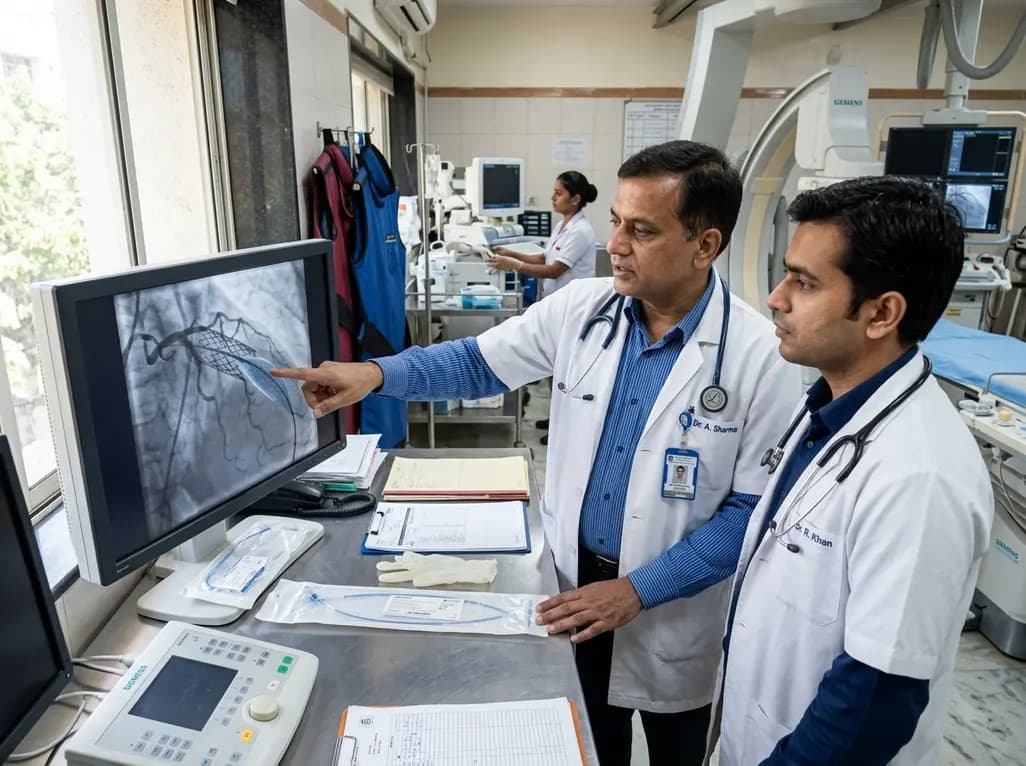
The US FDA has granted approval to the SELUTION SLR drug-eluting balloon for treating coronary in-stent restenosis. This milestone introduces a sustained-release sirolimus platform that eliminates the need for additional permanent metallic stents while maintaining robust vascular healing and luminal patency.
Today
Posttraumatic pisotriquetral instability is a rare wrist injury causing severe hypothenar pain and weakness. Explore clinical examination, imaging, and pisiformectomy.
Today

A comprehensive review analyzes periconceptional GLP-1 receptor agonist exposure, revealing reassuring data on congenital anomalies and adverse perinatal outcomes while emphasizing the need for cautious patient counseling.
Today
