.webp&w=384&q=75)

Loading, please wait...
Loading, please wait...

Ciliogenesis is a complex and highly ordered cellular process that ensures the proper formation of cilia. These organelles act as sensory antennae for cells, play crucial roles in signaling, and are vital for human development. Recent research has highlighted the essential Role of EXOC6A, a component of the exocyst complex, in managing the trafficking and fusion of membranes required for this process. By interacting with myosin-Va (Myo-Va), EXOC6A facilitates the precise movement of vesicles to the mother centriole. This interaction is critical for both the early and late stages of ciliary development, ensuring that membrane materials are delivered exactly where they are needed.
The study reveals that EXOC6A vesicles are actively recruited and integrated into ciliary vesicles and the ciliary sheath. These vesicles undergo continuous remodeling to support the growing cilium throughout its maturation. Furthermore, the loss of EXOC6A leads to a significant arrest in ciliogenesis at the ciliary vesicle stage. Consequently, the recruitment of vital components like the NPHP and MKS modules to the transition zone is severely impaired. These modules are necessary for establishing the ciliary gate, which controls the protein composition within the organelle.
The transition zone serves as a gatekeeper for the cilium, and its disruption is a hallmark of various genetic disorders known as ciliopathies. These conditions often manifest as multisystemic abnormalities, including polycystic kidney disease, retinal degeneration, and brain development defects. Mutations in other exocyst components have already been linked to conditions such as Joubert syndrome and Meckel-Gruber syndrome. Therefore, understanding the Role of EXOC6A provides a deeper look into the molecular pathogenesis of these heterogeneous disorders. These findings suggest that EXOC6A is indispensable for orchestrating the vesicle dynamics necessary for cilia membrane assembly and maintenance.
As research continues, the identification of EXOC6A as a key player in ciliary gating and membrane remodeling may offer new diagnostic markers for rare genetic conditions. Additionally, targeting these trafficking pathways could potentially lead to therapeutic interventions for patients with specific ciliary defects. Scientists are currently exploring how these molecular interactions can be modulated to rescue ciliary function in affected tissues. For clinicians, staying updated on these basic science advancements is crucial for understanding the evolving landscape of pediatric genetics and nephrology.
EXOC6A functions as a key regulator of vesicle trafficking and membrane remodeling. It interacts with myosin-Va to transport essential vesicles to the centriole, ensuring the proper assembly of the ciliary sheath and the transition zone.
A deficiency or knockout of EXOC6A arrests the development of cilia at the ciliary vesicle stage. This prevents the recruitment of necessary proteins to the transition zone, ultimately inhibiting the formation of functional cilia and contributing to the pathology of ciliopathies.
This research helps explain the molecular mechanisms behind ciliopathies, which are a group of genetic disorders affecting the kidneys, eyes, and brain. Identifying the roles of exocyst components like EXOC6A may lead to better diagnostic and therapeutic strategies for these complex conditions.
Disclaimer: This content is for informational and educational purposes only and does not constitute professional medical advice, diagnosis, or treatment. Always seek the advice of your physician or other qualified health provider with any questions you may have regarding a medical condition. Refer to the latest local and national guidelines for clinical practice.
References
Lin TL et al. The multifaceted role of EXOC6A in ciliogenesis. Elife. 2026 May 20. doi: undefined. PMID: 42159049.
Hildebrandt F et al. Ciliopathies. N Engl J Med. 2011 Apr 21;364(16):1533-43.
Reiter JF, Leroux MR. Genes and molecular pathways underpinning ciliopathies. Nat Rev Mol Cell Biol. 2017 Aug;18(8):533-547.
"
Read summarized clinical updates, watch expert medical content, and earn CME certifications right from your smartphone.
Open your smartphone camera to scan and install.





EXOC6A, a key exocyst component, drives ciliogenesis via Myo-Va-mediated vesicle trafficking, proving essential for transition zone assembly and cilia forma...
5 months ago
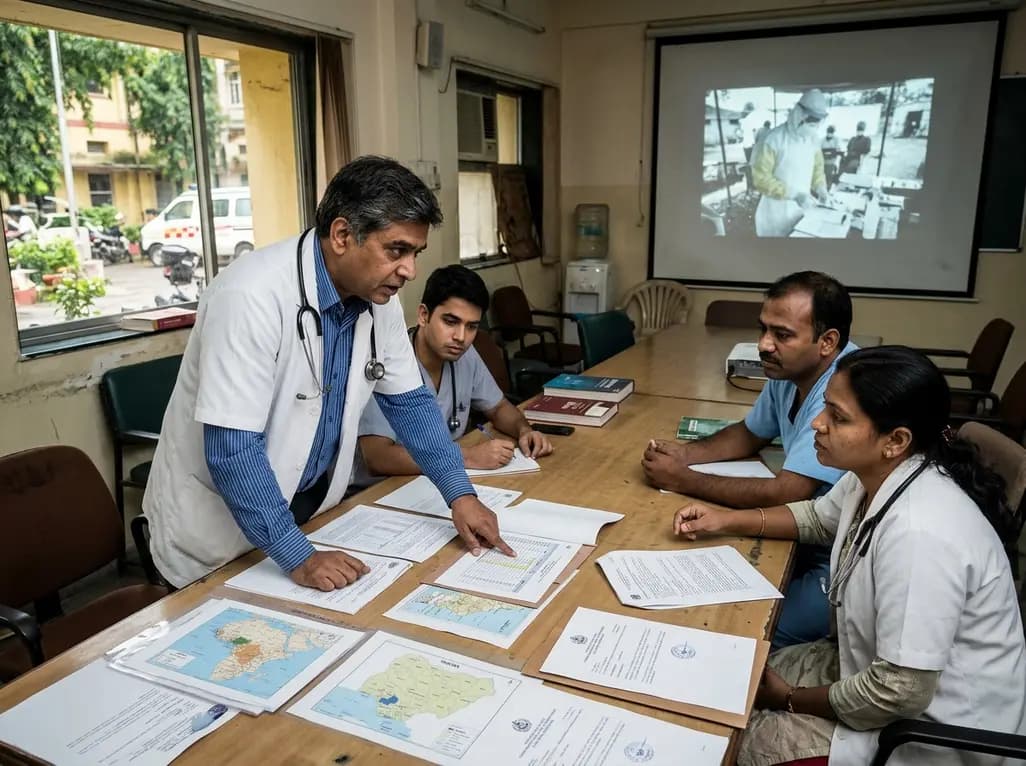
Following Nigeria's first recorded Ebola case linked to regional travel, the Africa CDC has convened an emergency ministerial summit. This alert underscores critical clinical priorities for healthcare professionals, including differentiating early viral infection from malaria, implementing barrier nursing, and triage.
Today

Leucine Rich Bio has introduced South Asia's first comprehensive vaginal microbiome test, BugSpeaks. By profiling microbial dysbiosis, pathogens, and antimicrobial resistance, this next-generation diagnostic platform provides clinicians with deeper insights into recurrent infections, fertility, and reproductive health.
Today

Review how tailored exercise programs benefit frail older patients with heart failure. Explore pathophysiological mechanisms, individualized training prescriptions, and strategies to overcome adherence barriers in clinical practice.
Today

This comparative study evaluates posterior labral tears with and without glenohumeral instability, highlighting distinct demographic patterns, MRI underestimation in stable shoulders, and successful arthroscopic repair outcomes.
Today

A clinical study demonstrates that early intervention with tocilizumab, either as monotherapy or bridged with corticosteroids, achieves significant proptosis reduction and resolves active inflammation in treatment-naive thyroid eye disease.
Today
