.webp&w=384&q=75)

Loading, please wait...
Loading, please wait...

Active euthanasia involves the intentional administration of lethal drugs to end a life and remains illegal in India. Passive euthanasia involves withholding or withdrawing life-prolonging treatments, which the Supreme Court permits under strict guidelines for terminally ill patients.
Clear definitions prevent the conflation of legal end-of-life practices, such as treatment withdrawal, with illegal ones like lethal injections. This ensures that research accurately reflects the actual euthanasia attitudes in India among healthcare professionals.
Disclaimer: This content is for informational and educational purposes only. It does not constitute medical advice or establish a doctor-patient relationship. Professional medical consultation is required for any health concerns or end-of-life decisions. Refer to the latest local and national guidelines for clinical practice.
References

Read summarized clinical updates, watch expert medical content, and earn CME certifications right from your smartphone.
Open your smartphone camera to scan and install.





New research highlights how definitional confusion overestimates approval for euthanasia in India, with actual approval for lethal injections at only 16%....
5 months ago
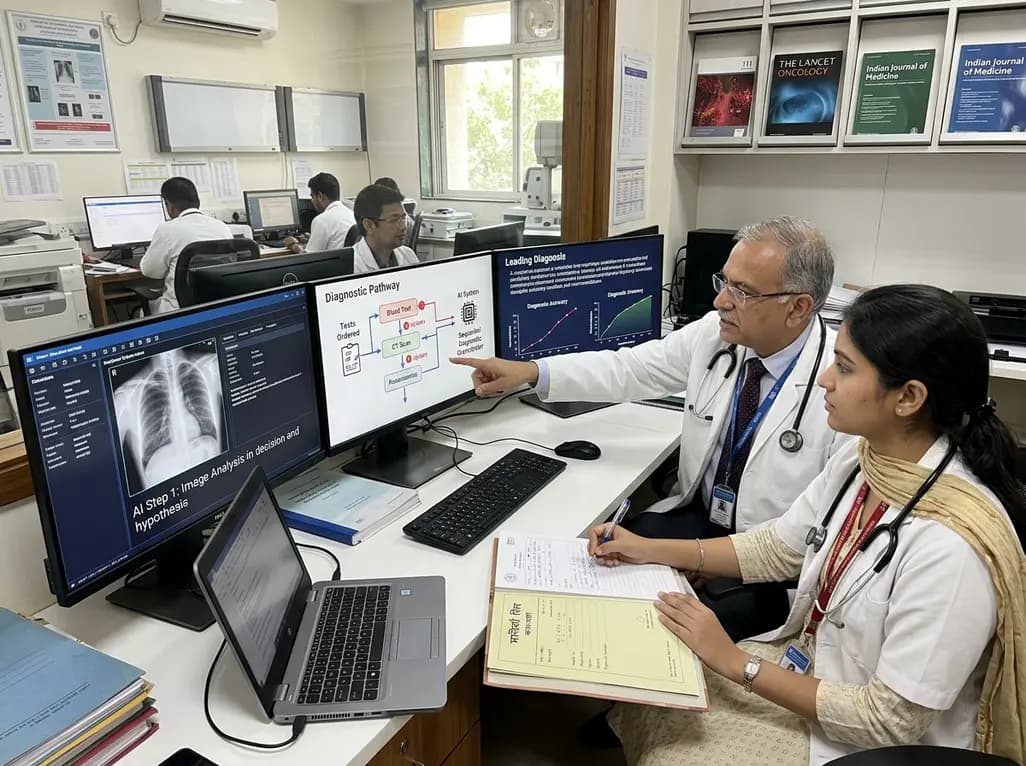
A breakthrough peer-reviewed study demonstrates that a sequential AI diagnosis system can mirror real-world clinical reasoning. By ordering stepwise tests and updating hypotheses dynamically, this multi-agent orchestrator achieved superior diagnostic accuracy while reducing investigative costs.
Today

A prenatal case highlights severe glutaric acidemia type II presenting as bilateral hyperechoic cystic kidneys at 18 weeks. Whole-exome sequencing revealed a novel homozygous ETFDH frameshift variant, demonstrating the power of rapid genetic testing in fetal renal anomalies.
Today

Review how tailored exercise programs benefit frail older patients with heart failure. Explore pathophysiological mechanisms, individualized training prescriptions, and strategies to overcome adherence barriers in clinical practice.
Yesterday

This comparative study evaluates posterior labral tears with and without glenohumeral instability, highlighting distinct demographic patterns, MRI underestimation in stable shoulders, and successful arthroscopic repair outcomes.
Yesterday

A clinical study demonstrates that early intervention with tocilizumab, either as monotherapy or bridged with corticosteroids, achieves significant proptosis reduction and resolves active inflammation in treatment-naive thyroid eye disease.
Yesterday
