.webp&w=384&q=75)

Loading, please wait...
Loading, please wait...
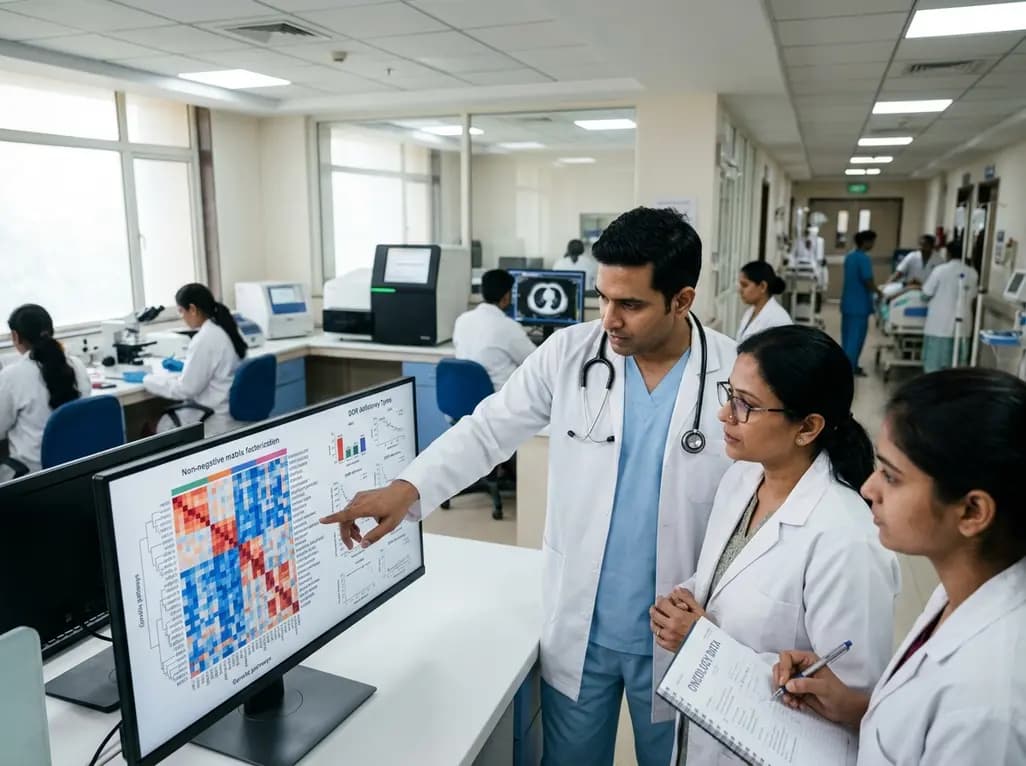
Tumors frequently exhibit functional impairments in their genomic maintenance machinery. Specifically, deficiencies in the DNA damage response (DDR) drive malignant transformation while simultaneously opening unique clinical vulnerabilities. Identifying these pathways allows oncologists to implement targeted interventions, such as PARP inhibitors for homologous recombination defects. Traditionally, clinicians relied on loss-of-function single-gene mutations to infer therapeutic responsiveness. However, emerging research indicates that genomic mutational signatures provide significantly superior predictive accuracy. These distinct mutational signatures represent the historical imprint of biological processes and environmental exposures on the cancer genome. Despite their clinical utility, identifying the underlying etiology for many mutational patterns remains challenging. Most cataloged signatures lack clear functional links to specific gene knockouts or biological mechanisms. Consequently, expanding biomarker models to novel DDR pathways requires innovative computational methodologies that bridge raw genomic data with underlying mechanistic etiologies.
To resolve the mechanistic ambiguity surrounding genomic alterations, researchers introduced supervised non-negative matrix factorization (SNMF). This sophisticated computational framework merges mutational signatures learning directly with multiclass DDR deficiency prediction. By leveraging human-induced pluripotent stem cell lines with precise, single-gene knockouts, the model learns pattern representations guided directly by known genomic etiologies. Consequently, SNMF creates a direct bridge between functional genomic disruption and downstream mutational patterns. Unlike unsupervised methods that merely cluster genomic features, this supervised approach grounds every pattern in verified cellular biology. Furthermore, the methodology successfully captures etiology-aligned signatures for key repair mechanisms, including homologous recombination repair, mismatch repair, and base excision repair. By training on laboratory-controlled gene knockouts, the platform generates biologically interpretable models that enhance clinical translation and improve diagnostic confidence.
A major strength of supervised matrix factorization lies in its capacity to resolve fine-grained biological distinctions. Even when provided with broader pathway-level training labels, the model effectively isolates gene-specific submechanisms. For instance, within base excision repair pathways, the algorithm successfully distinguished individual gene contributions and subtle repair dynamics. This level of granularity is crucial for clinical oncology, where different gene mutations within the same functional pathway can alter drug sensitivity profiles. Furthermore, cellular signatures learned from knockout models showed remarkably high concordance with tumor-derived COSMIC signatures. This alignment confirms that laboratory-induced knockouts faithfully recreate complex mutational phenomena observed in human patient tumors. By establishing clear mechanistic connections, clinicians can better interpret complex genomic panels and identify actionable biological targets in routine patient care.
Accurate identification of DDR deficiencies directly dictates patient selection for molecularly targeted therapies. In preclinical evaluations, signatures learned through supervised NMF demonstrated exceptional recall when classifying deficient tumors. By capturing both broad pathway disruptions and specific single-gene loss events, the platform reduces diagnostic false negatives. Consequently, patients who might otherwise miss targeted therapeutic windows due to variant of uncertain significance classification can be correctly identified. Furthermore, the model connects genomic scar patterns back to specific therapeutic vulnerabilities. Integrating these etiology-guided frameworks into clinical bioinformatic pipelines promises to refine patient stratification, optimize drug combination strategies, and improve overall survival outcomes in patients with high genomic instability.
The successful deployment of SNMF underscores the growing importance of experimental functional genomics in computational model design. By leveraging CRISPR-based knockout screens alongside advanced machine learning, researchers can systematically map unknown mutational processes. Furthermore, the open-source release of the algorithm allows global research teams to adapt the framework for novel therapeutic targets. Beyond standard DDR mechanisms, similar supervised architectures can elucidate mutational mechanisms associated with therapeutic resistance, environmental toxin exposures, and age-related genomic decay. Ultimately, grounding predictive algorithms in rigorous biological etiologies transforms raw sequencing data into actionable clinical intelligence, moving precision oncology closer to truly individualized patient care.
Mutational signatures are characteristic patterns of DNA mutations caused by specific biological processes, environmental exposures, or defective DNA repair pathways. They serve as genomic scars that allow researchers and clinicians to deduce the underlying molecular mechanisms driving tumor development and to select effective targeted therapies based on specific repair deficiencies.
Traditional signature extraction relies on unsupervised algorithms that group mutational patterns without prior biological knowledge, often leaving signatures without known etiologies. Supervised NMF incorporates pathway and gene-level knockout labels during the learning process, ensuring that the generated signatures are directly tied to specific functional DNA repair deficiencies.
Identifying the precise biological cause of a DNA damage response deficiency enables clinicians to predict how a tumor will respond to specific targeted agents, such as PARP inhibitors or immune checkpoint inhibitors. Etiology-guided signatures help avoid treatment failure and expand targeted therapeutic options to patients without obvious loss-of-function mutations.
Disclaimer: This content is for informational and educational purposes only... Refer to the latest local and national guidelines for clinical practice.
References
Goossens S et al. Etiology-guided mutational signature learning from DNA repair knockouts in cell lines using supervised NMF. NAR Genom Bioinform. 2026 Sep undefined. doi: 10.1093/nargab/lqag078. PMID: 42564521.

Read summarized clinical updates, watch expert medical content, and earn CME certifications right from your smartphone.
Open your smartphone camera to scan and install.





Supervised non-negative matrix factorization integrates mutational signatures with DNA damage response labels. This etiology-guided approach improves the identification of DDR deficiencies, paving the way for optimized precision cancer therapies.
Today
Discover clinical pitfalls in diagnosing SGLT2 inhibitor ketoacidosis in the ICU. Learn how cardiac surgery and GLP-1 agonist interactions trigger euglycemic DKA and explore management strategies.
Today
A new study reveals that pregnant women with gestational diabetes show altered neural responses to high-fat visual food cues compared to healthy controls. Using visual evoked potentials, researchers found that these early neurophysiological responses correlate with HbA1c levels and metabolic health.
Today
A multi-state Indian study by KMCRI reveals alarming cardiovascular risk markers among healthy adolescents and young adults, including hyperhomocysteinemia and early blood vessel damage.
Today
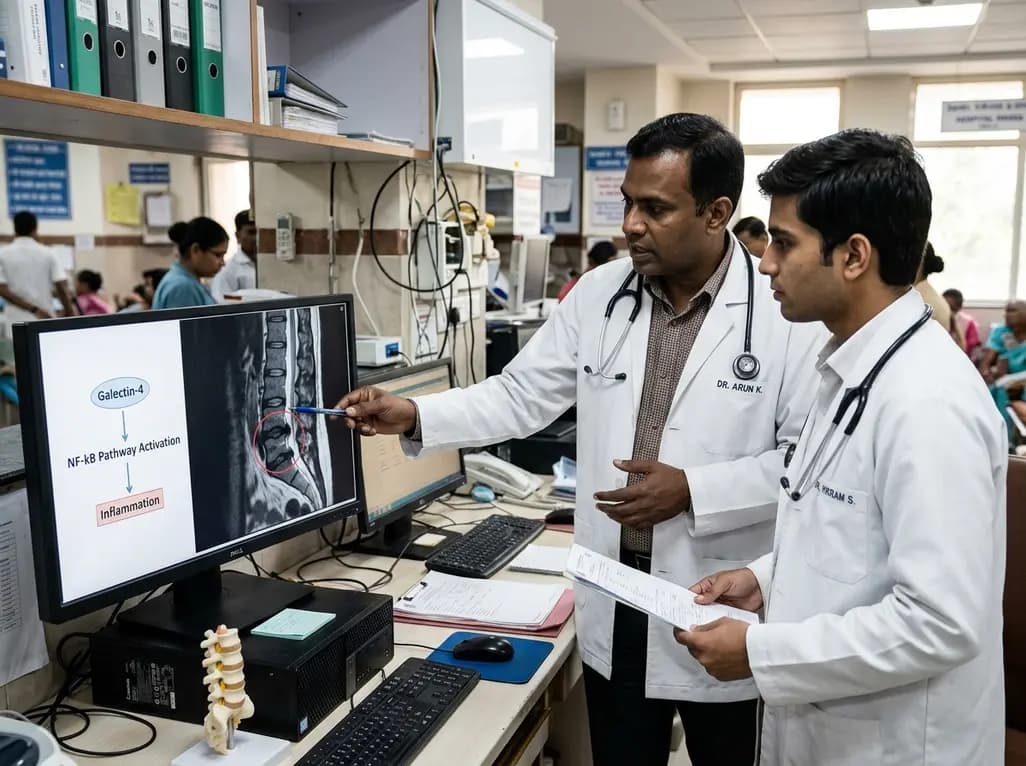
A groundbreaking study identifies galectin-4 as a key molecular driver of human intervertebral disc degeneration. The protein activates NF-kB pathways and inflames disc tissues, offering a potential target for novel spine therapies.
Today

Per-protocol analysis of the PRAGUE-25 trial demonstrates that catheter ablation significantly reduces atrial fibrillation burden, hospitalizations, and emergency visits compared to lifestyle modification plus antiarrhythmic drugs in obese patients.
Today
