.webp&w=384&q=75)

Loading, please wait...
Loading, please wait...
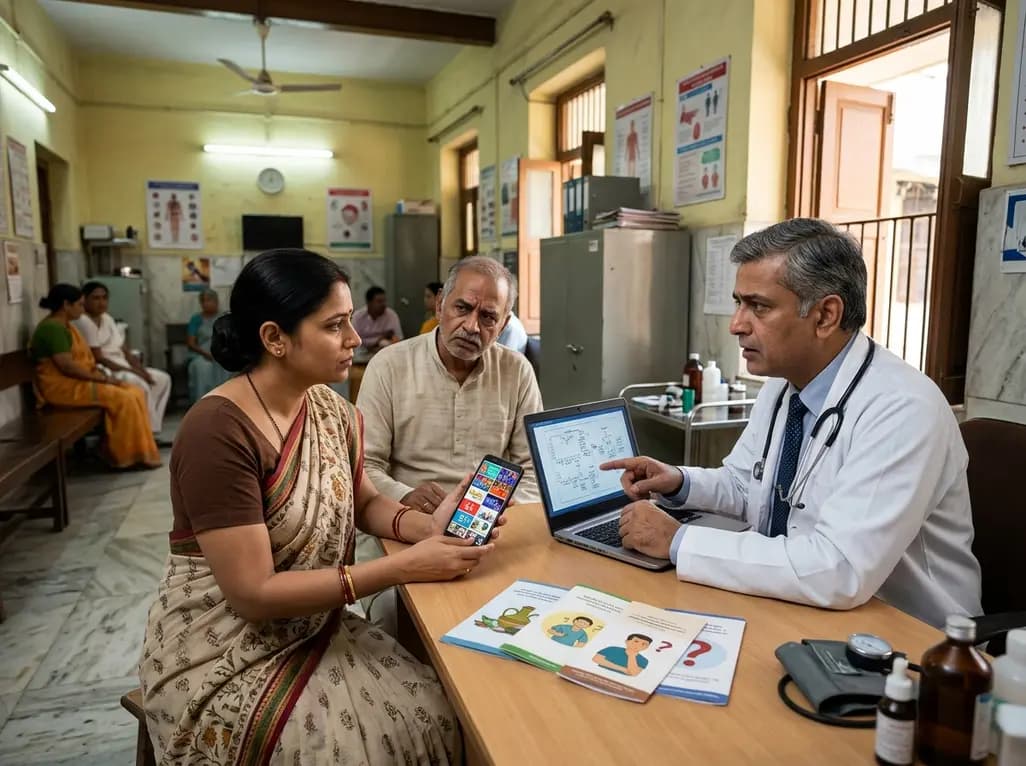
Epistemically suspect beliefs, encompassing conspiracy theories, pseudoscientific claims, and paranormal convictions, present a significant challenge in modern clinical practice. Historically, these views were often dismissed as fixed personality traits or a simple lack of education. However, current research by Alper S et al. indicates that these beliefs function as complex, context-sensitive systems rather than purely static worldviews. For doctors in India, where diverse cultural and social influences intersect, understanding the origin of a patient’s skepticism is vital. These beliefs are rarely isolated; they often reflect a broader strategy for navigating a world perceived as uncertain or untrustworthy. When a patient questions evidence-based medicine, they may be operating within an alternative epistemic framework that prioritizes anecdotal experience over clinical data. Therefore, clinicians must look beyond the immediate complaint to understand the systemic roots of these suspect convictions. Recognizing that these beliefs have a bounded sensitivity to environmental changes allows for more nuanced intervention. By adopting an empathetic stance, healthcare providers can better bridge the gap between scientific consensus and personal worldview, ultimately fostering higher levels of patient trust and cooperation.
The longitudinal evidence gathered from studies in Türkiye and the United Kingdom offers profound insights into how suspect beliefs evolve. Using five-wave panel data over two years, researchers observed a modest mean-level decline in epistemically suspect beliefs, alongside a remarkably stable cross-domain structure. This suggests that if a person holds pseudoscientific beliefs, they are statistically predisposed to also accept conspiracy theories or paranormal explanations. Specifically, the study employed latent growth models to show that while individual levels of suspicion remain relatively durable, they are not entirely immune to change. There is a strong coupling effect where trajectories in one domain often mirror those in another. For the medical community, this implies that a patient’s rejection of a specific vaccine may be part of a larger pattern of institutional skepticism. Moreover, the stability of these worldviews suggests that quick-fix educational interventions are unlikely to be successful. Instead, clinicians should prepare for a long-term engagement process. Understanding that these beliefs are durable but exhibit some sensitivity to changes provides a balanced perspective for managing difficult patient interactions and designing effective public health outreach programs.
One of the most critical takeaways from the research is the impact of the sociopolitical environment on personal convictions. In the Turkish sample, within-person increases in perceived corruption were directly correlated with rising conspiracy beliefs. Interestingly, this strong pattern did not emerge as consistently in the United Kingdom, highlighting how context-sensitive these belief systems can be. This suggests that when people feel their institutions are failing or corrupt, they turn to conspiracy theories to reclaim a sense of agency or understanding. For healthcare providers in India, this context is especially relevant. Patients who perceive broader systemic inequalities or lack of transparency in public institutions are likely to project those same suspicions onto the medical establishment. Consequently, a patient's refusal of treatment might not be an indictment of the science itself, but rather a reaction to the perceived integrity of the system providing it. Therefore, building trust in medical advice requires more than just biological facts; it requires a visible commitment to institutional transparency and ethical practice. Recognizing these sociopolitical drivers allows doctors to address the emotional and social foundations of a patient’s doubt.
The presence of epistemically suspect beliefs has direct and often detrimental consequences for public health outcomes. Studies show that individuals with a high degree of conspiratorial or pseudoscientific thinking are far more likely to engage in vaccine hesitancy and avoid recommended preventative screenings. This cognitive bias often leads to the adoption of unvalidated therapies which can delay necessary medical interventions for chronic diseases like cancer or diabetes. Furthermore, the jump-to-conclusions bias associated with these beliefs means patients may ignore base-rate information in favor of highly charged emotional anecdotes found on social media. This is not just a psychological curiosity; it is a clinical barrier that increases morbidity and complicates disease management. In a healthcare landscape increasingly crowded with digital misinformation, these beliefs act as a filter that distorts medical communication. Clinicians must be aware that patients holding these suspect beliefs are not simply uninformed but are often actively misinformed by sources they trust more than institutional experts. Addressing these barriers is essential for ensuring that evidence-based practices are followed and that public health initiatives reach the most vulnerable and skeptical populations.
To effectively manage epistemically suspect beliefs in a clinical setting, healthcare professionals must move beyond the information deficit model. Simply providing more data often backfires, reinforcing the patient’s existing suspicions. Instead, a more effective strategy involves dialogue-based communication and transparency. Clinicians should acknowledge the patient's concerns about safety, pharmaceutical profits, or institutional ethics without necessarily validating the incorrect belief. Techniques such as pre-bunking or inoculation messaging can help patients recognize common misinformation strategies before they are fully integrated into their worldview. Moreover, emphasize the rigorous processes behind clinical trials and regulatory approvals to counter narratives of shortcuts or cover-ups. By fostering a partnership where the patient feels their skepticism is heard rather than dismissed, doctors can lower the cognitive defenses that sustain conspiratorial thinking. This approach requires patience and a high degree of emotional intelligence but is essential for maintaining the doctor-patient relationship. Ultimately, the goal is to guide patients back toward evidence-aligned health behaviors by demonstrating that scientific medicine remains the most reliable pathway to personal well-being in an increasingly complex and uncertain information environment.
Epistemically suspect beliefs, such as conspiracy theories or pseudoscientific notions, often lead patients to view conventional medical advice with skepticism. This distrust frequently results in lower adherence to prescribed treatments, such as medications for chronic conditions or life-saving vaccinations. Furthermore, these patients may opt for unvalidated alternative therapies that lack empirical support. Consequently, the presence of such beliefs significantly increases the risk of poor health outcomes and complications arising from untreated or improperly managed medical conditions.
The sociopolitical context is crucial because individuals often project their broader institutional distrust onto the healthcare system. When patients perceive high levels of social corruption or lack of transparency in government, they are statistically more likely to adopt epistemically suspect beliefs. This environment makes them more susceptible to conspiracy theories regarding medical motives and industry influence. Therefore, a doctor who understands this context can better address the root of the patient's skepticism, which is often systemic rather than strictly biological.
It is highly unlikely that a single consultation will completely dismantle a patient's long-held epistemically suspect beliefs. These beliefs often form a durable, cross-domain structure that is relatively stable over time. However, because these systems show bounded sensitivity to context, consistent and transparent communication can gradually shift a patient's perspective. The goal should be to build long-term trust and provide incremental, evidence-aligned information rather than expecting an immediate or total abandonment of the patient's existing worldview or skeptical framework.
Disclaimer: This content is for informational and educational purposes only. It does not constitute professional medical advice, diagnosis, or treatment. Always seek the advice of your physician or other qualified healthcare provider with any questions you may have regarding a medical condition. Refer to the latest local and national guidelines for clinical practice.
References
Alper S et al. Stable Worldviews or Context-Sensitive Systems? Longitudinal Evidence on the Development of Epistemically Suspect Beliefs Across Two Sociopolitical Contexts. Pers Soc Psychol Bull. 2026 Jul 15. doi: 10.1177/01461672261463908. PMID: 42454457.
Häikiö T et al. Epistemically Suspect Beliefs About COVID‐19: Results From a Population Survey in Finland. Appl Cogn Psychol. 2025 Sep 1. doi: 10.1002/acp.4245.
Bronstein MV et al. Understanding and Challenging Epistemically Suspect Beliefs: A Call for Expanding Interdisciplinary Research. J Psychopathol Clin Sci. 2026 Jun 25. doi: 10.1037/abn0001145. PMID: 43556789.
"
Read summarized clinical updates, watch expert medical content, and earn CME certifications right from your smartphone.
Open your smartphone camera to scan and install.





New longitudinal research explores whether epistemically suspect beliefs, like conspiracy theories and pseudoscience, are stable worldviews or context-sensitive systems, with significant implications for patient trust and healthcare in different sociopolitical environments.
3 months ago
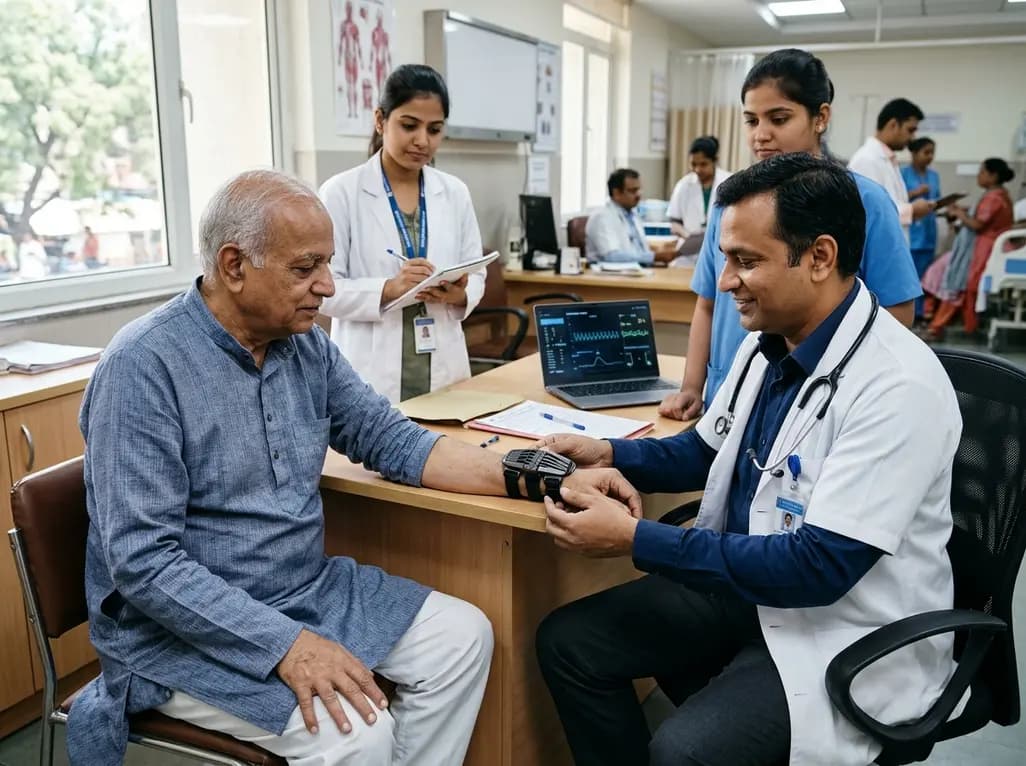
The TREM-AB open-label pilot study evaluated a wearable passive nonlinear vibration absorber for essential tremor. The Nonlinear Energy Sink bracelet reduced clinical Fahn-Tolosa-Marin tremor scores by 32.1% and electrophysiological tremor power by 49.2% with no adverse effects reported.
Today

A population-based study of 20,928 children reveals that small vulnerable newborns face sex-divergent mental capital outcomes at ages 6-7: term SGA girls show higher behavioral difficulties and lower resilience, while preterm non-SGA boys experience increased behavioral problems.
Today
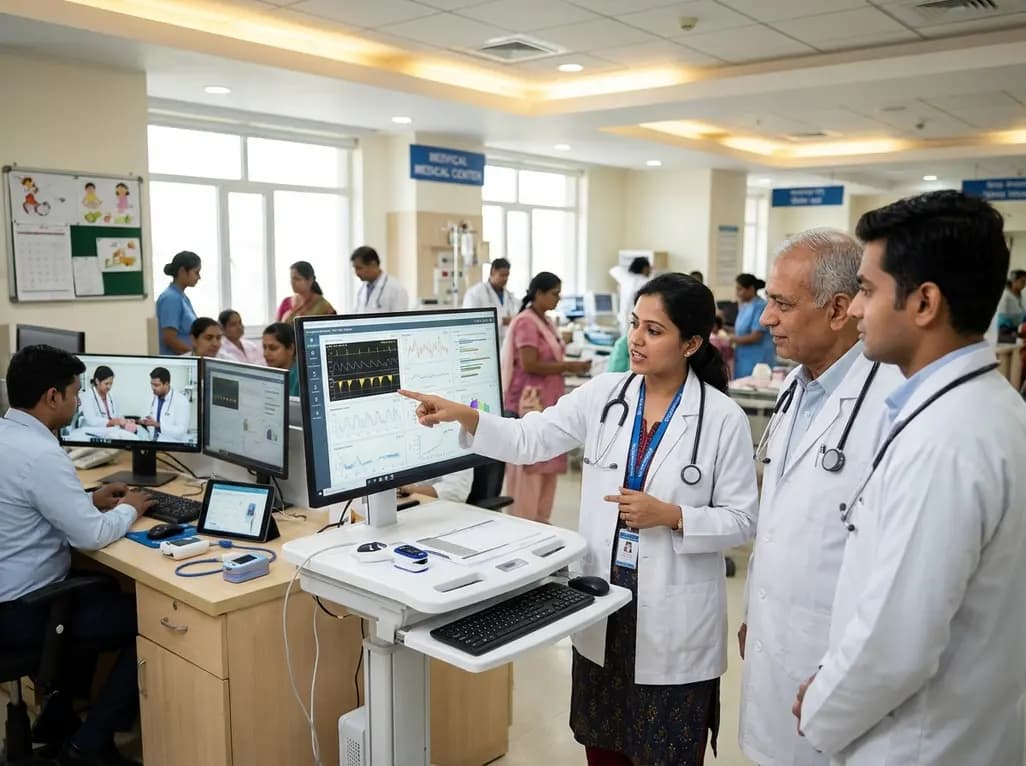
A landmark study details how an enterprise pediatric remote patient management model expanded from a single cardiology pilot to 16 diverse specialty programs by combining centralized digital operations with specialty clinical leadership.
Today

A comparative review of tension band wiring and intramedullary screw fixation in thumb metacarpophalangeal arthrodesis, evaluating union rates, hardware complications, and clinical outcomes.
Today
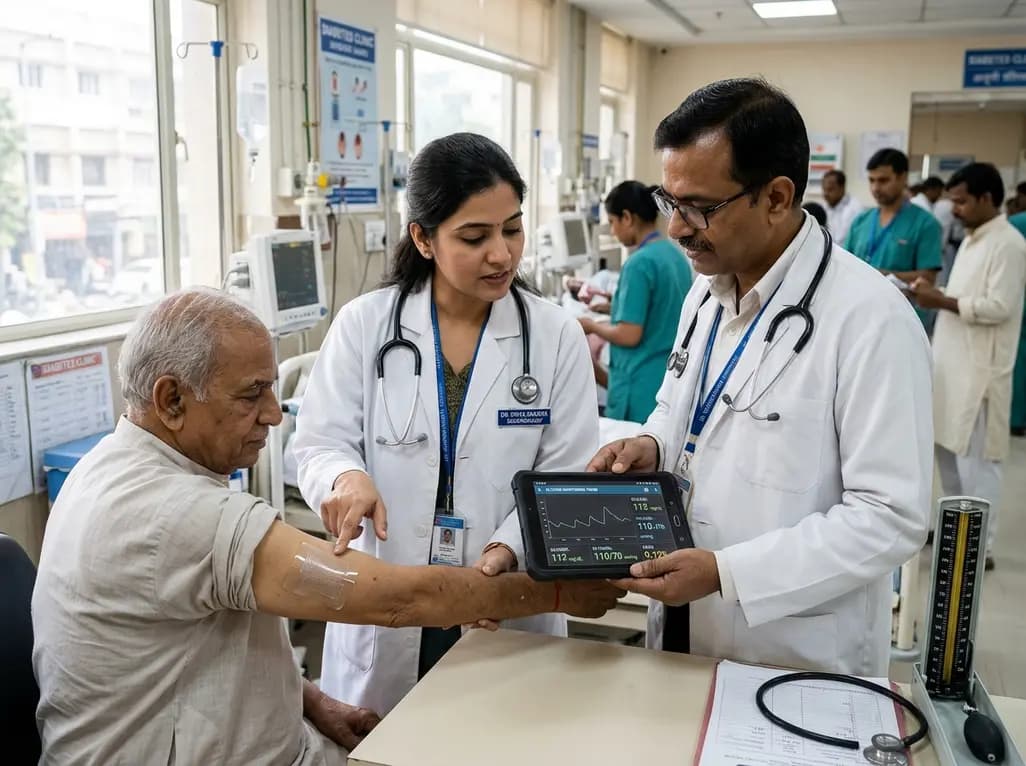
A breakthrough ultrathin multimodal sensor decouples physical hemodynamic monitoring from disposable electrochemical calibration, achieving long-term wearable glucose prediction with 81.36% accuracy and a 9.12% MARD. This offers a robust, drift-free solution for outpatient metabolic surveillance.
Today
