.webp&w=384&q=75)

Loading, please wait...
Loading, please wait...
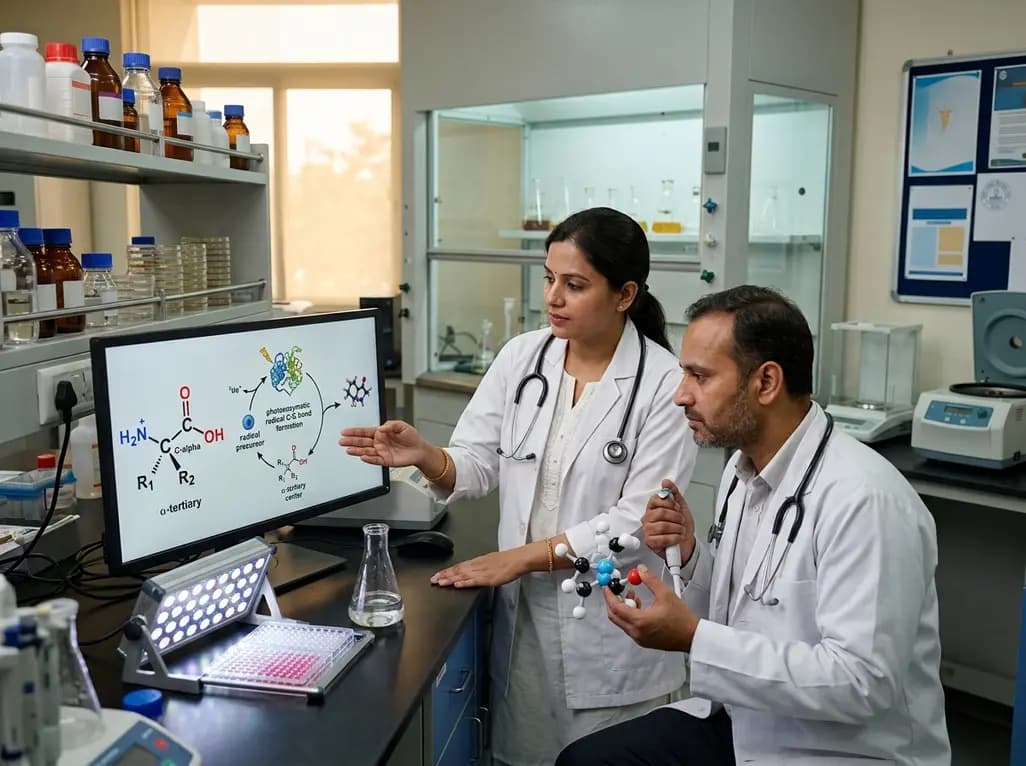
Alpha-tertiary amino acids (ATAAs) represent a critical class of chemical building blocks in modern medicinal chemistry. These unique molecules feature a fully substituted alpha-carbon atom, which carries two distinct carbon substituents. This structural configuration grants them exceptional value in the development of natural products, pharmaceuticals, and agrochemicals. For instance, the presence of these residues in a peptide backbone can significantly enhance metabolic stability and promote conformational rigidity. Consequently, drug molecules incorporating these structures often demonstrate improved potency and longer half-lives within the human body. Despite their immense utility, the Alpha-Tertiary Amino Acid Synthesis remains a formidable challenge for traditional organic chemists. Conventional methods frequently require multiple steps and struggle to achieve high levels of stereoselective precision. Furthermore, the steric hindrance inherent in forming a quaternary carbon center often leads to low yields and difficult purification processes. However, recent breakthroughs in enzymatic catalysis are transforming this field. Biocatalysis offers a more sustainable and efficient alternative to traditional metal-catalyzed reactions. By leveraging the natural selectivity of enzymes, researchers can now access complex ATAA structures with remarkable enantiomeric purity. This shift toward greener chemistry aligns with global pharmaceutical trends focused on reducing waste and improving manufacturing efficiency. As we explore the latest strategies, it becomes clear that nature's own toolkits provide the most promising answers to these longstanding synthetic hurdles.
Pyridoxal 5'-phosphate (PLP)-dependent enzymes stand at the forefront of biocatalytic innovation for amino acid modification. These enzymes are naturally versatile, participating in diverse biochemical pathways including transamination, decarboxylation, and racemization. Specifically, in the context of Alpha-Tertiary Amino Acid Synthesis, PLP-dependent enzymes have demonstrated a unique ability to facilitate carbon-carbon bond formation. Recent studies highlight their role in Mannich-type reactions and [3+2] annulations, which are essential for creating complex cyclic structures. Moreover, protein engineering has allowed scientists to repurpose these enzymes for non-canonical activities. For example, directed evolution can tune a native enzyme to accept larger or more hydrophobic substrates that it would typically ignore. This adaptability is crucial because many pharmaceutical intermediates require specific side-chain architectures that do not exist in nature. Additionally, the mild reaction conditions required for enzymatic processes—such as aqueous buffers and ambient temperatures—contrast sharply with the harsh reagents used in traditional synthesis. Therefore, using PLP-dependent catalysts not only improves stereocontrol but also contributes to the overall sustainability of the production cycle. Researchers are increasingly focusing on newly uncovered catalytic paradigms that allow for Nitrogen migration and other sophisticated molecular rearrangements. These advancements suggest that the chemical space accessible through PLP enzymology will continue to expand, offering new pathways for drug discovery and molecular design.
Beyond the well-known PLP-dependent systems, non-heme iron enzymes have emerged as powerful tools for specialized chemical transformations. These enzymes often utilize iron-oxo intermediates to drive radical-based reactions, which are notoriously difficult to control using standard chemical catalysts. In the realm of Alpha-Tertiary Amino Acid Synthesis, non-heme iron enzymes are particularly effective at oxidative decarboxylation and asymmetric radical C-C bond formation. Specifically, they enable the precise functionalization of unactivated C-H bonds, allowing for the direct synthesis of complex amino acids from simpler precursors. Furthermore, these enzymes can mediate abiological radical relay chemistry, which opens doors to chemical structures that were previously considered unreachable. The high degree of regioselectivity and enantioselectivity provided by these biological catalysts is unparalleled. For example, engineered variants can distinguish between nearly identical carbon atoms in a complex substrate, ensuring that the desired tertiary center forms with perfect precision. This level of control is vital for the pharmaceutical industry, where even minor impurities can lead to adverse clinical outcomes. Additionally, the development of high-throughput screening platforms has accelerated the discovery of optimized enzyme variants. Consequently, scientists can now rapidly evolve non-heme iron enzymes to perform specific, high-value reactions with industrial-scale efficiency. As our understanding of these radical mechanisms deepens, their integration into pharmaceutical manufacturing is likely to become more commonplace.
One of the most exciting recent developments in biocatalysis is the marriage of light and enzymes, known as photoenzymatic catalysis. This hybrid approach enables chemical reactivity that goes far beyond canonical enzymatic pathways found in nature. By using light to excite electronic states within an enzyme-cofactor complex, researchers can unlock new radical-mediated mechanisms. For instance, synergistic photoenzymatic strategies have been successfully applied to the alkylation of unprotected alanine and glycine. This process allows for the creation of alpha-tertiary amino acids in a single chemical step with absolute stereocontrol. Furthermore, the use of photoredox catalysts in tandem with traditional enzymes like threonine aldolases has proven highly effective. This synergy localizes radical formation to the enzyme's active site, preventing side reactions and ensuring high yields. Additionally, photoenzymatic methods offer a unique solution to the problem of steric hindrance. Because radicals are highly reactive, they can facilitate the formation of crowded quaternary centers that would otherwise be thermodynamically unfavorable. Moreover, this approach is inherently greener, as it often eliminates the need for toxic metal catalysts and volatile organic solvents. Therefore, photoenzymatic catalysis represents a significant leap forward in the quest for predictable and sustainable molecular synthesis. As technology improves, we can expect to see these light-driven processes used more frequently in the production of high-value chiral intermediates for the global medical market.
Despite the rapid progress in this field, several challenges remain in making enzymatic synthesis a universal standard for pharmaceutical production. Achieving predictable stereocontrol across a wide range of substrates is perhaps the most significant hurdle. While nature provides excellent templates, many synthetic targets require an exact mirror image or a specific diastereomer that the native enzyme does not produce. Consequently, enzyme discovery and directed evolution are essential components of the modern synthetic workflow. By using computational modeling and machine learning, scientists can now predict which mutations will enhance an enzyme's performance or shift its selectivity. Furthermore, expanding the chemical space to include highly non-polar or extremely bulky amino acids requires further innovation in enzyme scaffold design. Nevertheless, the opportunities arising from these technologies are vast. For example, the ability to synthesize unnatural amino acids with high throughput allows for more rapid screening in drug discovery programs. Additionally, the integration of multi-enzyme cascades can further streamline the synthesis of complex peptides and small molecules. This holistic approach reduces the number of purification steps and significantly lowers production costs. As we continue to refine these enzymatic strategies, the bridge between laboratory-scale research and industrial-scale application will continue to strengthen. Therefore, the future of chemical synthesis in medicine looks increasingly biological, driven by the precision and sustainability of engineered enzymes.
Alpha-tertiary amino acids provide several structural advantages that enhance drug performance. Their fully substituted alpha-carbon creates a quaternary center, which significantly increases the metabolic stability of the molecule by preventing degradation by proteases and other metabolic enzymes. Additionally, the bulky substituents introduce conformational rigidity, which helps the drug molecule bind more precisely to its biological target. This improved binding affinity often leads to higher potency and fewer off-target side effects in clinical settings.
Enzymatic catalysis offers superior stereoselectivity and regioselectivity compared to traditional chemical methods, which is crucial for producing pure enantiomers required in medicine. Furthermore, enzymes operate under mild, environmentally friendly conditions, such as aqueous solutions and room temperature, reducing the carbon footprint of pharmaceutical manufacturing. Biocatalysis also eliminates the need for expensive and toxic heavy metal catalysts, making the entire production process safer for workers and more sustainable for the planet overall.
Directed evolution allows scientists to mimic natural selection in the laboratory to optimize enzymes for specific industrial tasks. By introducing random or targeted mutations into an enzyme's genetic code and screening the variants for improved activity, researchers can create biocatalysts that accept non-natural substrates or function under extreme conditions. This technology is essential for expanding the chemical space of enzymatic synthesis, allowing for the creation of unique amino acid structures that do not exist in nature.
Disclaimer: This content is for informational and educational purposes only. It is not intended to provide medical advice or to be a substitute for professional clinical judgment. Always consult with a qualified healthcare provider or pharmaceutical expert for specific advice. Refer to the latest local and national guidelines for clinical practice.
References
Wang H et al. Emerging enzymatic strategies for the synthesis of α-tertiary amino acids. Commun Chem. 2026 Jul 09. doi: undefined. PMID: 42426422.
Ouyang Y et al. Synergistic Photoenzymatic Catalysis Enables Synthesis of a-Tertiary Amino Acids Using Threonine Aldolases. J Am Chem Soc. 2024 May 22;146(20):13754-13759. doi: 10.1021/jacs.4c04661.
Cordoza JL. Investigation and Biocatalytic Applications of Pyridoxal-5'-Phosphate-Dependent Enzymology for the Biosynthesis of Noncanonical Amino Acids. eScholarship. 2020.

Read summarized clinical updates, watch expert medical content, and earn CME certifications right from your smartphone.
Open your smartphone camera to scan and install.





Recent advances in enzymatic catalysis provide efficient and sustainable solutions for alpha-tertiary amino acid synthesis. This review highlights newly uncovered catalytic paradigms like asymmetric radical C-C bond formation and photoenzymatic approaches that expand the chemical space of drug development.
3 months ago

A retrospective cohort study of 7,716 ICU patients from the MIMIC-IV database demonstrates that Gradient Boosting Decision Trees significantly outperform traditional SOFA scores in predicting in-hospital mortality among patients with sepsis and diabetes, with SHAP analysis providing clinical interpretability.
Today

Occult maternal malignancy accounts for 3.82% of persistent unreportable NIPT results with genomic noise. Multiple chromosomal aberrations, notably on chromosome 18, warrant thorough oncological evaluation and whole-body MRI to ensure timely maternal diagnosis while preserving fetal care.
Today

This article reviews the forensic and clinical complexities of acute myocarditis arising on left ventricular hypertrophy in children, highlighting early diagnostic red flags and multidisciplinary postmortem autopsy protocols.
Today

This comparative study evaluates posterior labral tears with and without glenohumeral instability, highlighting distinct demographic patterns, MRI underestimation in stable shoulders, and successful arthroscopic repair outcomes.
Yesterday

A clinical study demonstrates that early intervention with tocilizumab, either as monotherapy or bridged with corticosteroids, achieves significant proptosis reduction and resolves active inflammation in treatment-naive thyroid eye disease.
Yesterday
