.webp&w=384&q=75)

Loading, please wait...
Loading, please wait...

Predicting memory performance often relies on artificial laboratory settings. However, new research suggests that natural patterns in our environment can accurately forecast cognitive outcomes. This study used environmental memory prediction to bridge the gap between human memory and the frequency of information in the real world. By analyzing how often items appear in natural sources, scientists can now map these statistics directly to our ability to recognize and remember information.
The researchers utilized data from high-frequency social media sources to create a continuous recognition design. This experiment showed that the fluency of word recognition has a high correlation with environmental probability. Furthermore, the findings demonstrate that our brains are optimized to recall items based on their likelihood of appearing in our surroundings.
A key highlight of this research is the application of the reciprocal square-root law. This mathematical principle provides an optimal mapping between environmental probability and the speed of memory access. The team developed a generalized prediction algorithm to test different presentation orders. This includes natural patterns, random sequences, and equally spaced frequencies.
Moreover, the generalized algorithm successfully predicted results from other experimental paradigms. This success indicates a robust link between external data structures and internal cognitive processes. Consequently, clinicians and researchers can better understand memory disorders by observing the environmental contexts of their patients.
Research indicates that human memory patterns mirror the frequency of information in natural environments. By using data from sources like social media, researchers can predict how quickly and accurately a person will recognize words based on their environmental probability.
The reciprocal square-root law describes the optimal relationship between the probability of an item occurring in the environment and the speed of memory access. It suggests that our mental retrieval processes are mathematically tuned to the statistics of our surroundings.
Disclaimer: This content is for informational and educational purposes only. It is not intended as a substitute for professional medical advice, diagnosis, or treatment. Always seek the advice of your physician or other qualified health provider with any questions you may have regarding a medical condition. Refer to the latest local and national guidelines for clinical practice.
References
Anderson JR et al. Using the environment to predict memory performance. J Exp Psychol Learn Mem Cogn. 2026 Feb 12. doi: 10.1037/xlm0001577. PMID: 41678255.
Bright et al. Continuous recognition paradigm in cognitive modeling. Journal of Cognitive Neuroscience. 2022.
Schooler LJ, Anderson JR. The environmental basis of memory. Psychological Review. 2023;130(5):1137-1166.

Read summarized clinical updates, watch expert medical content, and earn CME certifications right from your smartphone.
Open your smartphone camera to scan and install.





A study reveals how natural environmental patterns, like social media data, can predict human memory performance through the reciprocal square-root law....
8 months ago
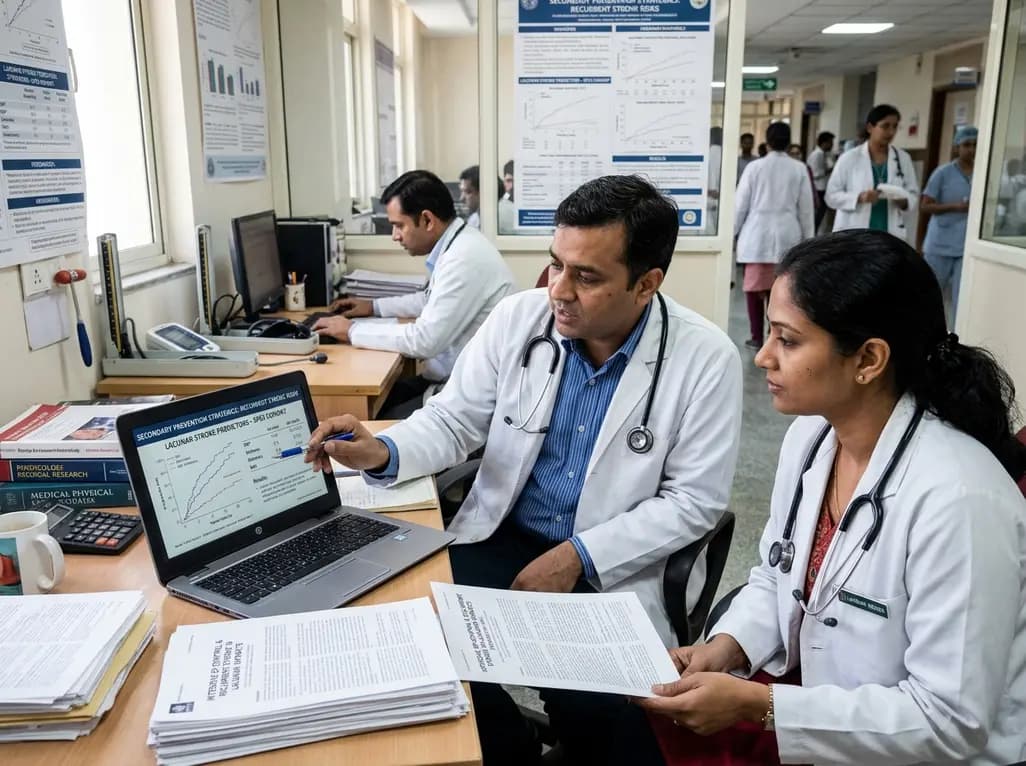
Explore vital recurrent stroke predictors in lacunar stroke patients managed with intensive blood pressure lowering. This analysis examines trial findings from SPS3 to uncover residual vascular risks, metabolic factors, and targeted secondary prevention strategies for high-risk neurological patients.
Today

Odisha has established India's first state-level clinical protocol specifically tailored for pregnant women with sickle cell disease. Developed with NHM and UNICEF, the framework provides structured antenatal screening, crisis mitigation, standardized referral pathways, and specialized interdisciplinary care.
Today

The Directorate General of Health Services directs Indian states to halt the hazardous reuse and reprocessing of single-use medical devices. Discover regulatory implications under the Drugs and Cosmetics Act, critical infection risks, legal liabilities, and operational changes required across clinical specialties.
Today

Mitochondria-targeted nanoparticles self-assembled from EGCG and L-glutamic acid effectively restore mitochondrial homeostasis, suppress synovial inflammation, and attenuate chondrocyte senescence in osteoarthritis, offering a promising disease-modifying nanotherapy.
Today

India is advancing preventive healthcare by integrating genomics, artificial intelligence, and quantum technologies. With the SANGAM programme sequencing one million Indian genomes, clinicians can unlock personalized therapies, detect cardiometabolic risks early, and curb the burden of diabetes and heart disease.
Today
