.webp&w=384&q=75)

Loading, please wait...
Loading, please wait...

Recent research highlights the significant environmental impact of various urinary drainage strategies used in clinical practice. Initially, researchers evaluated how healthcare resource use contributes to global warming. Furthermore, they conducted a comparative life cycle assessment (LCA) of three common urological devices. Consequently, the study identified that both device choice and care delivery models act as primary drivers of carbon emissions in urology. Notably, indwelling catheterization consistently demonstrated the highest climate change impact among the methods tested.
Specifically, the mean climate change impact over 30 days was 96.5 kg CO2-equivalents for indwelling catheterization. In contrast, disposable clean intermittent self-catheterisation (CISC) catheters produced 39.8 kg CO2-eq, while temporary urethral stents showed the lowest footprint at 16.1 kg CO2-eq. Therefore, utilizing a stent instead of a standard catheter can reduce the climate impact by approximately 83%. Additionally, stents lowered fossil resource use by 83% and water consumption by 92%. Moreover, the frequency of device replacement substantially affects these totals. For example, reducing unnecessary replacements can significantly lower the environmental footprint. Similarly, patient autonomy plays a vital role in sustainability. Specifically, when patients manage their own care, emissions related to nurse travel decrease. Resultantly, the overall footprint of the care model improves. Ultimately, this study supports a major shift away from indwelling catheters. In addition, it provides strong arguments for greening urological practices worldwide.
According to the 30-day life cycle assessment, temporary urethral stents have the lowest environmental impact, reducing carbon emissions by 83% compared to indwelling catheters.
Factors such as the frequency of device replacement and the distance a home nurse must travel to assist a patient can significantly increase the total environmental footprint.
Yes, sensitivity analyses showed that reusable CISC catheters provide an environmental profile comparable to urethral stents, offering a more sustainable alternative to single-use options.
Disclaimer: This content is for informational and educational purposes only. It does not constitute professional medical advice, diagnosis, or treatment. Always seek the advice of your physician or other qualified health provider with any questions you may have regarding a medical condition. Refer to the latest local and national guidelines for clinical practice.
References
Peyrottes A et al. Comparative 30-day life cycle assessment of bladder drainage strategies. BJU Int. 2026 May 11. doi: 10.1111/bju.70304. PMID: 42109204.
Elliott CS. Sustainability in Urology: Single-use Versus Reusable Catheters for Intermittent Catheterization. Eur Urol Focus. 2023 Nov;9(6):888-890.
Pathak R et al. Uncovering the Evidence for Sustainability in Urology: A Scoping Review. PMC. 2024.

Read summarized clinical updates, watch expert medical content, and earn CME certifications right from your smartphone.
Open your smartphone camera to scan and install.





A 30-day life cycle assessment reveals that urethral stents and CISC significantly reduce the environmental footprint compared to indwelling catheters....
5 months ago

Recent epidemiological data reveals a dramatic surge in summer heat mortality driven by human-induced climate warming. This analysis explores the pathophysiological impacts on cardiac and renal systems, diagnostic dilemmas in death certification, and essential emergency cooling protocols for acute clinical care.
Today

Odisha has established India's first state-level clinical protocol specifically tailored for pregnant women with sickle cell disease. Developed with NHM and UNICEF, the framework provides structured antenatal screening, crisis mitigation, standardized referral pathways, and specialized interdisciplinary care.
Today

India is advancing preventive healthcare by integrating genomics, artificial intelligence, and quantum technologies. With the SANGAM programme sequencing one million Indian genomes, clinicians can unlock personalized therapies, detect cardiometabolic risks early, and curb the burden of diabetes and heart disease.
Today
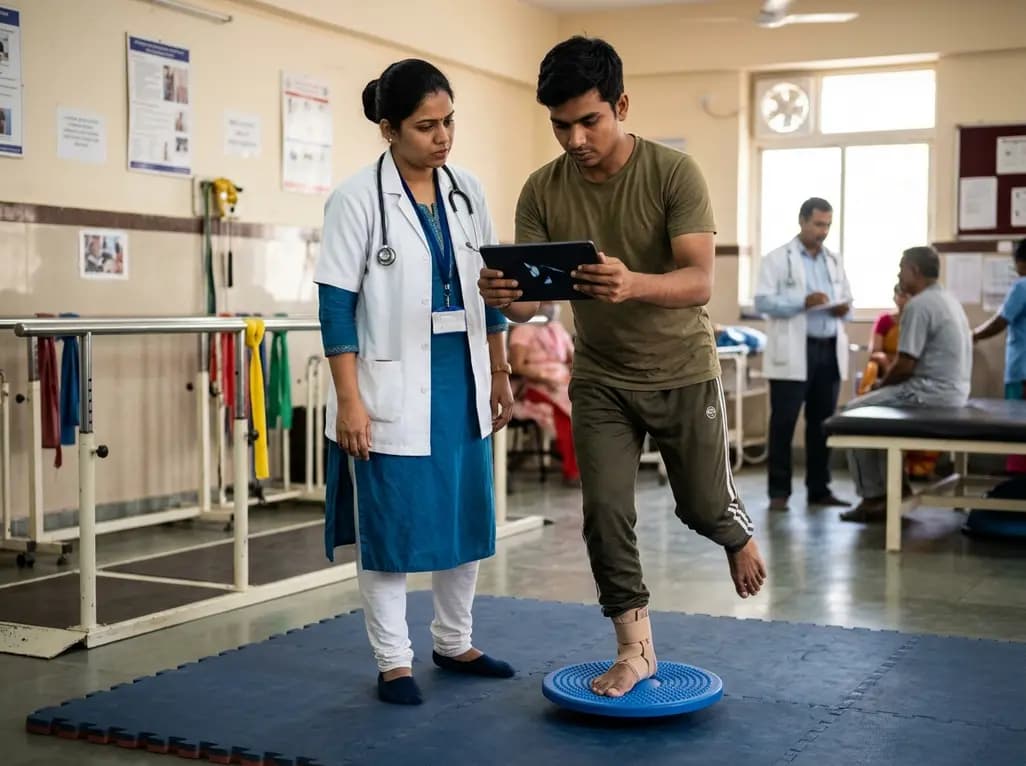
A randomized controlled trial demonstrates that an eight-week dual-task training intervention significantly improves static and dynamic postural control over standard balance exercises in individuals with chronic ankle instability, addressing critical neurocognitive deficits during athletic and daily activities.
Today

A retrospective cohort study of 7,716 ICU patients from the MIMIC-IV database demonstrates that Gradient Boosting Decision Trees significantly outperform traditional SOFA scores in predicting in-hospital mortality among patients with sepsis and diabetes, with SHAP analysis providing clinical interpretability.
Today
