.webp&w=384&q=75)

Loading, please wait...
Loading, please wait...

Surgical management of hypothalamic hamartomas (HH) remains a significant neurosurgical challenge due to their deep-seated location. Historically, microsurgery was the primary treatment, but less invasive techniques have gained prominence to reduce risks. Among these, the endoscopic disconnection of HH provides a specialized approach to control drug-resistant epilepsy while minimizing damage to critical structures. While Laser Interstitial Thermal Therapy (LITT) has grown in popularity, recent evidence suggests that endoscopy remains a highly effective surgical option for many patients.
Researchers recently conducted a retrospective analysis of 29 patients who underwent robotic-assisted procedures between 2011 and 2023. These patients primarily suffered from gelastic seizures and various types of HH according to the Delalande classification. Notably, the team utilized direct visualization and real-time monitoring to ensure precision during the operations. Furthermore, the study followed these patients for an average of 6.9 years to evaluate long-term success and safety.
The results indicated that 65.5% of patients achieved Engel class I seizure freedom. Specifically, patients with type II HH experienced the most favorable outcomes. Additionally, the procedure maintained or improved cognitive function in most participants. Although some patients required multiple interventions, the overall safety profile remained robust. Permanent complications were rare, affecting only a small percentage of the cohort, mostly after repeated surgeries. Consequently, the findings suggest that the initial procedure provides a strong balance of efficacy and safety.
Moreover, the researchers observed that endocrinological status remained stable for approximately 77% of patients who underwent a single procedure. In some cases, hormonal health even improved after the intervention. Therefore, the study concludes that endoscopic techniques remain an essential tool in the neurosurgical arsenal. This is particularly true for newly diagnosed cases or residual lesions with intraventricular involvement. While newer technologies continue to emerge, endoscopic disconnection of HH remains a reliable and viable story for modern epilepsy management.
In this long-term study, approximately 65.5% of patients achieved Engel class I seizure freedom, meaning they became free of disabling seizures over a mean follow-up of nearly seven years.
Most patients experience stable or improved cognitive and endocrine outcomes. However, the study noted that repeat procedures might slightly increase the risk of minor hormonal deficits like hypothyroidism.
Disclaimer: This content is for informational and educational purposes only. It does not constitute medical advice or establish a doctor-patient relationship. Always seek the advice of a qualified healthcare provider regarding a medical condition. Refer to the latest local and national guidelines for clinical practice.
References
De Benedictis A et al. Endoscopic disconnection of hypothalamic hamartoma: an already outdated story? J Neurosurg Pediatr. 2026 Apr 10. doi: 10.3171/2025.11.PEDS25377. PMID: 41962169.
Niazi F et al. Outcome of Surgery for Hypothalamic Hamartoma-Related Epilepsy: A Systematic Review and Individual Participant Data Meta-Analysis. Neurology. 2024 Dec 24;103(12):e210060.
Hall WA, De Jesus O. Hypothalamic Hamartoma. StatPearls [Internet]. Treasure Island (FL): StatPearls Publishing; 2025 Oct.

Read summarized clinical updates, watch expert medical content, and earn CME certifications right from your smartphone.
Open your smartphone camera to scan and install.





A retrospective study confirms that robotic-assisted endoscopic disconnection remains a viable, effective, and safe option for treating HH-related epilepsy....
6 months ago

An observational study from the NIH All of Us Research Program reveals that adding a multi-ancestry polygenic risk score to machine learning models provides only modest improvements in predicting adult weight gain, underscoring the enduring significance of routine clinical and lifestyle factors.
Today

A study in JAMIA Open shows lightweight open-source reasoning LLMs achieve up to 95% sensitivity and accelerate evidence synthesis screening by nearly twentyfold, presenting a cost-effective, scalable AI solution for biomedical research and systematic reviews.
Today
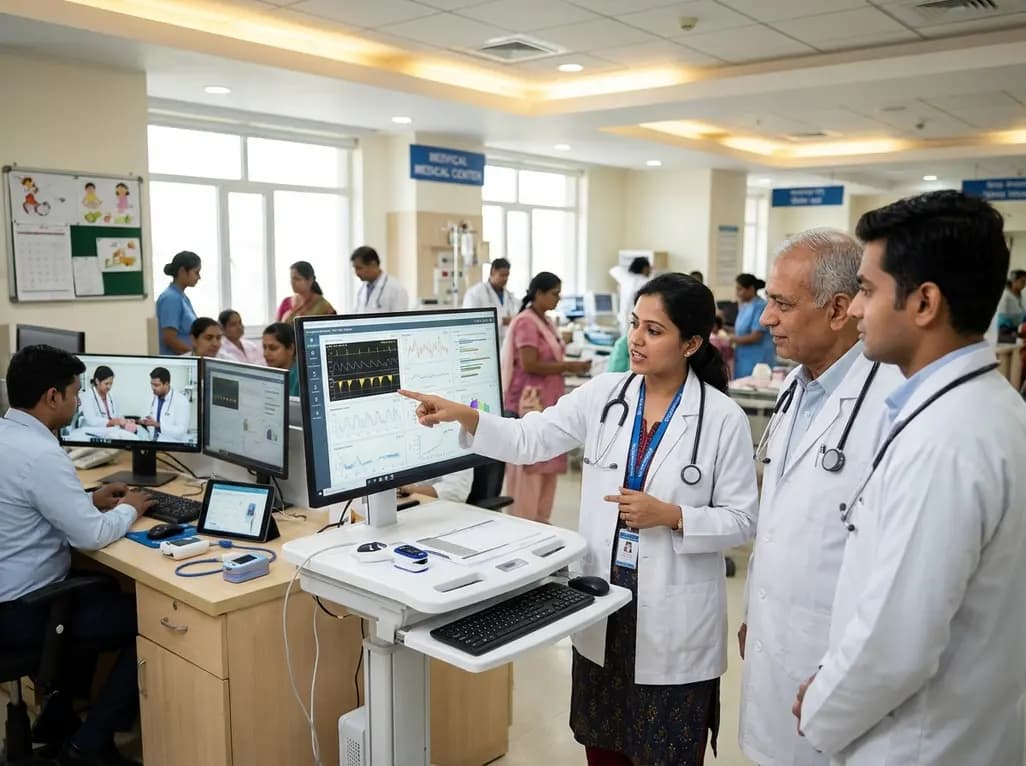
A landmark study details how an enterprise pediatric remote patient management model expanded from a single cardiology pilot to 16 diverse specialty programs by combining centralized digital operations with specialty clinical leadership.
Today
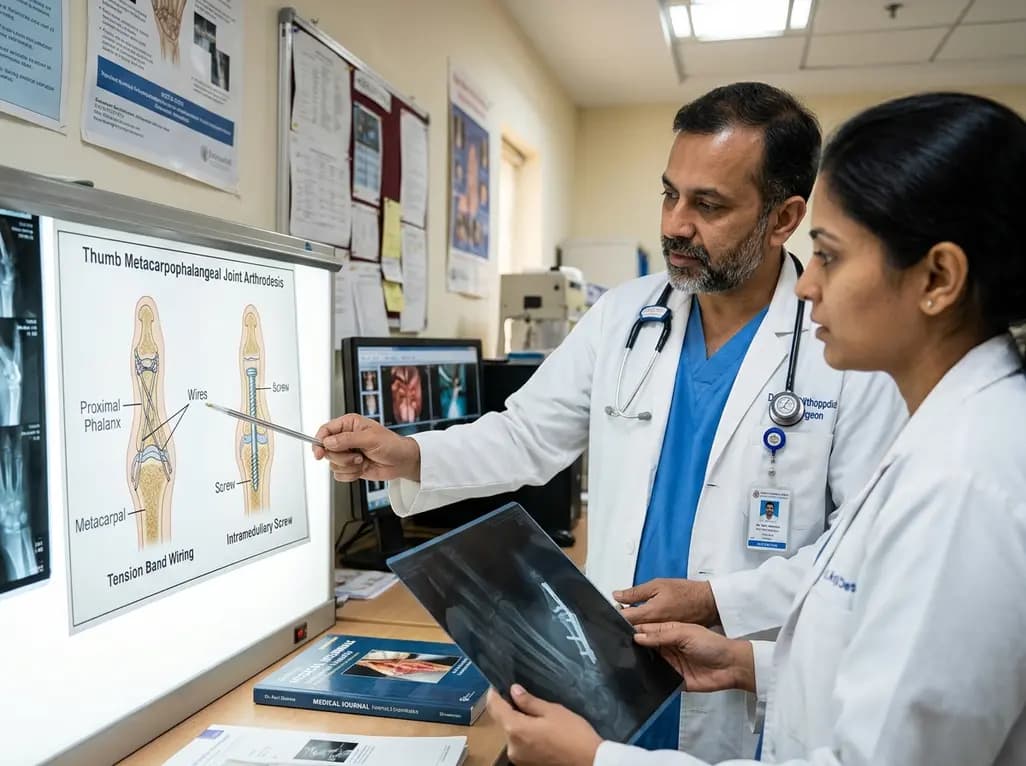
A comparative review of tension band wiring and intramedullary screw fixation in thumb metacarpophalangeal arthrodesis, evaluating union rates, hardware complications, and clinical outcomes.
Yesterday

A breakthrough ultrathin multimodal sensor decouples physical hemodynamic monitoring from disposable electrochemical calibration, achieving long-term wearable glucose prediction with 81.36% accuracy and a 9.12% MARD. This offers a robust, drift-free solution for outpatient metabolic surveillance.
Yesterday
