.webp&w=384&q=75)

Loading, please wait...
Loading, please wait...
Modern healthcare systems have increasingly pivoted toward supporting home deaths as the preferred end-of-life (EOL) outcome. This shift is driven by patient preferences for dignity and familiarity, as well as policy changes aimed at reducing the financial strain on institutional palliative care. Consequently, the family home has become a primary site of clinical and supportive care. However, this transition fundamentally changes the dynamics of patient management. Recent research underscores a significant rise in end-of-life caregiving intensity among families managing home deaths. While the goal is often to provide a peaceful transition, the reality involves a complex web of medical, emotional, and physical labor. Informal caregivers, typically family members or close friends, find themselves acting as untrained nursing staff. They manage medication schedules, handle personal care, and monitor fluctuating symptoms. Therefore, understanding the true weight of this responsibility is essential for clinicians who must support both the patient and the caregiver. The current trajectory suggests that without improved formal support, the burden on these under-resourced individuals will continue to grow exponentially.
To quantify the workload associated with home deaths, researchers conducted a secondary data analysis of the Health and Retirement Study (HRS) spanning two decades. This longitudinal study analyzed over 8,000 decedents aged 65 and older to compare the hours of informal care provided in different settings. The findings reveal that decedents dying at home receive significantly more hours of informal caregiving per day than those in institutions. Specifically, this end-of-life caregiving intensity became even more pronounced after 2010, reflecting a deepening dependence on family networks. Quantile regression methods further showed that this association is not uniform. The burden is particularly extreme for caregivers in the highest quantiles of care hours, where the time commitment often exceeds forty hours per week. These individuals are effectively providing full-time care without the benefit of institutional shifts or professional relief. Moreover, the study highlights that this intensity is often hidden from the traditional healthcare view. Because this labor occurs within the private sphere, it is frequently underestimated in policy planning and clinical assessment.
Perhaps the most troubling finding in recent palliative care research is the lack of association between caregiving intensity and symptom management. One might assume that more hours of dedicated care would lead to better control of pain, dyspnea, or agitation. However, the data suggests otherwise. High-intensity care does not necessarily translate into improved comfort for the dying patient. This disconnect often stems from the fact that informal caregivers lack the professional training required to manage complex clinical crises. For example, they may struggle with titration of analgesics or the recognition of nuanced respiratory changes. Additionally, the emotional distress of watching a loved one suffer can impair a caregiver's ability to execute complex care tasks effectively. Furthermore, the absence of real-time clinical guidance for home-based caregivers means they are often operating in a state of high alert but low efficacy. This gap emphasizes that simply spending more time at the bedside is not a substitute for professional palliative intervention and structured caregiver education.
In the Indian context, the challenges of informal caregiving are amplified by unique socioeconomic factors. Traditional cultural expectations dictate that children and spouses should provide EOL care at home, often regardless of their own health or financial status. Furthermore, India faces a significant shortage of formal palliative care infrastructure, particularly in rural and semi-urban areas. Families often incur high out-of-pocket expenditures for medicines and home equipment, which further adds to the psychological strain. Recent studies in South India have highlighted that the prevalence of moderate to severe caregiver burden is alarmingly high, especially among women who shoulder the majority of these responsibilities. Therefore, the financial and physical toll can lead to a "crisis of care" within the household. Moreover, the lack of structured respite care options means that caregivers rarely get a break from their duties. This sustained pressure frequently results in the caregiver’s own health deteriorating, sometimes leading to a higher mortality risk for the caregiver themselves. Consequently, clinicians must recognize that the family is not just a resource, but a vulnerable unit in need of support.
Physicians and nurses play a pivotal role in mitigating the strain on informal caregivers. The first step involves routine screening for caregiver burnout using validated tools like the Zarit Burden Interview. By identifying high-risk individuals early, clinicians can tailor their support strategies. Furthermore, proactive education is vital; caregivers need clear, simplified protocols for symptom management at home. For instance, providing written guides on how to manage pain breakthroughs can reduce the caregiver's anxiety. Additionally, establishing clear lines of communication through telehealth or home-care visits can bridge the gap between intensity and efficacy. Clinicians should also encourage families to share the caregiving load to prevent a single individual from reaching a breaking point. Moreover, discussing advance care planning early in the disease trajectory can help set realistic expectations for home care. By acknowledging the caregiver as a critical member of the care team, physicians can foster a more sustainable environment for home-based palliative care. Ultimately, the goal is to ensure that the patient’s comfort is achieved without sacrificing the caregiver’s well-being.
The increasing dependence on under-resourced informal caregiving signals an urgent need for policy reform. National health strategies must go beyond simply encouraging home deaths; they must provide the infrastructure to make home care safe and sustainable. This includes expanding the availability of community-based palliative care teams and providing financial subsidies for EOL care supplies. Furthermore, legal and workplace policies should offer better support for family members who must take leave from work to provide care. For example, paid caregiving leave could alleviate some of the financial stress that currently plagues low-income families. Additionally, integrating hospice services into primary healthcare can ensure that specialist support is available when symptoms become difficult to manage. Therefore, future health system designs must account for the high end-of-life caregiving intensity that currently falls on private shoulders. Only through a combined approach of clinical excellence and supportive policy can we ensure that a home death truly represents a dignified and peaceful end-of-life experience for everyone involved.
Research consistently shows that home deaths require significantly more hours of informal caregiving compared to institutional settings. At home, family members must take over roles usually handled by nursing staff, such as monitoring vital signs and managing hygiene. This shift often leads to an average of over eight hours of care per day. Consequently, caregivers in home settings face a much higher risk of physical exhaustion and social isolation than those supported by hospital teams.
While caregivers spend significant time at the bedside, they often lack the specialized training to treat advanced symptoms like severe pain or respiratory distress. High caregiving intensity frequently reflects the patient's deteriorating condition rather than the caregiver's medical efficacy. Without real-time access to professional palliative advice or appropriate medications, caregivers may feel helpless despite their constant presence. Therefore, increasing care hours alone cannot replace the need for professional clinical interventions and structured training.
Clinicians should look for physical symptoms such as chronic fatigue, frequent illnesses, or significant weight changes in the caregiver. Emotional indicators include increasing irritability, social withdrawal, and expressions of hopelessness or resentment toward the patient. Caregivers who report difficulty sleeping or a lack of interest in their own hobbies are often at high risk. Identifying these signs early through regular screening allows for timely interventions, such as recommending respite care or professional counseling support.
Disclaimer: This content is for informational and educational purposes only. It is not intended to provide medical advice or to be a substitute for professional clinical judgment. Refer to the latest local and national guidelines for clinical practice.
References
Bhagianadh D et al. Beyond Averages: Informal Caregiving Intensity at End-of-Life for Home Deaths. J Appl Gerontol. 2026 Jul 02. doi: 10.1177/07334648261466715. PMID: 42393500.
Shefeek SK et al. Caregiver burden and quality of life in palliative care: cross-sectional study. BMJ Support Palliat Care. 2026; doi: 10.1136/bmjspcare-2025-004500.
Freeman S et al. A holistic approach to supporting death in the home: Implementation of a home hospice program in a northern community. PLOS ONE. 2024;19(10):e0306553.
Joy TM et al. Mapping end-of-life care in India: a scoping review to identify gaps in policy and practice. PMC. 2025; PMID: 38923456.

Read summarized clinical updates, watch expert medical content, and earn CME certifications right from your smartphone.
Open your smartphone camera to scan and install.





New research highlights a significant rise in informal caregiving intensity for patients dying at home. Despite more hours spent by families, symptom management remains a challenge, necessitating better clinical and policy support for caregivers.
3 months ago
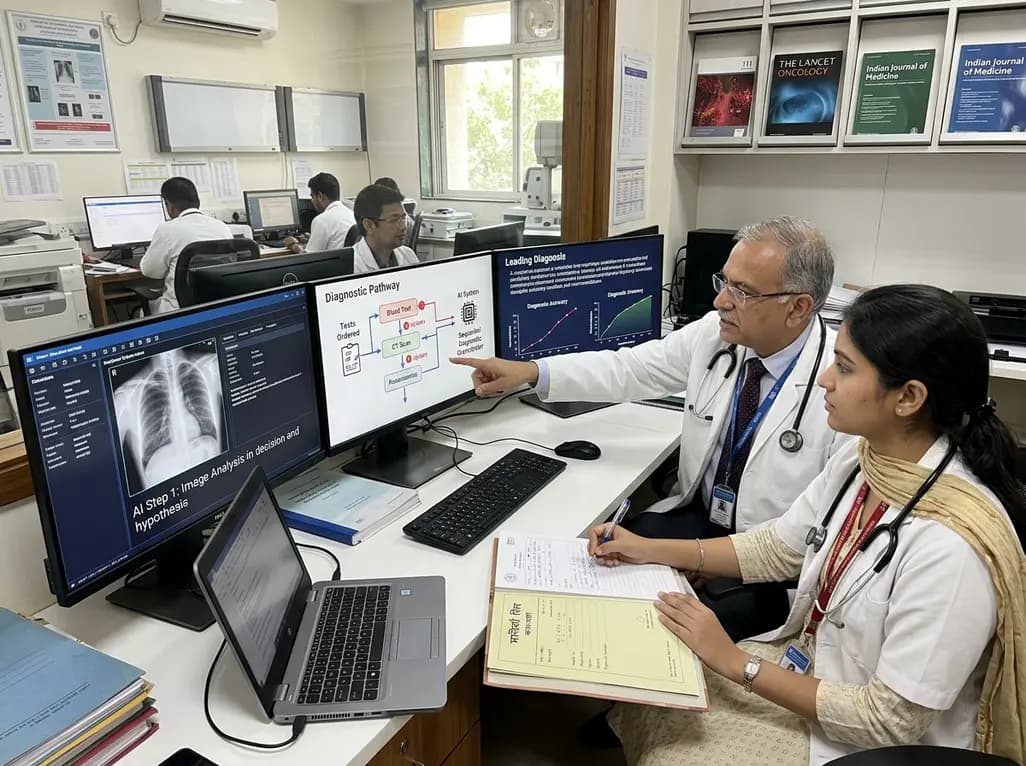
A breakthrough peer-reviewed study demonstrates that a sequential AI diagnosis system can mirror real-world clinical reasoning. By ordering stepwise tests and updating hypotheses dynamically, this multi-agent orchestrator achieved superior diagnostic accuracy while reducing investigative costs.
Today

A prenatal case highlights severe glutaric acidemia type II presenting as bilateral hyperechoic cystic kidneys at 18 weeks. Whole-exome sequencing revealed a novel homozygous ETFDH frameshift variant, demonstrating the power of rapid genetic testing in fetal renal anomalies.
Today

Review how tailored exercise programs benefit frail older patients with heart failure. Explore pathophysiological mechanisms, individualized training prescriptions, and strategies to overcome adherence barriers in clinical practice.
Yesterday

This comparative study evaluates posterior labral tears with and without glenohumeral instability, highlighting distinct demographic patterns, MRI underestimation in stable shoulders, and successful arthroscopic repair outcomes.
Yesterday

A clinical study demonstrates that early intervention with tocilizumab, either as monotherapy or bridged with corticosteroids, achieves significant proptosis reduction and resolves active inflammation in treatment-naive thyroid eye disease.
Yesterday
