.webp&w=384&q=75)

Loading, please wait...
Loading, please wait...

Empathy in midwifery education is a cornerstone for delivering culturally competent care to diverse patient populations. Therefore, a recent cross-sectional study in Türkiye evaluated empathic tendencies and xenophobic attitudes among 724 midwifery students. While the findings showed no direct correlation between empathy and xenophobia, several demographic and educational factors significantly influenced these traits.
Specifically, the study highlighted that empathy levels varied based on students' university, citizenship status, and income levels. Moreover, having intercultural friendships and prior clinical experience with foreign individuals positively impacted empathic tendencies. Consequently, real-world exposure to different cultures helps students develop a deeper connection with diverse patients.
On the other hand, students who completed specific courses on intercultural midwifery demonstrated notably lower xenophobia levels. Furthermore, factors like family type and the type of residence during their upbringing influenced these attitudes. Similarly, because xenophobic attitudes create barriers to healthcare access, health institutions must integrate intercultural competence into their core curricula.
In addition, educators should prioritize practical intercultural engagement. For example, providing clinical opportunities with foreign patients and fostering diverse social environments can bridge gaps in understanding. Although empathy and xenophobia appeared as independent variables in this study, addressing both is crucial for promoting equitable healthcare.
Surprisingly, this study found no significant association between empathic tendency and xenophobia levels. This suggests they are independent psychological constructs requiring separate educational interventions.
Taking dedicated courses on intercultural midwifery was significantly associated with lower xenophobia levels among the students surveyed in this research.
Providing care to foreign individuals during clinical practice significantly influenced students' empathic tendencies. This highlights the vital importance of diverse clinical placements in health education.
Disclaimer: This content is for informational and educational purposes only and does not constitute professional medical advice or training. Always consult official educational standards and clinical protocols. Refer to the latest local and national guidelines for clinical practice.
References
1. Hacıvelioğlu D et al. Empathy and xenophobic attitudes toward migrants among midwifery students in Türkiye: a cross-sectional study. BMC Public Health. 2026 Jun 16. doi: 10.1186/s12889-026-27913-0. PMID: 42304177.
2. Akyıldız D, Kılıç Ç, Çamur Z, Kuzucu B, Ceyhan F. Factors affecting midwifery students' intercultural sensitivity and xenophobia levels in Turkiye. Eur J Midwifery. 2026;10(Supplement 1):A107.
3. Çingöl N, Karakaş M, Çelebi E, Zengin S. Determining the effect of an intercultural nursing course on empathic skill and intercultural sensitivity levels: an intervention study. Nurse Educ Today. 2021;99:103171.

Read summarized clinical updates, watch expert medical content, and earn CME certifications right from your smartphone.
Open your smartphone camera to scan and install.





This study examines empathy and xenophobia among 724 midwifery students in Türkiye. Results indicate that empathy and xenophobia are independent of each other. However, factors like income, intercultural courses, and friendships significantly influence these attitudes, highlighting the need for cultural education.
4 months ago
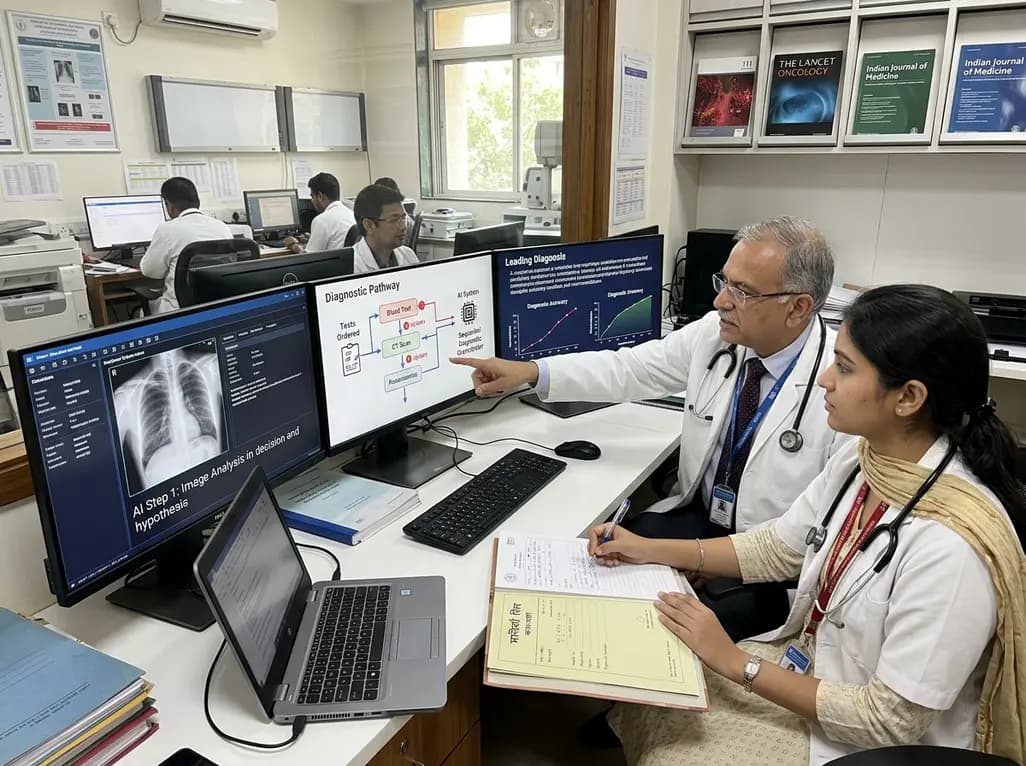
A breakthrough peer-reviewed study demonstrates that a sequential AI diagnosis system can mirror real-world clinical reasoning. By ordering stepwise tests and updating hypotheses dynamically, this multi-agent orchestrator achieved superior diagnostic accuracy while reducing investigative costs.
Today

A prenatal case highlights severe glutaric acidemia type II presenting as bilateral hyperechoic cystic kidneys at 18 weeks. Whole-exome sequencing revealed a novel homozygous ETFDH frameshift variant, demonstrating the power of rapid genetic testing in fetal renal anomalies.
Today

Review how tailored exercise programs benefit frail older patients with heart failure. Explore pathophysiological mechanisms, individualized training prescriptions, and strategies to overcome adherence barriers in clinical practice.
Yesterday

This comparative study evaluates posterior labral tears with and without glenohumeral instability, highlighting distinct demographic patterns, MRI underestimation in stable shoulders, and successful arthroscopic repair outcomes.
Yesterday

A clinical study demonstrates that early intervention with tocilizumab, either as monotherapy or bridged with corticosteroids, achieves significant proptosis reduction and resolves active inflammation in treatment-naive thyroid eye disease.
Yesterday
