.webp&w=384&q=75)

Loading, please wait...
Loading, please wait...

Functional neurological disorder presents a complex intersection of somatic neurology and psychological distress. Clinicians have long recognized that affective processes shape symptom severity. However, robust experimental paradigms are essential to quantify these interactions accurately. A groundbreaking investigation has now evaluated emotion regulation in FND through rigorous psychological and physiological testing. This multimethod analysis clarifies how individuals navigate affective distress through solitary and social mechanisms. Consequently, these findings offer vital guidance for neurologists and psychiatrists managing conversion symptoms in clinical settings.
Patients living with functional neurological disorder frequently experience significant difficulties in identifying and modulating distress. In the initial phase of the study, researchers surveyed 109 individuals with functional neurological symptoms and 88 healthy control subjects. The results revealed striking differences across habitual emotional metrics. Specifically, patients with functional disorders documented substantially higher levels of alexithymia and overall emotion dysregulation. In addition, these participants reported markedly greater rates of adverse childhood trauma.
Moreover, participants with functional neurological symptoms demonstrated a significant reduction in their spontaneous reliance on interpersonal regulation. They rarely shared emotional distress with friends, family members, or caregivers to alleviate internal discomfort. Instead, these individuals frequently relied on internal coping strategies or emotional suppression. Therefore, clinicians must appreciate that subjective affective turmoil represents a pervasive baseline challenge for this cohort. These chronic affective deficits likely diminish resilience against acute environmental stressors. Consequently, addressing emotional awareness should remain a primary focus during initial multidisciplinary evaluations.
To validate self-reported deficits, investigators conducted controlled laboratory experiments on a targeted subsample of 33 patients and 33 healthy controls. The first experimental paradigm evaluated intrapersonal choices between cognitive reappraisal and attentional distraction. Participants viewed emotional imagery of varying intensity while recording their chosen strategy and subjective arousal. Simultaneously, scientists measured the acoustic startle reflex magnitude to track defensive psychophysiological reactivity.
Interestingly, stimulus intensity reliably predicted regulatory behavior across both participant groups. When visual stimuli were mild, subjects consistently favored cognitive reappraisal to reframe negative meaning. Conversely, higher stimulus intensity prompted an immediate shift toward cognitive distraction. Surprisingly, the laboratory data revealed no significant differences between patient and control cohorts in solitary regulation choice or success. Both groups successfully lowered subjective arousal and attenuated startle amplitude when applying structured techniques. Therefore, patients with functional disorders demonstrate intact capacity for momentary emotional control under explicit laboratory instructions. This observation suggests that intrinsic skill deficits do not fully explain their persistent clinical struggles.
The secondary experimental paradigm explored social dimensions by contrasting self-directed reappraisal with external, other-guided cognitive reappraisal. During this protocol, participants either generated their own cognitive reframing or received guided reappraisal instructions from an external source. Once again, higher emotional intensity significantly decreased the preference for solitary reappraisal over supportive interpersonal guidance. Furthermore, the patient cohort displayed a noticeable trend toward avoiding interpersonal regulation options.
Nevertheless, the physiological findings demonstrated striking advantages for social interventions. Interpersonal reappraisal produced significantly lower startle reflex amplitudes than solitary cognitive reframing across all subjects. This physiological attenuation indicates that guided social support uniquely suppresses defensive autonomic reflexes. Although the two cohorts achieved similar overall reductions in subjective distress, social buffering provided distinct psychophysiological relief. Consequently, social safety cues appear biologically potent in downregulating limbic threat responses. However, individuals with functional symptoms often remain hesitant to mobilize these interpersonal resources naturally. Clinicians must therefore identify ways to bridge this crucial gap between interpersonal capacity and everyday behavioral avoidance.
A central paradox highlighted by this investigation is the clear divergence between subjective reporting and objective experimental execution. In questionnaire batteries, patients consistently describe severe affective dysregulation and marked distress. Yet, structured laboratory assessments reveal that their momentary regulatory capacity remains remarkably intact. What factors explain this pronounced mismatch?
First, laboratory environments provide structured guidance, structured cues, and minimal ambient ambiguity. Patients often perform effectively when clinicians provide explicit cognitive frameworks and supportive task instructions. In contrast, real-world stressors occur unpredictably, requiring rapid cognitive flexibility and immediate emotional clarity. Second, pervasive alexithymia impairs internal monitoring, causing patients to perceive their coping abilities as inadequate even when physiological compensation occurs. Third, early childhood adversity frequently disrupts social attachment systems. As a result, patients may avoid seeking help because interpersonal interactions historically triggered vulnerability rather than security. Therefore, therapeutic interventions must bridge structured behavioral capability with spontaneous, unprompted daily execution. Helping patients recognize their existing regulatory competence can substantially foster clinical empowerment.
These experimental insights carry direct therapeutic implications for neurological and psychiatric practitioners. Functional neurological symptoms frequently serve as somatic manifestations of autonomic overload or unresolved affective distress. Therefore, integrated management requires clinicians to look beyond isolated motor or sensory complaints. Neurologists should establish collaborative partnerships with liaison psychiatrists and clinical psychologists early in the diagnostic pathway.
Furthermore, psychotherapy should explicitly incorporate interpersonal effectiveness training alongside cognitive behavioral therapy. Clinicians can utilize dialectical behavior therapy or psychodynamic interpersonal therapy to dismantle relational avoidance. By practicing other-guided reappraisal within a safe therapeutic relationship, patients learn to utilize social support systems constructively. Additionally, therapists must address alexithymia by enhancing somatic awareness and emotional labeling skills. When patients learn to distinguish physiological arousal from physical pathology, symptom anxiety diminishes rapidly. Ultimately, fostering both solitary resilience and interpersonal trust offers the most robust pathway toward long-term functional recovery.
Affective dysregulation directly influences autonomic reactivity and neuromuscular control in vulnerable patients. When individuals experience overwhelming psychological distress but lack effective regulatory strategies, the central nervous system can convert internal tension into physical symptoms, such as functional weakness or non-epileptic seizures. Consequently, teaching structured emotion modulation helps stabilize autonomic balance, attenuates limb reactivity, and significantly reduces the frequency of acute somatic symptom episodes in clinical practice.
Controlled laboratory paradigms provide explicit directions, predictable stimuli, and structured timing, which facilitate successful cognitive execution. In everyday life, however, emotional stressors arrive unpredictably and demand immediate cognitive flexibility. Furthermore, high baseline alexithymia leads individuals to perceive their emotional abilities as inadequate. Therefore, while patients possess the underlying biological capacity to regulate emotion under guided conditions, they struggle to deploy these strategies autonomously amid complex real-world challenges.
Cognitive behavioral therapy and psychodynamic interpersonal therapy represent two highly effective modalities for addressing interpersonal deficits. These interventions encourage patients to process interpersonal conflict, communicate emotional needs, and utilize supportive social resources rather than withdrawing. Furthermore, integrating dialectical behavior therapy skills trains patients in distress tolerance and relational effectiveness. Ultimately, practicing guided reappraisal within a supportive therapeutic alliance empowers individuals to reduce defensiveness and rebuild healthy social coping habits.
Disclaimer: This content is for informational and educational purposes only... Refer to the latest local and national guidelines for clinical practice.
References

Read summarized clinical updates, watch expert medical content, and earn CME certifications right from your smartphone.
Open your smartphone camera to scan and install.





Recent research evaluates emotion regulation in functional neurological disorder, comparing intrapersonal and interpersonal strategies to guide neuropsychiatric care.
last month

Recent epidemiological data reveals a dramatic surge in summer heat mortality driven by human-induced climate warming. This analysis explores the pathophysiological impacts on cardiac and renal systems, diagnostic dilemmas in death certification, and essential emergency cooling protocols for acute clinical care.
Today

Odisha has established India's first state-level clinical protocol specifically tailored for pregnant women with sickle cell disease. Developed with NHM and UNICEF, the framework provides structured antenatal screening, crisis mitigation, standardized referral pathways, and specialized interdisciplinary care.
Today

India is advancing preventive healthcare by integrating genomics, artificial intelligence, and quantum technologies. With the SANGAM programme sequencing one million Indian genomes, clinicians can unlock personalized therapies, detect cardiometabolic risks early, and curb the burden of diabetes and heart disease.
Today
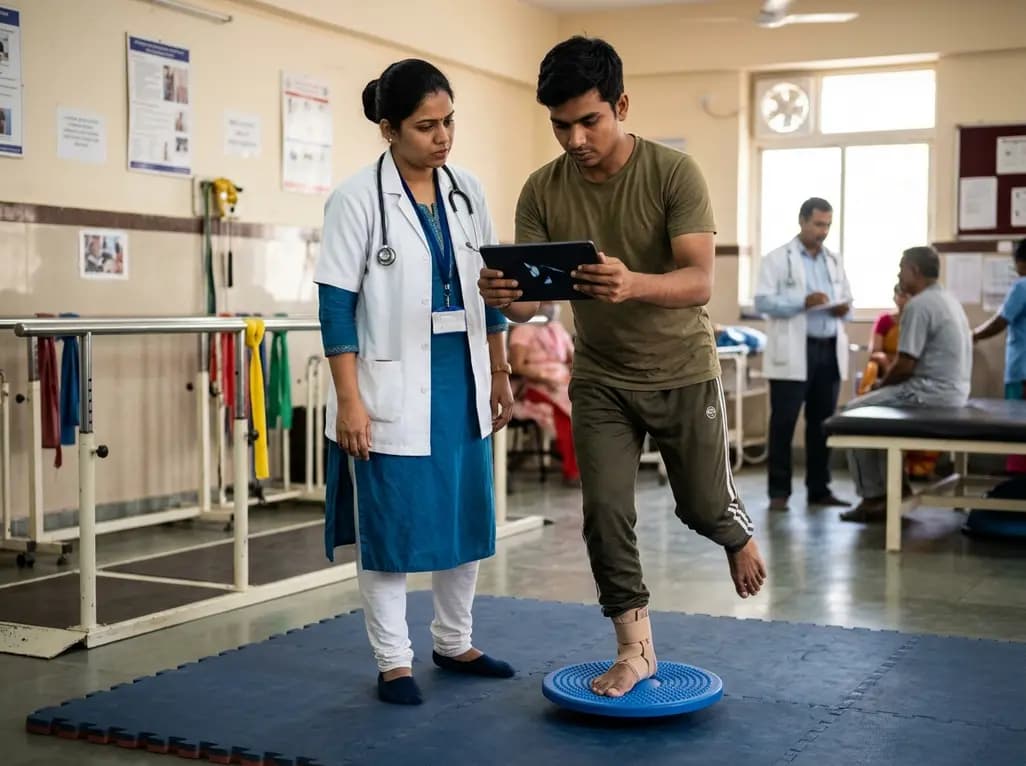
A randomized controlled trial demonstrates that an eight-week dual-task training intervention significantly improves static and dynamic postural control over standard balance exercises in individuals with chronic ankle instability, addressing critical neurocognitive deficits during athletic and daily activities.
Today

A retrospective cohort study of 7,716 ICU patients from the MIMIC-IV database demonstrates that Gradient Boosting Decision Trees significantly outperform traditional SOFA scores in predicting in-hospital mortality among patients with sepsis and diabetes, with SHAP analysis providing clinical interpretability.
Today
