.webp&w=384&q=75)

Loading, please wait...
Loading, please wait...

Clinical residency demands that physicians balance rapid patient care with extensive electronic documentation. Consequently, investigating emergency medicine EHR efficiency offers crucial insights into resident workflow and cognitive workload. A comprehensive retrospective cohort study analyzed over one hundred fifty-five thousand encounters across five and a half years of training. Researchers examined EHR audit log data from one hundred thirty-three emergency medicine trainees between 2020 and 2025. Interestingly, the investigation revealed that technical charting efficiency accelerates substantially as trainees gain clinical experience. Senior emergency residents spend dramatically less time managing digital records for individual patient encounters than junior peers. However, this measurable efficiency gain does not automatically reduce overall shift fatigue or after-hours computer demands. Instead, senior residents assume broader operational roles that require prolonged interaction with department tracking systems. Therefore, technical proficiency alone cannot resolve the pervasive administrative burden experienced by frontline emergency doctors. Medical training programs must recognize that individual speed cannot overcome systemic documentation demands. Trainees effectively run faster merely to remain in the same operational place.
Audit log metrics demonstrate remarkable improvements in how senior residents process individual patient encounters. Specifically, encounter-attributed electronic health record time dropped by fifty-one percent between postgraduate year one and year four. First-year residents spent a median of nineteen point seven minutes interacting with digital charts per patient. In sharp contrast, fourth-year residents required only nine point seven minutes per encounter to perform identical documentation tasks. Furthermore, clinical note synthesis demonstrated the largest absolute reduction among all evaluated digital activities. Senior trainees wrote significantly shorter progress notes, navigated review screens faster, and logged diagnostic orders with greater efficiency. In addition, experienced residents demonstrated higher typing speeds and synthesized complex patient histories more concisely. These objective findings prove that clinicians develop effective charting instincts through structured clinical immersion. Nevertheless, documentation efficiency gains plateau as clinical complexity increases in senior residency years. Advanced trainees frequently manage sicker patients who require multi-organ assessment, complex consultations, and extensive medical handovers. Consequently, individual encounter speed cannot entirely shield senior residents from heavy overall documentation volumes.
Although individual documentation became twice as fast, overall after-hours record use failed to decline. In fact, time spent working in the electronic health record outside scheduled shifts persisted across all four training classes. Shift-level tracking board management emerged as the predominant driver of after-hours computer work. Moreover, senior residents experienced an unexpected surge in post-shift tracking board activity. While first-year residents logged a median of forty point two minutes of post-shift tracking board time, fourth-year residents logged seventy-nine minutes per shift. Senior emergency trainees frequently supervise department flow, follow pending laboratory tests, and manage bed assignments for multiple junior teams. Consequently, urgent operational demands constantly interrupt senior residents during clinical shifts. Trainees must therefore postpone clerical tasks, final chart sign-offs, and discharge summaries until after their official shift ends. Thus, unscheduled computer work becomes an informal requirement for fulfilling supervisory responsibilities. This persistent after-hours burden erodes personal rest and contributes to physical exhaustion. Academic health centers cannot solve after-hours documentation simply by urging trainees to chart faster.
Emergency care requires intense concentration, continuous triage, and immediate decision-making under severe time constraints. Consequently, fragmented digital interfaces impose a heavy cognitive tax on practicing emergency physicians. When trainees continuously switch between patient resuscitation and complex electronic order entry, cognitive overload rapidly accumulates. Furthermore, performing substantial computer work at home disrupts essential sleep cycles and diminishes restorative leisure hours. Trainees often sacrifice family relationships and physical well-being to clear administrative inboxes and review diagnostic studies. In addition, prolonged digital documentation correlates strongly with emotional exhaustion, depersonalization, and resident attrition. Residency leaders have historically attributed after-hours charting to deficient individual organization or inadequate clinical preparation. However, objective audit log evidence definitively proves that system architecture drives persistent workload. Senior residents already demonstrate optimal electronic charting speed, yet institutional workflow demands continue to expand. Therefore, healthcare leaders must address documentation overload as a systemic design failure rather than a personal trainee shortcoming. Protecting physician wellness requires reforming clinical environments rather than demanding greater individual stamina from exhausted doctors.
These longitudinal findings provide crucial guidance as healthcare systems modernize clinical documentation workflows. Academic institutions must streamline electronic health record interfaces, remove redundant documentation requirements, and eliminate unnecessary administrative checkboxes. Furthermore, hospitals should integrate ambient artificial intelligence scribes into emergency departments to automate clinical charting during bedside visits. Recent clinical studies show that ambient voice technology significantly decreases documentation time without harming record quality or billing accuracy. Consequently, emergency clinicians can redirect valuable attention toward acute clinical care and bedside trainee education. In addition, these lessons hold profound relevance for emergency medicine training across India. As Indian tertiary hospitals expand electronic health records under the Ayushman Bharat Digital Mission, emergency casualty departments face unique operational bottlenecks. High patient volumes, complex resuscitations, and crowded wards already place severe demands on Indian postgraduate trainees. If health systems introduce complex electronic records without tailored workflows, resident burnout will inevitably escalate. Therefore, Indian medical institutions must integrate clinical informatics training into postgraduate curricula and optimize digital systems specifically for acute casualty settings. Ultimately, healthcare leaders must ensure that digital transformation empowers physicians rather than adding uncompensated administrative burdens.
Emergency medicine residents achieve substantial gains in documentation efficiency throughout residency training. Objective audit log data demonstrate that encounter-attributed EHR time decreases by fifty-one percent from postgraduate year one to year four. Senior residents write shorter clinical notes, achieve faster typing speeds, and navigate patient records with greater precision. However, these individual speed improvements do not eliminate after-hours work because senior residents absorb extensive tracking board management and departmental coordination duties.
After-hours EHR workload persists and expands for senior residents because their core responsibilities shift toward department leadership. Senior trainees supervise overall patient flow, coordinate admissions, and manage complex bed logistics for junior teams. Consequently, shift-level tracking board tasks dominate their after-hours work, nearly doubling between junior and senior training years. Systemic care coordination displaces routine clerical charting during active shifts, forcing senior emergency residents to finalize documentation after their scheduled clinical hours conclude.
Hospitals must implement systemic solutions rather than relying entirely on individual clinician speed to curb documentation overload. Healthcare institutions can deploy ambient artificial intelligence scribes to capture bedside clinical encounters automatically, substantially reducing keyboard charting time. Furthermore, leadership should redesign electronic health records to eliminate redundant checkboxes and unnecessary administrative approvals. Finally, scheduling dedicated administrative transition time during shifts ensures emergency physicians complete handovers and note closures before leaving the hospital.
Disclaimer: This content is for informational and educational purposes only... Refer to the latest local and national guidelines for clinical practice.
References

Read summarized clinical updates, watch expert medical content, and earn CME certifications right from your smartphone.
Open your smartphone camera to scan and install.





A 5.5-year study reveals emergency medicine residents halve encounter EHR time by PGY-4, yet after-hours tracking board work doubles. Addressing documentation burden demands systemic workflow and informatics reforms rather than relying on individual speed alone.
Today
A Mumbai tertiary care hospital study reveals Gram-negative bacteria dominate clinical isolates with high multidrug resistance, emphasizing the critical need for regular institutional antibiograms, robust antimicrobial stewardship programs, and evidence-based empirical antimicrobial therapy.
Today
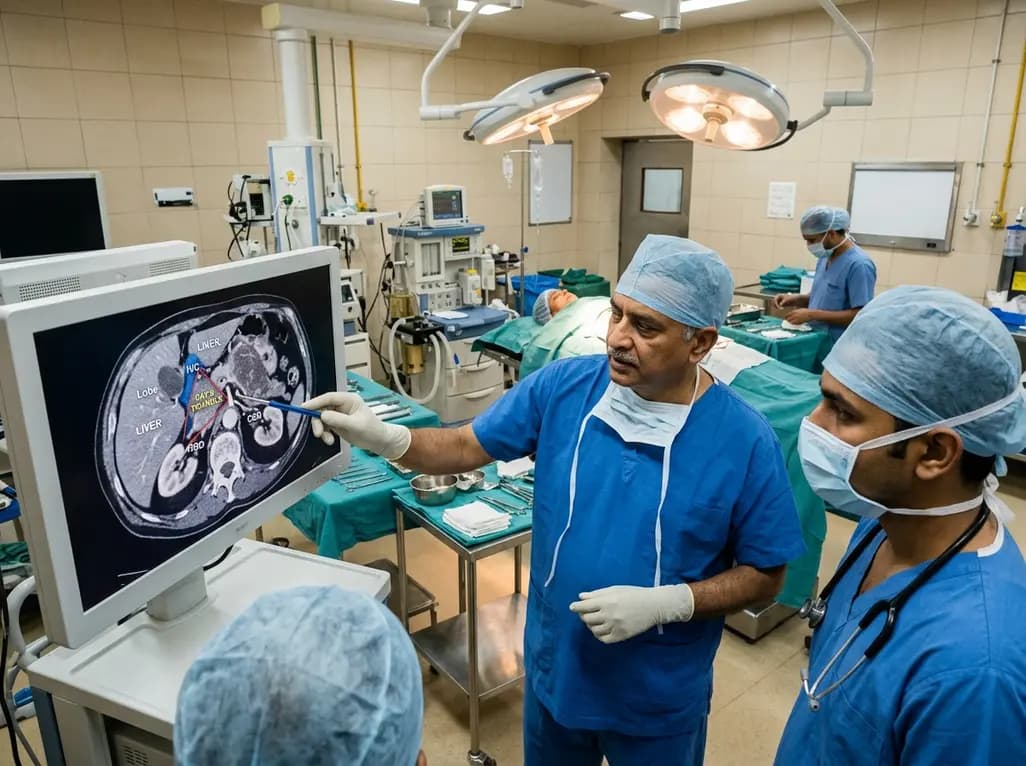
Researchers at AIIMS New Delhi have identified Ray's triangle, a high-risk surgical zone between the liver and inferior vena cava. Recognising this danger area allows surgical oncologists to achieve complete cytoreduction in advanced abdominal cancers while substantially lowering the risk of life-threatening hemorrhage.
Today
An updated systematic review and meta-analysis of 7,875 patients reveals that routine microaxial left ventricular support during nonemergent high-risk PCI does not reduce mortality or ischemic complications, while significantly increasing major bleeding events.
Yesterday
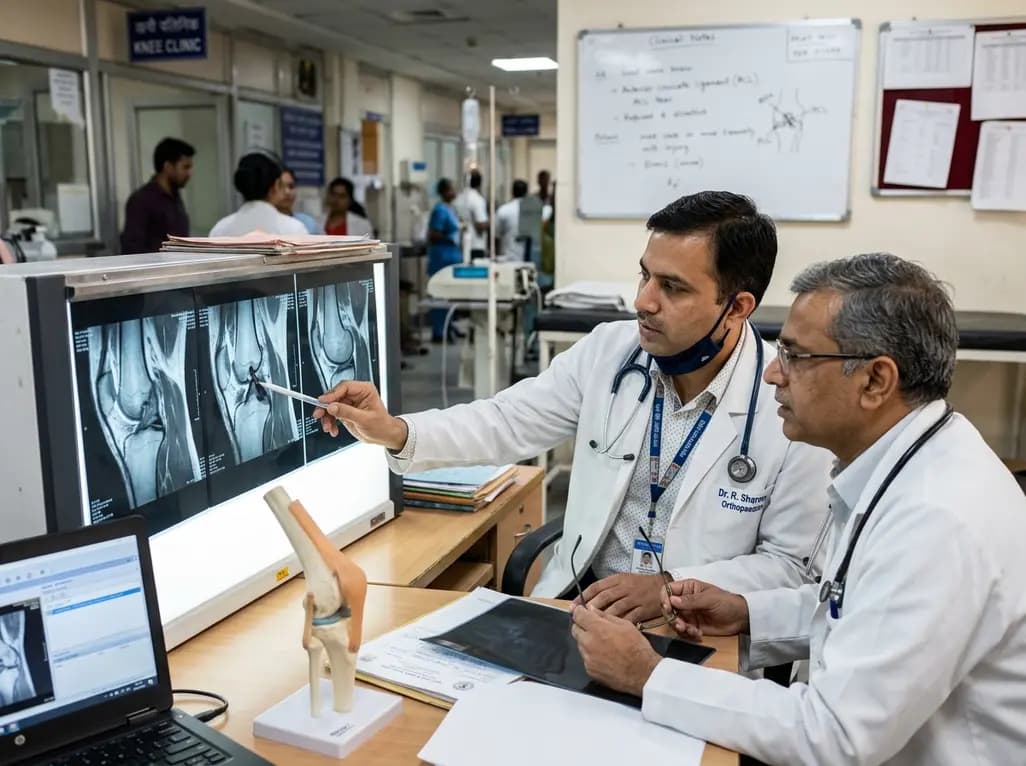
The FIRM-P framework redefines anterior cruciate ligament instability management by separating objective knee phenotypes from patient context and integrating arthrogenic muscle inhibition as a dynamic modifier to optimize individual surgical timing and outcomes.
Today
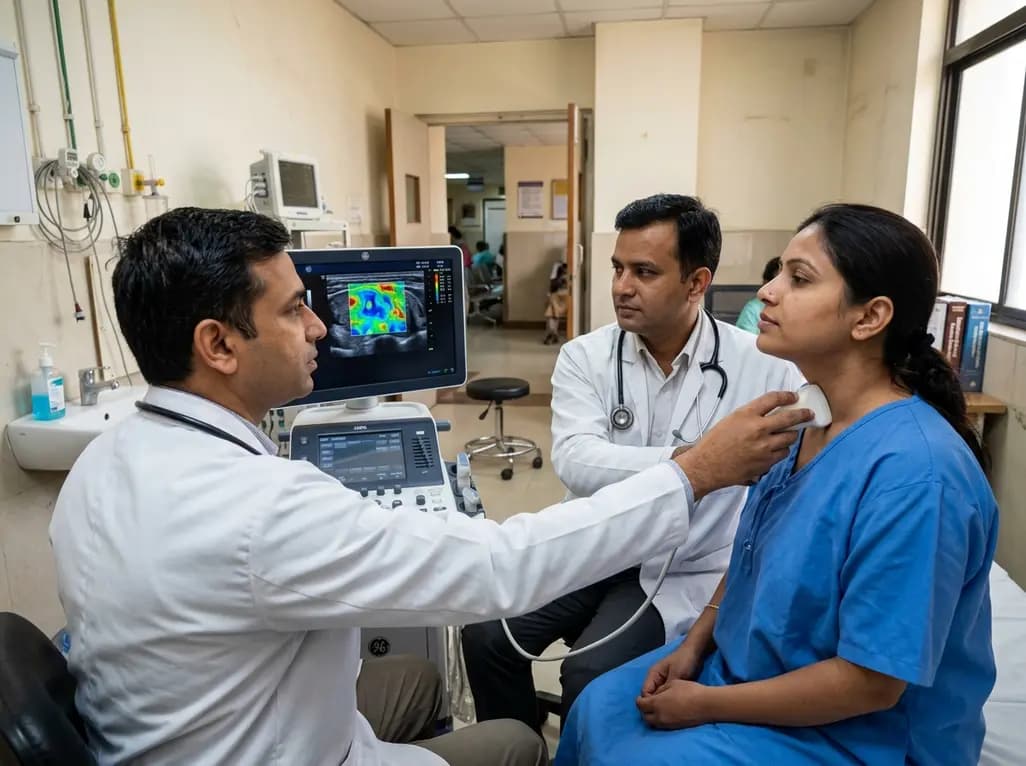
Subacute thyroiditis presents diagnostic dilemmas when differentiating it from malignancy or chronic thyroiditis. Discover how 2D shear wave elastography provides quantitative tissue stiffness metrics that enhance diagnostic accuracy and assist in tracking disease resolution during therapy.
Today
