.webp&w=384&q=75)

Loading, please wait...
Loading, please wait...

Lymphocele formation remains a frequent and frustrating surgical complication following kidney transplantation. This problem arises primarily from disrupted recipient iliac lymphatic channels during vascular bed preparation. Historically, surgeons relied on suture ligatures or titanium clips to secure these delicate pathways. However, conventional techniques often prove time-consuming and technically variable across different surgical teams. To mitigate persistent retroperitoneal fluid collections, surgeons are increasingly utilizing electrothermal bipolar vessel sealing during iliac exposure. By delivering precise radiofrequency energy and calibrated mechanical pressure, advanced vessel sealers permanently fuse perivascular connective tissue. Consequently, this innovative approach creates a resilient seal that prevents lymphatic leakage without leaving foreign materials behind. Meticulous control of the extensive lymphatic network encasing the iliac vessels directly prevents secondary complications. Therefore, modernizing recipient iliac dissection through targeted thermal fusion represents a major step forward in optimizing transplant surgical workflows.
The operational mechanism of electrothermal bipolar vessel sealing relies on simultaneous high-density bipolar energy and precise mechanical apposition. Unlike conventional electrocautery that causes superficial eschar and excessive lateral thermal spread, specialized vessel sealing generators sense tissue impedance continuously. The generator modulates energy delivery in real time, automatically stopping current flow once complete tissue fusion occurs. As a result, collagen and elastin within the lymphatic and vascular walls denature and cross-link into a permanent, translucent seal. In kidney transplantation, recipient lymphatic channels lack muscular layers and clotting factors, rendering standard coagulation ineffective. Advanced bipolar devices reliably seal lymphatic trunks and blood vessels up to seven millimeters in caliber. Furthermore, minimal lateral thermal spread of only one to two millimeters protects the adjacent iliac vein and obturator nerve. Ultimately, this physiological sealing mechanism ensures dependable lymphatic closure while preserving vital pelvic structures.
Operative efficiency during recipient iliac bed preparation directly impacts total procedural time and vascular reconstruction workflows. Prospective surgical evaluations reveal that electrothermal bipolar vessel sealing significantly accelerates iliac mobilization. Specifically, surgeons achieved an average recipient iliac dissection time of just 16.9 minutes. Because the instrument grasps, coagulates, and transects tissue with an integrated blade, instrument exchanges decrease substantially during the operation. Moreover, this streamlined workflow maintains an exceptionally clean, bloodless field for subsequent arterial and venous anastomoses. In contrast, traditional manual ligation along the external iliac axis often prolongs operative time and introduces risks of clip displacement. By utilizing a continuous, reproducible fusion technique, surgical teams can advance steadily through dense retroperitoneal tissue. Consequently, incorporating bipolar sealing standardizes surgical practice, shortens operative phases, and enhances overall theatre productivity.
Systematic monitoring of drain output kinetics and rigorous ultrasound surveillance are essential to confirm lymphatic sealing efficacy. In prospective clinical evaluations, kidney recipients managed with bipolar vessel sealing exhibited an average total drain output of 985.8 mL. Notably, prolonged drainage occurred only in isolated cases with peritoneal breaches or secondary re-explorations rather than spontaneous lymphatic leakage. Surgical drains were safely discontinued once serous production decreased below standard institutional thresholds. Furthermore, objective postoperative surveillance is necessary to identify occult collections. Standardized ultrasound assessments performed at postoperative days 14, 60, and 90 revealed a zero percent incidence of lymphoceles. This complete absence of fluid collections confirms the durability of the thermal seal over the critical ninety-day period. Consequently, recipients avoided secondary interventions, hospital readmissions, and prolonged catheterization, demonstrating the lasting reliability of this surgical technique.
Uncontrolled retroperitoneal lymphoceles cause substantial clinical morbidity and threaten graft longevity if left unaddressed. Large fluid collections within the tight iliac fossa exert direct mechanical pressure on the ureter, inducing hydronephrosis and graft dysfunction. Additionally, significant lymphoceles can compress the external iliac vein, causing ipsilateral lower limb edema and predisposing patients to deep venous thrombosis. When fluid pockets become secondarily infected, they transform into pelvic abscesses requiring urgent percutaneous drainage or operative marsupialization. Fortunately, achieving zero lymphocele formation through electrothermal vessel fusion eliminates these severe secondary hazards. Unimpeded venous outflow and unhindered urinary drainage ensure optimal early graft recovery. Furthermore, avoiding fluid complications reduces the need for frequent outpatient ultrasounds and invasive procedures. Ultimately, proactive lymphatic control during recipient dissection safeguards both renal allograft function and overall patient recovery.
Implementing routine vessel sealing in kidney transplantation requires adherence to sound surgical fundamentals and proper instrument handling. Surgeons must capture appropriate tissue volumes within the jaws, avoiding excessive tension that could disrupt fragile seals before energy completion. Furthermore, operators should maintain a safe one-millimeter clearance from major vascular walls, despite minimal lateral thermal spread. Keeping the instrument jaws free from charred debris ensures accurate tissue impedance sensing by the generator. Surgical programs adopting this technology should systematically track dissection times, drainage parameters, and sonographic surveillance results. Interdisciplinary coordination between transplant surgeons, nephrologists, and specialized nursing teams ensures smooth postoperative management. Although larger randomized multicenter trials will provide further comparative evidence, current prospective findings strongly support this approach. Therefore, transplant centers seeking to reduce lymphatic morbidity should integrate routine bipolar vessel sealing into standard recipient protocols.
Standard monopolar cautery produces high lateral heat and superficial eschar, which frequently fails to occlude fragile lymphatic channels lacking intrinsic clotting factors. Conversely, electrothermal bipolar vessel sealing combines calibrated mechanical pressure with intelligent radiofrequency feedback. This precise mechanism denatures collagen and elastin fibrils, fusing opposing vessel walls into a permanent, autologous seal with minimal lateral thermal damage to adjacent critical retroperitoneal structures.
Post-transplant lymphoceles can exert substantial extrinsic pressure on adjacent anatomical structures within the iliac fossa. This mechanical compression frequently causes ureteral obstruction leading to allograft dysfunction, lower extremity edema, and external iliac vein thrombosis. Furthermore, large retroperitoneal fluid collections carry a significant risk of secondary bacterial colonization, converting sterile seromas into deep pelvic abscesses that require invasive percutaneous drainage or surgical intervention.
Many retroperitoneal lymphoceles develop silently without causing initial pain, palpable swelling, or overt graft deterioration. Relying solely on clinical symptoms can delay diagnosis until severe complications occur, such as hydronephrosis or deep vein thrombosis. Structured postoperative ultrasound surveillance at scheduled intervals—specifically days 14, 60, and 90—allows clinicians to objectively confirm the absence of occult collections and verify long-term surgical success.
Disclaimer: This content is for informational and educational purposes only and does not constitute medical advice, diagnosis, or treatment recommendations. Always consult a qualified healthcare professional regarding clinical decisions or surgical protocols. Refer to the latest local and national guidelines for clinical practice.
References

Read summarized clinical updates, watch expert medical content, and earn CME certifications right from your smartphone.
Open your smartphone camera to scan and install.





A prospective study evaluated routine electrothermal bipolar vessel sealing during recipient iliac dissection in kidney transplantation. The technique achieved rapid dissection (16.9 minutes) and zero lymphoceles at 90 days, confirming its safety and efficacy for lymphatic control.
last month

A secondary analysis of an HIV cure-related trial in South Africa highlights the acceptability and safety of serial excisional lymph node and gut biopsies among young women. Clear communication, empathetic care, and altruistic motives helped mitigate initial apprehension and sustain longitudinal trial engagement.
Today

Explore the crucial link between dietary protein and immunocompetence. This review examines how low-protein nutrition shifts metabolic resources away from pathogen defense toward early reproduction, compromising host survival and immunity against severe bacterial infections.
Today
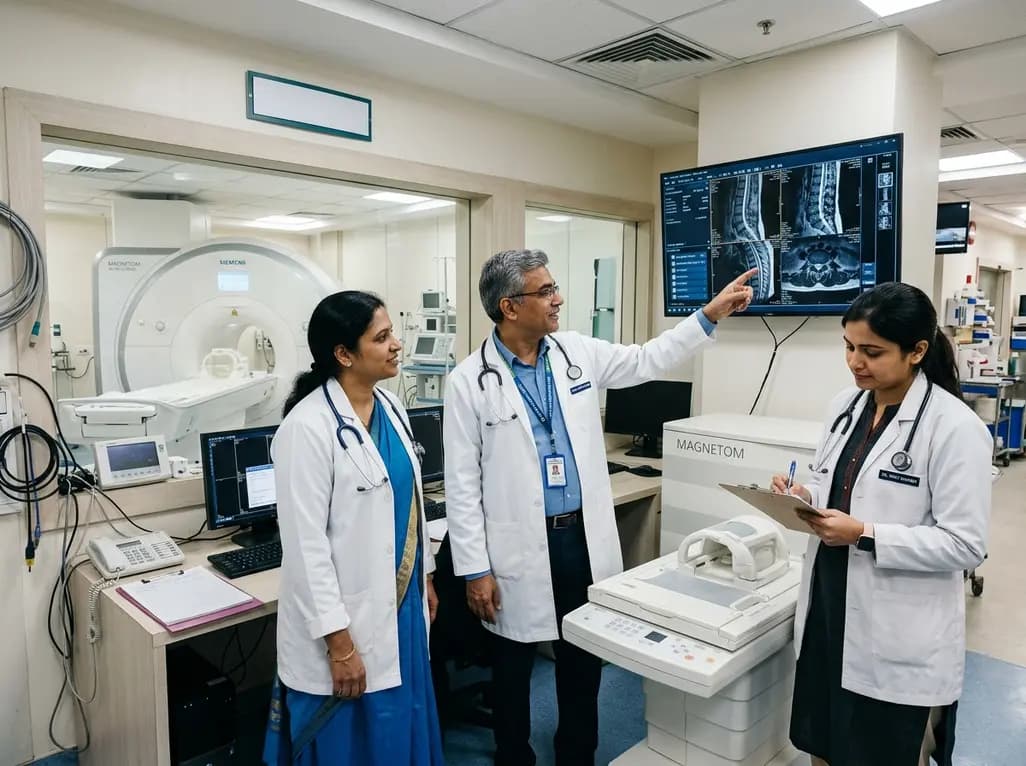
Under India's PLI initiative, domestic production of 57 critical medical devices has commenced, including MRI and CT scanners, cath labs, and heart valves. Global partnerships and local investments are expanding high-end technology, curbing import reliance, and strengthening clinical accessibility nationwide.
Today

A longitudinal study reveals that patients undergoing staged bilateral hip arthroscopy experience progressive contralateral labral deterioration during surgical intervals. However, structural degradation does not compromise 2-year postoperative clinical outcomes or patient-reported satisfaction scores.
Today

New immunological research reveals how PTPN22 forms a delayed inhibitory signaling complex to restrain T cell activation, explaining how the autoimmune-linked R620W variant disrupts feedback control and promotes persistent inflammation in conditions like rheumatoid arthritis and type 1 diabetes.
Today
