.webp&w=384&q=75)

Loading, please wait...
Loading, please wait...

The complex interplay between dietary protein and immunocompetence represents a fundamental biological principle with direct clinical relevance. When dietary macronutrients become scarce, organisms face critical physiological trade-offs between self-preservation and species survival. Insufficient protein intake reliably triggers nutritional deprivation, compromising immune surveillance and elevating susceptibility to virulent pathogens. Consequently, biological systems must actively prioritize how they distribute limited amino acids and metabolic energy. Evolutionary pressures compel hosts to balance energy-demanding immune responses against the high metabolic demands of reproduction. In low-resource environments, organisms often adapt by allocating scarce nutrients toward reproduction at the direct expense of pathogen defense. Therefore, understanding these adaptive trade-offs provides crucial insights into host defense mechanisms. Furthermore, this dynamic illuminates how maternal undernutrition impairs systemic resilience during systemic bacterial challenges.
Recent experimental investigations offer rigorous empirical confirmation of these metabolic compromises. When populations evolve under persistent dietary restriction, the evolutionary drive to reproduce swiftly reshapes baseline immunocompetence. As a result, individuals sustain heightened biological costs whenever infectious challenges emerge. Healthcare professionals must recognize that inadequate protein intake fundamentally undermines immune durability across reproductive cycles, precipitating systemic vulnerability.
Resource allocation theory posits that organisms possess a finite physiological budget. When available dietary protein drops below baseline requirements, distinct biological functions actively compete for scarce substrates. For instance, cellular protein synthesis, humoral effector production, and tissue repair require continuous supplies of essential amino acids. Consequently, metabolic triage forces vital organs to downregulate energetically expensive immune surveillance. Similarly, gamete formation and reproductive investment impose severe energetic and structural demands on the host. Under stringent evolutionary selection, populations frequently favor reproductive speed over prolonged immune longevity. Specifically, reproducing early ensures the transmission of genetic material before environmental hazards or starvation prove fatal. However, this evolutionary adaptation leaves the organism with critically diminished immunological reserves.
In experimental populations adapted to pre-oviposition low-protein diets, organisms consistently display altered life-history priorities. These adapted hosts accelerate reproductive output, but they sacrifice their capacity to withstand bacterial challenge. In addition, chronic dietary stress downregulates central metabolic pathways that generate adenosine triphosphate. Consequently, the host cannot readily sustain the high metabolic rate required for robust immunological defense. Therefore, nutritional deprivation directly impairs systemic disease tolerance, creating severe physiological vulnerabilities.
Nutritional deprivation and reproductive status exert profound, sexually dimorphic effects on infection outcomes. In experimental models utilizing Providencia rettgeri, unmated females adapted to low-protein nutrition suffer significantly lower survival rates than unmated males. This biological divergence stems from the intense energetic investment that females allocate toward early oogenesis. Because egg production requires massive amounts of protein, virgin females deplete essential metabolic stores ahead of infection. Conversely, unmated males maintain comparatively lower baseline reproductive expenditures, preserving sufficient resources to mount effective defenses. Thus, unmated hosts exhibit stark sex-specific disparities in post-infection mortality under dietary restriction.
Remarkably, the act of mating completely eliminates these initial sex differences. Once mating occurs, both males and females exhibit nearly identical, steep reductions in post-infection survival compared to unselected counterparts. Mating triggers substantial neuroendocrine shifts and physical resource reallocations in both sexes. In particular, seminal fluid production and copulatory behaviors deplete male metabolic reserves just as vigorously as oviposition depletes females. As a result, reproductive activity forces both sexes into a state of severe immunological exhaustion. Ultimately, reproductive investment overrides baseline sex advantages, leaving mated individuals equally vulnerable to pathogenic invasion.
To uncover the precise mechanisms behind this vulnerability, researchers analyzed essential innate immune signaling pathways. Organisms adapted to low-protein environments exhibit marked dysregulation of both Toll and immune deficiency pathways. These conserved signaling cascades represent the primary defense systems against Gram-positive and Gram-negative bacterial pathogens. Notably, selected populations display reduced upregulation or pronounced downregulation of critical antimicrobial peptides following bacterial challenge. Without adequate antimicrobial peptide transcription, the host cannot effectively neutralize proliferating bacteria. Furthermore, key metabolic enzymes responsible for carbohydrate and lipid catabolism show substantial downregulation.
Interestingly, experimental findings reveal that this increased mortality primarily reflects decreased infection tolerance rather than failed pathogen resistance. Pathogen load burdens frequently remain comparable between selected and unselected hosts. However, selected hosts cannot endure the systemic tissue damage and physiological stress provoked by the infection. Consequently, bacterial proliferation and metabolic depletion quickly overwhelm host physiological compensation. When dietary protein remains deficient, the organism lacks the structural amino acids necessary for continuous cellular repair. Therefore, the downregulation of protective signaling cascades combines with structural exhaustion, producing fatal clinical deterioration.
These evolutionary and immunological principles hold profound clinical significance for human medicine, particularly within developing nations. In India, maternal protein-energy malnutrition remains a prevalent public health crisis affecting millions of women of reproductive age. Clinical evidence demonstrates that dietary protein deficits during pregnancy compromise maternal immune defense, increasing vulnerability to severe infections. For example, malnourished expectant mothers experience higher rates of sepsis, urinary tract infections, and pulmonary complications. Moreover, systemic maternal undernutrition impairs placental transfer of nutrients, compromising neonatal immune development. Consequently, maternal nutritional deficits generate transgenerational immunological liabilities that threaten neonatal survival.
Physicians and public health strategists must therefore prioritize comprehensive dietary interventions during preconception and gestation. Clinicians should routinely screen women of reproductive age for dietary protein insufficiency and micronutrient deficiencies. In addition, clinical protocols must incorporate targeted macronutrient supplementation to bolster maternal immunocompetence before infectious exposures occur. By ensuring adequate protein intake, healthcare providers can mitigate the trade-offs between maternal reproductive success and immune resilience. Ultimately, optimizing macronutrient intake preserves host barrier integrity, sustains antimicrobial peptide production, and significantly reduces infectious disease mortality.
Protein malnutrition deprives the immune system of essential amino acids required for cellular proliferation, cytokine synthesis, and antibody production. In addition, it downregulates critical signaling pathways and suppresses antimicrobial peptide synthesis. Consequently, the host experiences compromised mucosal barriers, impaired phagocytic activity, and diminished infection tolerance. These cumulative deficits prevent the body from repairing damaged tissues during active infections, which significantly elevates morbidity and accelerates mortality during acute bacterial challenges.
Reproduction demands tremendous amounts of metabolic energy and nutritional substrates for gamete synthesis, hormonal regulation, and mating behaviors. When dietary protein is scarce, the organism prioritizes reproductive efforts over immune maintenance to ensure genetic survival. As a result, mating severely depletes residual amino acid pools and metabolic reserves in both sexes. This reallocation impairs innate immune signaling pathways and reduces systemic disease tolerance, rendering mated hosts far more vulnerable to fatal bacterial infections.
Clinicians must recognize that preconception and gestational protein malnutrition severely compromises maternal immunocompetence, elevating the risk of opportunistic and pathogenic infections. Furthermore, suboptimal maternal nutrition impairs fetal immune programming, increasing infection risks in offspring. Therefore, healthcare providers should implement early nutritional screening and targeted protein supplementation for pregnant women. Ensuring balanced macronutrient intake protects maternal systemic health, sustains antimicrobial defenses, and significantly improves neonatal outcomes in resource-limited clinical settings.
Disclaimer: This content is for informational and educational purposes only and does not substitute professional medical advice, diagnosis, or treatment. Always seek the advice of your physician or other qualified health provider with any questions regarding a medical condition. Refer to the latest local and national guidelines for clinical practice.
References

Read summarized clinical updates, watch expert medical content, and earn CME certifications right from your smartphone.
Open your smartphone camera to scan and install.





Explore the crucial link between dietary protein and immunocompetence. This review examines how low-protein nutrition shifts metabolic resources away from pathogen defense toward early reproduction, compromising host survival and immunity against severe bacterial infections.
Today
A secondary analysis of an HIV cure-related trial in South Africa highlights the acceptability and safety of serial excisional lymph node and gut biopsies among young women. Clear communication, empathetic care, and altruistic motives helped mitigate initial apprehension and sustain longitudinal trial engagement.
Today

Under India's PLI initiative, domestic production of 57 critical medical devices has commenced, including MRI and CT scanners, cath labs, and heart valves. Global partnerships and local investments are expanding high-end technology, curbing import reliance, and strengthening clinical accessibility nationwide.
Today

A longitudinal study reveals that patients undergoing staged bilateral hip arthroscopy experience progressive contralateral labral deterioration during surgical intervals. However, structural degradation does not compromise 2-year postoperative clinical outcomes or patient-reported satisfaction scores.
Today
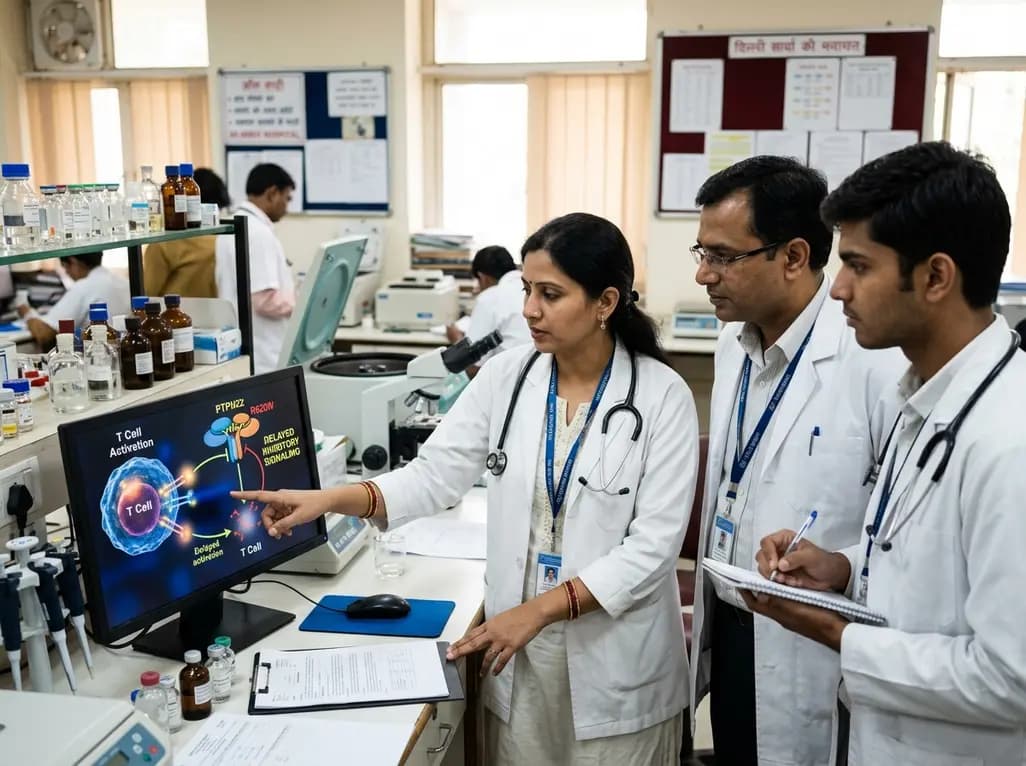
New immunological research reveals how PTPN22 forms a delayed inhibitory signaling complex to restrain T cell activation, explaining how the autoimmune-linked R620W variant disrupts feedback control and promotes persistent inflammation in conditions like rheumatoid arthritis and type 1 diabetes.
Today
