.webp&w=384&q=75)

Loading, please wait...
Loading, please wait...
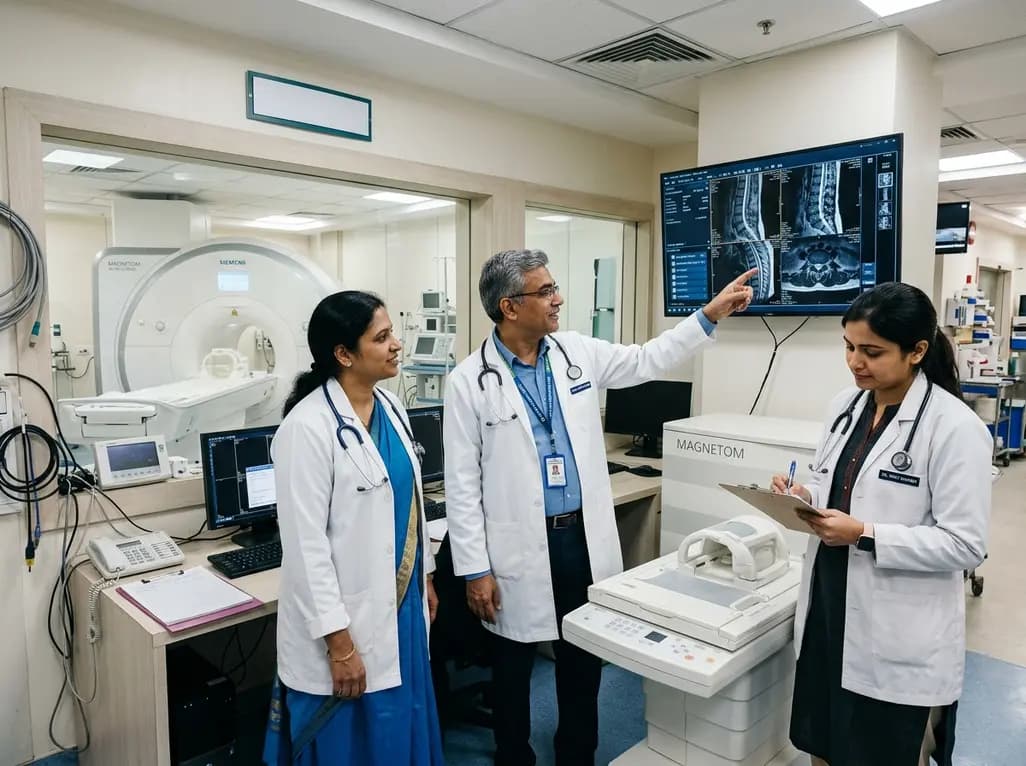
The Department of Pharmaceuticals recently highlighted a major turning point in India's healthcare infrastructure. Specifically, the medical devices PLI scheme has successfully catalyzed the domestic manufacturing of critical, high-end medical equipment. Historically, hospitals across India depended on foreign manufacturers for vital capital equipment like magnetic resonance imaging units and heart valves. Consequently, healthcare delivery faced substantial equipment costs, prolonged supply chain delays, and steep operational expenses. Today, however, domestic production of fifty-seven sophisticated devices is actively transforming this clinical ecosystem. Furthermore, this transition supports the national mission of self-reliance while lowering barriers to advanced medical technology. As a result, healthcare providers can now source high-precision tools directly within the national borders.
In 2020, the Central Government launched the medical devices PLI scheme with an outlay of 3,420 crore rupees. This flagship program specifically provides a five percent incentive on incremental sales of eligible medical technology. The incentive spans a tenure of five productive years following the designated base financial year. Consequently, the scheme encourages manufacturers to establish robust greenfield facilities across Indian states. In addition, the policy addresses long-standing manufacturing cost disabilities that previously hampered domestic engineering. Indian device makers previously struggled against well-established multinational enterprises with extensive economies of scale. Therefore, targeted financial assistance provides the necessary operational cushion for local innovators. Moreover, the project management agency enforces rigorous technical standards and strict investment thresholds. As a result, participating firms must commit real capital before receiving government incentives. Ultimately, this structured fiscal framework ensures sustainable industrial expansion across domestic healthcare supply chains. By creating predictable financial returns, the scheme actively fosters indigenous engineering talent and local manufacturing infrastructure. Furthermore, regional clusters benefit directly as supply networks produce ancillary components and specialized diagnostic software. Thus, the program establishes a comprehensive foundation that supports sustainable, high-precision industrial production nationwide.
The comprehensive incentive strategy strategically targets four critical therapeutic segments within modern medicine. First, it addresses cancer care and radiotherapy devices to combat the rising national burden of malignancies. For instance, domestic assembly lines now build advanced linear accelerators and specialized brachytherapy systems. Second, the scheme covers radiology and imaging technologies, including computerized tomography and magnetic resonance imaging scanners. Additionally, local plants assemble modern catheterization laboratories, digital mammography units, and mobile C-arm systems. Third, the policy encompasses anaesthesia workstations, cardio-respiratory monitors, and advanced renal care dialysis machines. Consequently, intensive care units can readily procure reliable life-support hardware during critical emergencies. Fourth, the program prioritizes implantable hardware, ranging from artificial heart valves to complex vascular stents. Notably, fifty-seven advanced medical devices have commenced active production under this comprehensive program. Furthermore, domestic factories produce vital subcomponents like rotating anode tubes and flat-panel detectors. In doing so, Indian manufacturing secures the broader supply chain against global market disruptions. Therefore, clinicians across specialties gain continuous access to dependable, domestically produced therapeutic hardware. Similarly, this wide product variety helps secondary and tertiary centers modernize their existing departmental facilities. Ultimately, specialized hospitals can deliver precise clinical interventions without relying entirely on overseas component vendors.
International medtech corporations have responded enthusiastically to India's dynamic industrial incentives. Specifically, multinational giants such as GE Healthcare, Siemens, Philips, Varex, Nipro, and Omron have expanded domestic operations. These established corporations collaborate closely with local engineering teams to transfer sophisticated manufacturing processes. Consequently, domestic production facilities now adhere to rigorous global quality standards and regulatory frameworks. At the same time, indigenous Indian manufacturers have scaled their research and development investments. For example, prominent domestic companies produce top-tier coronary stents, balloon catheters, and prosthetic heart valves. Furthermore, these homegrown enterprises successfully export high-precision products to demanding international markets. This dual participation creates healthy market competition between multinational firms and domestic innovators. As a result, the healthcare industry witnesses rapid adoption of cutting-edge manufacturing protocols. In addition, local academic institutions and biomedical engineers gain practical exposure to advanced industrial technologies. Therefore, collaborative ventures accelerate technology transfer while strengthening local talent across design and assembly disciplines. Moreover, this synergy positions India as a competitive global manufacturing hub for advanced electro-medical hardware. Ultimately, international partnerships provide the technological foundation necessary for sustained medical device autonomy. Consequently, local clinical institutions benefit from equipment designed specifically for regional healthcare demographics.
The rapid acceleration of domestic medtech manufacturing yields profound operational advantages for Indian hospitals. Primarily, localized production dramatically lowers capital expenditure requirements for procuring advanced imaging and surgical devices. In the past, heavy import duties and shipping fees inflated the baseline acquisition costs of scanners. Now, however, domestic alternatives enable smaller diagnostic centers and rural hospitals to invest in modern equipment. Consequently, patient access to early radiological screening and timely oncology staging improves nationwide. Furthermore, local manufacturing fundamentally alters the maintenance ecosystem for hospital biomedical engineers. Previously, facilities experienced prolonged equipment downtime while awaiting imported replacement components from foreign factories. Today, regional spare-part availability ensures rapid repair cycles and minimizes clinical interruption. As a result, hospital administrators can optimize patient scheduling and maintain reliable surgical workflows. In addition, lower equipment expenditures allow institutions to offer diagnostic services at more affordable rates. Therefore, economically disadvantaged populations experience reduced out-of-pocket healthcare expenses. Ultimately, expanded domestic output enhances institutional productivity while elevating standard clinical care pathways. Moreover, clinicians gain greater confidence when performing life-saving procedures with dependable, locally serviceable technology. Thus, tier-two and tier-three medical centers can match the diagnostic capabilities of metropolitan institutions.
Despite impressive initial milestones, the domestic medical device sector still encounters specific operational challenges. For instance, the industry continues to navigate dependencies on foreign raw materials and specialized electronic microchips. Therefore, national policy must prioritize indigenous fabrication of sensors, optical assemblies, and advanced semiconductor components. Furthermore, regulatory agencies must ensure that domestic quality auditing matches international pharmacopeial and engineering benchmarks. Stringent post-market clinical surveillance remains essential to preserve practitioner confidence in homegrown implants and hardware. Additionally, academic research centers must coordinate closely with manufacturers to promote novel biomedical patents. Dedicated medical device testing parks in states like Uttar Pradesh, Madhya Pradesh, and Tamil Nadu will assist this endeavor. Consequently, these shared industrial testing facilities will significantly lower entry barriers for emerging healthcare startups. In parallel, targeted skill development schemes will train technicians in precise equipment calibration and software integration. As a result, the national medtech ecosystem will transition from mere assembly to authentic technological innovation. Ultimately, continuing fiscal support and structural reforms will secure India's position as a global healthcare powerhouse. Through these coordinated interventions, clinicians will receive world-class diagnostic tools tailored to domestic healthcare challenges. Thus, sustainable policy implementation ensures enduring clinical excellence and robust health security across the nation.
Q1: What is the primary objective of the medical devices PLI scheme?
The medical devices PLI scheme aims to reduce heavy import reliance and boost domestic manufacturing capacity across critical healthcare sectors. By offering a five percent financial incentive on incremental sales over five years, the program encourages greenfield investments in advanced medtech. Consequently, India now manufactures fifty-seven sophisticated devices domestically. These include MRI systems, CT scanners, and prosthetic heart valves that strengthen national healthcare self-reliance.
Q2: Which medical specialties benefit most from the PLI scheme?
Radiology, cardiology, oncology, and anesthesiology derive immediate clinical benefits from expanded domestic output. Local production now delivers computerized tomography scanners, linear accelerators, cardiac catheterization laboratories, and advanced ventilators. Furthermore, local manufacturing of prosthetic heart valves and vascular stents directly supports interventional cardiologists. Consequently, diverse clinical departments obtain cost-effective, dependable equipment without enduring lengthy shipping delays.
Q3: How does domestic manufacturing impact hospital procurement and patient care?
Domestic production substantially reduces capital expenditures for hospital procurement teams while accelerating routine maintenance cycles. Because replacement parts and technical specialists operate locally, healthcare facilities experience minimal diagnostic equipment downtime. Furthermore, lower hardware costs enable smaller health centers to acquire state-of-the-art diagnostic imaging. As a result, patients receive faster clinical evaluations, reduced out-of-pocket fees, and timely community interventions.
Disclaimer: This content is for informational and educational purposes only. It does not constitute medical advice or replace professional judgment. Refer to the latest local and national guidelines for clinical practice.
References

Read summarized clinical updates, watch expert medical content, and earn CME certifications right from your smartphone.
Open your smartphone camera to scan and install.





Under India's PLI initiative, domestic production of 57 critical medical devices has commenced, including MRI and CT scanners, cath labs, and heart valves. Global partnerships and local investments are expanding high-end technology, curbing import reliance, and strengthening clinical accessibility nationwide.
Today

Researchers in Hebei, China identified two novel HIV-1 unique recombinant forms, BDNY017 and BDK025, among patients failing antiretroviral therapy. Genomic analysis revealed complex mosaic structures involving CRF07_BC, CRF08_BC, and subtype B, alongside key drug resistance mutations including M184V, A98G, and E138K.
Today
A nationwide study covering 3.7 million Swedish births reveals that prenatal exposure to TORCH pathogens significantly elevates long-term risks of intellectual disability and autism. Healthcare providers must recognize clinical indicators, promote prenatal prevention, and track early pediatric neurodevelopment.
Today
A longitudinal study reveals that patients undergoing staged bilateral hip arthroscopy experience progressive contralateral labral deterioration during surgical intervals. However, structural degradation does not compromise 2-year postoperative clinical outcomes or patient-reported satisfaction scores.
Today
SWEDEPAD-1 trial insights show paclitaxel-coated devices do not improve long-term limb salvage in patients with chronic limb-threatening ischemia and tissue loss. While one-year reinterventions decreased, the devices were linked to a higher risk of major amputation at three months.
Today
