.webp&w=384&q=75)

Loading, please wait...
Loading, please wait...

Duchenne muscular dystrophy leads to progressive muscular weakness, which ultimately necessitates reliance on motorized seating systems to sustain functional independence. For these patients, maintaining fine motor control over joystick inputs is essential to maintain daily community participation. However, ambient cold exposure represents a major, yet under-recognized, physical hurdle. Cold environments exacerbate intrinsic muscular stiffness, impair distal capillary perfusion, and slow down neuromuscular conduction velocity. Consequently, even mild seasonal temperature drops can severely compromise hand dexterity. This physiological decline threatens safe powered wheelchair mobility during routine travel. Clinicians and occupational therapists frequently encounter patients whose community engagement plummets during winter months due to functional hand stiffness. Exploring innovative assistive adaptations is therefore essential to preserve autonomy across disease stages.
Individuals living with advanced neuromuscular disorders face substantial environmental challenges that compound their physical deficits. In Duchenne muscular dystrophy, approximately 85% of motorized wheelchair users report cold weather as a serious deterrent to device control and daily life. As ambient temperatures drop, cutaneous vasoconstriction reduces microvascular blood flow to the distal extremities. Because individuals with dystrophinopathy already exhibit compromised muscle bulk and minimal autonomic buffering, distal limb temperature falls rapidly. Therefore, the small muscles of the thenar and hypothenar compartments experience pronounced contractile slowing and joint stiffness.
Moreover, patients who depend on motorized controls cannot generate endogenous thermal energy through gross active movement. Prolonged physical stillness on wheelchair cushions accelerates heat loss through convective air currents. Consequently, joystick manipulation becomes hesitant, erratic, and physically tiring. When steering becomes unpredictable, individuals often restrict their outings, abandon educational pursuits, or avoid social interactions. Rehabilitation specialists recognize that addressing this seasonal functional decline is vital. Without targeted microclimate interventions, standard assistive technologies cannot fully protect patient autonomy during inclement seasons.
To directly address this mobility barrier, researchers implemented a targeted prospective pilot trial evaluating thermal assistive technology. The study cohort comprised thirteen male participants with confirmed Duchenne muscular dystrophy, spanning an age range of 15 to 43 years. Every participant utilized a powered wheelchair as their primary mode of independent conveyance. The trial evaluated an electric hand warmer positioned securely over the participant's driving hand and the wheelchair joystick interface. Before testing began, the specialized heating system delivered active thermal conditioning to the driving hand for one full hour.
Subsequently, the researchers conducted structured pre-test and post-test assessments during winter conditions to quantify practical gains. They evaluated powered wheelchair mobility through standardized functional instruments. These included the Six-Minute Push Test for physical endurance and the Slalom test for spatial manoeuvrability. Furthermore, the protocol integrated the Wheelchair Skills Test-Powered version alongside the Wheelchair Use Confidence Scale. Finally, investigators gathered subjective user feedback using the Quebec User Evaluation of Satisfaction with Assistive Technology scale. This multi-tiered assessment ensured an objective analysis of both physical control and personal confidence.
The statistical findings demonstrated meaningful gains following the one-hour thermal conditioning intervention. Most notably, the participants demonstrated significant improvements in continuous driving endurance on the Six-Minute Push Test. The investigators recorded a statistically significant performance boost (Z = -2.27, p = 0.02) accompanied by a large effect size of 0.63. Thermal warming prevented the typical muscular fatigue that occurs when dystrophic motor units attempt repetitive fine-motor adjustments in chilled ambient air. Consequently, users sustained smoother joystick control without premature muscle exhaustion.
In addition to physical endurance, the intervention yielded profound psychological benefits for the participants. Wheelchair use self-efficacy scores rose significantly (Z = -2.66, p = 0.008) with a robust effect size of 0.74. When users maintain warm, responsive fingers, their subjective sense of environmental mastery increases substantially. Patients felt markedly more capable of navigating tight hallways, outdoor curb cuts, and unexpected obstacles. Therefore, delivering warmth directly to the driving interface addresses both the mechanical and psychological barriers that frequently limit independent travel during winter months.
Beyond endurance metrics, the researchers analyzed precision navigation and obstacle negotiation through spatial obstacle courses. The Slalom test and the Wheelchair Skills Test demonstrated encouraging positive trajectories following thermal intervention. Specifically, these functional steering assessments yielded moderate effect sizes of 0.37 and 0.47, respectively. Although these particular metrics did not reach strict statistical significance due to the small pilot sample size, the clinical trend suggests meaningful functional facilitation. Warm intrinsic finger muscles allow rapid, low-amplitude joystick corrections when avoiding household hazards.
However, user feedback highlighted critical nuances regarding practical hardware deployment. On the Quebec User Evaluation of Satisfaction with Assistive Technology scale, participants reported an overall moderate satisfaction score of 3.22 out of 5. Users assigned the highest satisfaction ratings to the system's ease of operation and rapid thermal output. In contrast, physical dimensions and mechanical stability scored lowest among the cohort. Bulky heating enclosures can obstruct visual monitoring of the joystick or collide with narrow doorframes. Consequently, mechanical stability requires further industrial refinement before broad prescription occurs.
The pilot study illustrates the immense promise of ergonomic thermal devices while delineating clear engineering challenges. In progressive muscular dystrophy, patients progressively switch from traditional hand joysticks to compact micro-joysticks, touchpads, or head arrays. Heating enclosures must therefore adapt to diverse input modalities without adding unmanageable bulk. If a thermal dome restricts the driver's limited range of motion, the risk of accidental vehicular collisions increases. Industrial designers must prioritize ultra-lightweight, low-profile insulating textiles that preserve clear lines of sight.
Furthermore, seamless electrical integration remains a central priority for rehabilitation engineers. Modern powered wheelchairs possess 24-volt battery architectures capable of running low-draw thermal accessories. However, wiring must be robust, shielded against cold condensation, and simple for family caregivers to connect. Assistive technology teams must collaborate closely with occupational therapists during seating clinics. By evaluating hand clearance, passive finger contractures, and thumb opposition strength, clinicians can ensure that the heating apparatus enhances mobility rather than creating physical entrapment.
From a broad clinical perspective, these findings underscore the importance of looking beyond basic pharmacological regimens in neuromuscular disease. Neurologists, physiatrists, and pediatric teams routinely focus on respiratory care, cardiac surveillance, and gene-modifying therapies. Nevertheless, daily quality of life frequently depends on preserving independent community transport. Maintaining adequate distal hand warmth protects the fragile motor output necessary to control specialized electronic interfaces, computers, and environmental control units.
Clinicians practicing in varied climatic regions must actively question patients about seasonal drops in vehicular autonomy. Even in climate-controlled indoor environments or during seasonal monsoon and winter chills, microvascular cooling can quietly compromise independence. Simple inquiries regarding cold-induced hand stiffness should become standard during annual multidisciplinary wheelchair reviews. By combining medical management with proactive environmental and thermal adaptations, healthcare professionals can empower individuals with Duchenne muscular dystrophy to navigate their communities with safety, endurance, and confidence throughout the entire year.
Cold temperature reduces peripheral blood circulation and slows muscle contractile velocity. Individuals with Duchenne muscular dystrophy lack substantial muscle mass and cannot generate heat through voluntary movement. Consequently, prolonged sitting exposes hands to convective cooling, creating severe stiffness in the small hand muscles. This stiffness impairs fine joystick control, compromises driving precision, accelerates fatigue, and discourages patients from venturing outdoors during cold conditions.
Clinical researchers effectively capture powered wheelchair mobility using validated functional and psychological instruments. The Six-Minute Push Test accurately measures continuous driving endurance over distance. Meanwhile, the Slalom test and the Wheelchair Skills Test evaluate precision navigation and obstacle negotiation. Finally, subjective confidence scales, such as the Wheelchair Use Confidence Scale, quantify real-world self-efficacy and psychological autonomy during daily community travel.
Rehabilitation teams should evaluate thermal sensitivity during routine occupational therapy and wheelchair seating evaluations. Occupational therapists and rehabilitation engineers can assess the user's driving hand clearance, range of motion, and control interface. They must verify that electric warmers integrate safely with the wheelchair's power supply without obstructing sightlines or movement. Ongoing follow-up ensures the hardware maintains thermal reliability and physical stability.
Disclaimer: This content is for informational and educational purposes only and should not be considered medical advice. Always consult a qualified healthcare professional for diagnosis and treatment decisions. Refer to the latest local and national guidelines for clinical practice.
References
Baram T et al. The impact of an electric hand warmer on powered wheelchair mobility in men with duchenne Muscular dystrophy. Disabil Rehabil Assist Technol. 2026 Sep 20. doi: 10.1080/17483107.2026.2734710. PMID: 42763902.
Franki I et al. Seating and mobility concerns of adults with Duchenne muscular dystrophy: A mixed-methods study. Disabil Rehabil. 2024;46(8):1621-1630. doi: 10.1080/09638288.2023.2200021.
Birnkrant DJ et al. Diagnosis and management of Duchenne muscular dystrophy, part 2: respiratory, cardiac, bone health, and orthopaedic management. Lancet Neurol. 2018;17(4):347-361. doi: 10.1016/S1474-4422(18)30025-5.

Read summarized clinical updates, watch expert medical content, and earn CME certifications right from your smartphone.
Open your smartphone camera to scan and install.





Cold weather significantly impairs hand function in individuals with Duchenne muscular dystrophy. A new pilot study reveals that electric hand warmers fitted over driving controls markedly improve powered wheelchair mobility, endurance, and user self-efficacy, offering fresh clinical insights for rehabilitation.
Today
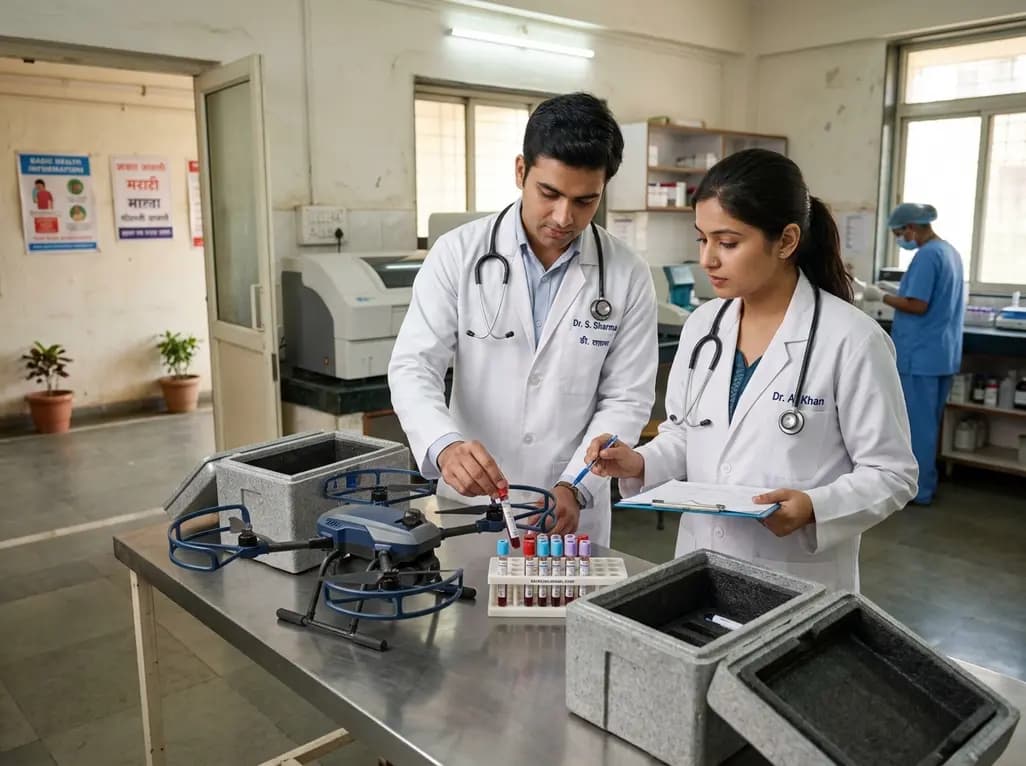
A study evaluating drone transport of blood samples across winter and summer found 31 of 32 routine biochemical analytes remained stable compared to ground transport. While plasma LDH showed minor increases, separation gel caused greater preanalytical alterations, showing aviation rules are the main barrier.
Today

A recent case highlights favorable maternal and neonatal survival in a patient presenting at 34 weeks with probable Eisenmenger physiology and suspected double outlet right ventricle (DORV). Here is a critical review of hemodynamic challenges, delivery strategies, and peripartum management in complex cardiac disease.
Today
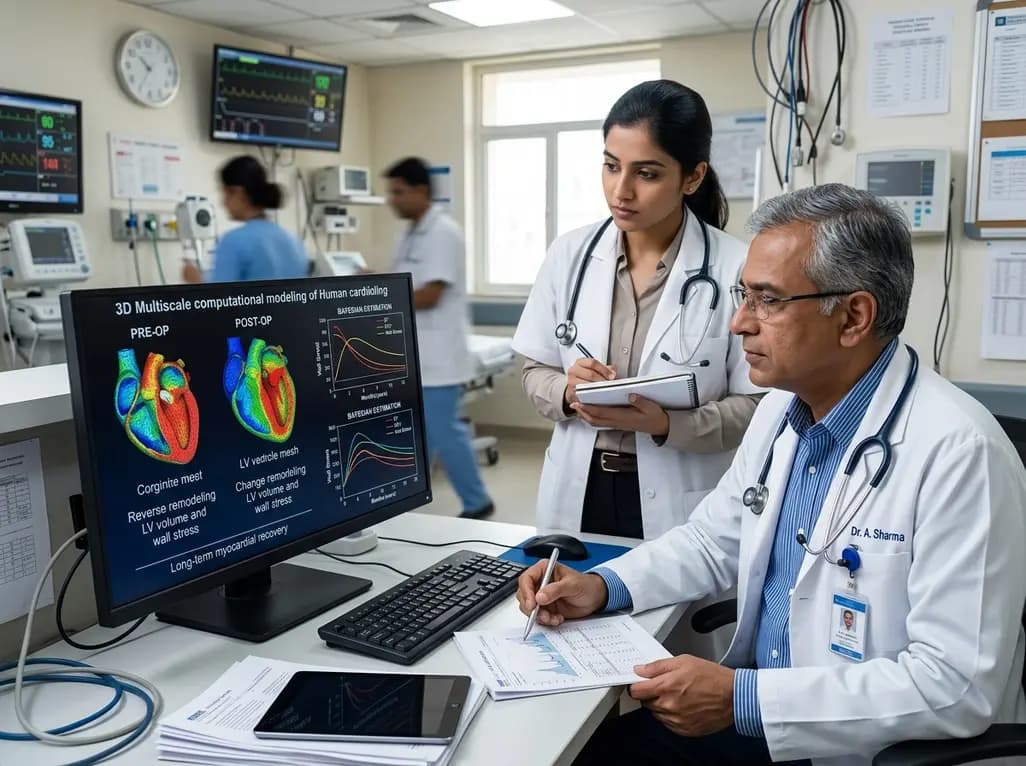
A novel multiscale computational model calibrated with Bayesian algorithms demonstrates that full reverse remodeling after mitral valve regurgitation demands both mechanical correction of volume overload and neurohormonal restoration, shedding light on persistent postoperative left ventricular dysfunction.
Today

Systematic review comparing labral repair and reconstruction in primary hip arthroscopy shows comparable short- to mid-term patient-reported outcomes, with lower THA conversion after repair but superior outcomes for reconstruction in patients aged 40 and older.
Today

A preclinical study reveals that alpinetin significantly alters glimepiride pharmacokinetics by inhibiting CYP2C9. This drug-herb interaction enhances hypoglycemic potency and underscores critical safety concerns regarding severe hypoglycemia in diabetic management.
Today
