.webp&w=384&q=75)

Loading, please wait...
Loading, please wait...

Managing Eisenmenger syndrome in pregnancy represents one of the most demanding clinical scenarios in modern cardiovascular obstetrics. Severe pulmonary arterial hypertension paired with reversed or bidirectional intracardiac shunting exposes both mother and fetus to life-threatening complications. Consequently, international guidelines typically designate this physiological state as a contraindication to gestation. However, undiagnosed patients in resource-constrained environments continue to present late in gestation. A recent clinical report documents a primigravida at 34 weeks who survived an induced vaginal delivery despite severe cyanosis and complex anatomy. This challenging case underscores essential diagnostic, physiological, and therapeutic priorities for multidisciplinary teams.
Pregnancy induces profound cardiovascular adaptations that severely destabilize patients with fixed pulmonary vascular resistance. Normal gestation elevates maternal blood volume by nearly fifty percent and markedly increases resting cardiac output. Concurrently, systemic vascular resistance falls secondary to circulating gestational hormones and low-resistance uteroplacental vascular beds. In healthy parturients, these changes optimize fetal perfusion. In contrast, patients with Eisenmenger physiology cannot expand pulmonary blood flow because their pulmonary vasculature is structurally fixed and remodeled. Therefore, the physiological decline in systemic vascular resistance exacerbates right-to-left intracardiac shunting. This worsening shunt intensifies systemic hypoxemia and cyanosis. Furthermore, sudden changes in venous return during labour or immediate postpartum autotransfusion can precipitate acute right ventricular failure. Consequently, maternal mortality historically ranges between twenty and fifty percent, with the peripartum period carrying the highest vulnerability.
A twenty-five-year-old primigravida presented at thirty-four weeks of gestation with progressive dyspnoea, peripheral oedema, tachycardia, and an oxygen saturation of eighty percent on supplemental oxygen. Physical examination revealed signs of heart failure alongside a loud second heart sound. Urgent bedside transthoracic echocardiography identified large ventricular and atrial septal defects, severe tricuspid regurgitation, and a systolic pulmonary artery pressure of 85 mmHg. Moreover, sonographic windows indicated that the great arteries predominantly originated from the right ventricle, indicating suspected double outlet right ventricle (DORV). However, limited imaging equipment precluded complete delineation of the great artery relationships or precise shunt quantification. This diagnostic dilemma commonly confronts clinicians in emergency settings. In addition, late antenatal presentation deprives teams of preconception pulmonary vascular assessment and tailored vasodilatory pretreatments. Thus, clinicians must promptly synthesize limited clinical findings to guide urgent lifesaving care.
Selecting the optimal delivery mode for high-risk cardiac parturients remains intensely debated among obstetricians and cardiologists. Although elective caesarean section provides scheduled control, surgical delivery carries significant hazards. Specifically, major laparotomy introduces risks of brisk surgical hemorrhage, sudden fluid shifts, and deep tissue trauma. Furthermore, positive-pressure ventilation during general anesthesia impedes right ventricular preload and escalates pulmonary vascular resistance. In this highlighted presentation, the team opted for labour induction, culminating in a successful vaginal delivery within four hours. The mother delivered a 2.7-kilogram infant requiring temporary neonatal resuscitation. Careful vaginal delivery avoids massive surgical blood loss and reduces thrombotic risks. However, uterine contractions exert substantial hemodynamic stress by autotransfusing hundreds of milliliters of blood into the maternal circulation. Therefore, clinicians must emphasize that single favorable case outcomes do not validate vaginal birth as universally safe in severe pulmonary vascular disease.
The immediate postpartum phase represents the most perilous window for parturients with Eisenmenger physiology. Following placental separation, systemic vascular resistance may collapse precipitously while venous return surges. In this patient, postpartum hemoglobin dropped sharply to 7 g/dL, necessitating immediate transfusion of two units of packed red blood cells. Severe anemia markedly compromises systemic oxygen delivery and increases myocardial work. Therefore, prompt hematologic restoration and meticulous volume titration prevented cardiovascular decompensation. Clinicians monitored the mother in an intensive care setting for three days before transitioning her to cardiology wards on day six. Her eventual discharge on day seven reflects robust resuscitation. Nevertheless, clinicians must recognize that delayed pulmonary hypertensive crises, thromboembolic events, and progressive right ventricular failure can occur weeks after delivery. Consequently, rigorous surveillance must extend well beyond the immediate puerperium.
Optimizing clinical outcomes in Eisenmenger physiology requires seamless integration among obstetricians, adult congenital cardiologists, intensivists, and neonatologists. In tertiary centers, advanced pulmonary vasodilators such as prostacyclin analogs and endothelin receptor antagonists provide hemodynamic stabilization. However, clinicians in resource-limited environments often face critical supply constraints. Under such conditions, basic interventions remain vital for survival. Practitioners must ensure continuous supplemental oxygenation, avoid systemic hypotension, and promptly treat uterine atony. Moreover, regional anesthesia requires meticulous titration using low-dose epidural or combined spinal-epidural techniques to avert sudden sympathectomy. In addition, healthcare networks must enhance community-level screening to detect complex congenital anomalies before conception. Ultimately, early diagnosis, individualized peripartum planning, and aggressive critical care monitoring remain the cornerstones for reducing maternal mortality in complex congenital heart disease.
Fixed pulmonary vascular resistance prevents the cardiovascular system from accommodating gestational changes. As systemic vascular resistance naturally declines during gestation, right-to-left shunting increases, worsening systemic hypoxemia and cyanosis. Furthermore, sudden shifts in venous return during delivery can trigger acute right ventricular failure, severe arrhythmias, or sudden cardiovascular collapse, especially in the immediate postpartum window.
Clinical teams must avoid systemic hypotension, maintain adequate right ventricular preload, and prevent increases in pulmonary vascular resistance. Clinicians achieve these goals by minimizing maternal pain, preventing hypoxemia and acidosis, carefully titrating intravenous fluids, and avoiding sudden vasodilation from regional anesthesia. In addition, aggressive prevention of postpartum hemorrhage protects against cardiovascular decompensation.
Yes. Uncorrected double outlet right ventricle (DORV) without pulmonary stenosis subjects the pulmonary vascular bed to persistent high pressure and massive systemic blood flow. Over time, progressive endothelial damage and vascular remodeling cause irreversible pulmonary vascular resistance. Eventually, pulmonary pressures equal or exceed systemic pressures, resulting in reversed or bidirectional shunting typical of Eisenmenger physiology.
Disclaimer: This content is for informational and educational purposes only. It is not intended to be a substitute for professional medical advice, diagnosis, or treatment. Always seek the advice of your physician or other qualified health provider with any questions you may have regarding a medical condition. Never disregard professional medical advice or delay in seeking it because of something you have read here. Refer to the latest local and national guidelines for clinical practice.
References
Mohamed MM et al. Favorable maternal and neonatal outcomes in probable Eisenmenger physiology with suspected DORV: a case report and literature review. Egypt Heart J. 2026 Sep 20. doi: undefined. PMID: 42763816.
Regitz-Zagrosek V, et al. 2018 ESC Guidelines for the management of cardiovascular diseases during pregnancy. Eur Heart J. 2018;39(34):3165-3241.
Baumgartner H, et al. 2020 ESC Guidelines for the management of adult congenital heart disease. Eur Heart J. 2021;42(6):563-645.

Read summarized clinical updates, watch expert medical content, and earn CME certifications right from your smartphone.
Open your smartphone camera to scan and install.





A recent case highlights favorable maternal and neonatal survival in a patient presenting at 34 weeks with probable Eisenmenger physiology and suspected double outlet right ventricle (DORV). Here is a critical review of hemodynamic challenges, delivery strategies, and peripartum management in complex cardiac disease.
Today
A systematic review evaluated molecular testing for UTIs across 12 clinical and microbiological studies. While PCR provides rapid results and symptom reduction, low specificity and industry sponsorship leave clinical utility uncertain.
Today

An updated systematic review and meta-analysis of 7,875 patients reveals that routine microaxial left ventricular support during nonemergent high-risk PCI does not reduce mortality or ischemic complications, while significantly increasing major bleeding events.
Yesterday
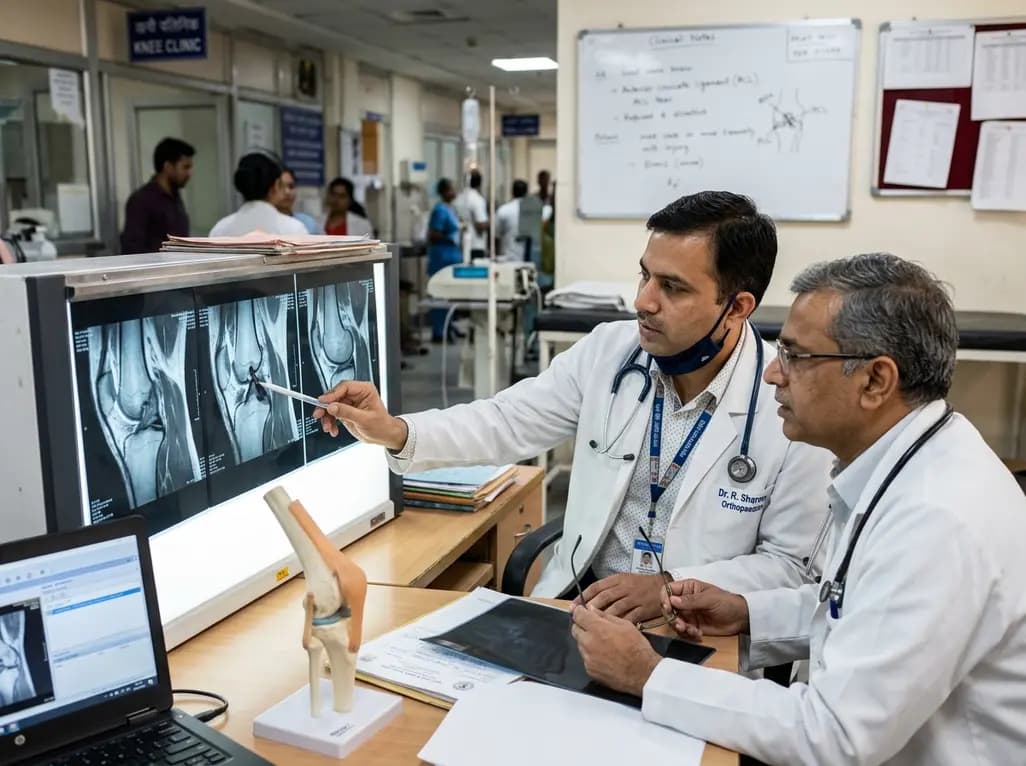
The FIRM-P framework redefines anterior cruciate ligament instability management by separating objective knee phenotypes from patient context and integrating arthrogenic muscle inhibition as a dynamic modifier to optimize individual surgical timing and outcomes.
Today

Subacute thyroiditis presents diagnostic dilemmas when differentiating it from malignancy or chronic thyroiditis. Discover how 2D shear wave elastography provides quantitative tissue stiffness metrics that enhance diagnostic accuracy and assist in tracking disease resolution during therapy.
Today
