.webp&w=384&q=75)

Loading, please wait...
Loading, please wait...

Elective egg freezing has evolved from a niche medical practice into a vital reproductive safety net. Dr. Neeta Singh, a Professor at AIIMS Delhi, recently highlighted that India's fertility rate is plummeting toward a critical low. Consequently, many women are turning to oocyte cryopreservation to delay their biological clock. This procedure offers a form of reproductive autonomy in line with modern life priorities.
Recent technological shifts have transformed the landscape of elective egg freezing for Indian women. Furthermore, improvements in vitrification techniques have led to remarkable egg survival and pregnancy rates. Dr. Singh notes that India’s total fertility rate could drop to 1.2 within twenty-five years. Therefore, clinicians are seeing a 30 percent year-on-year growth in freezing cycles. However, the timing of the procedure remains the most critical factor for success.
Specifically, experts recommend that women should preserve their eggs before the age of 32. This recommendation stems from the fact that Indian women often experience premature ovarian aging. Moreover, seeking consultations around age 35 often limits available reproductive options. Consequently, proactive planning allows women to navigate age-related fertility declines while pursuing career goals. Ultimately, early intervention provides the highest probability of future successful outcomes.
The field of reproductive medicine is moving toward individualized forecasting driven by artificial intelligence. Additionally, many AI-based predictive tools now help clinicians guide patients on their specific reproductive needs. These tools analyze ovarian reserve markers to determine the optimal number of oocytes required. Therefore, patients receive a more realistic understanding of how many cycles they might need. This precision helps in managing both clinical expectations and financial planning.
Moreover, consultations are becoming increasingly personalized to reflect a patient's unique medical history. Clinicians must address the challenges of cycle failures and oocyte immaturity during these sessions. Furthermore, labeling egg freezing as "fertility insurance" can be misleading for many patients. Instead, it should be viewed as a safety net with specific biological limitations. Thus, ensuring adoption through realistic counseling is crucial for responsible reproductive care in India.
Q1: What is the ideal age for elective egg freezing?
Experts suggest that preserving eggs before age 32 yields the best results, particularly as Indian women may face earlier ovarian aging compared to global averages.
Q2: How does AI improve the egg freezing process?
AI-based tools help predict the number of cycles needed and assess embryo competence, allowing for more personalized and precise reproductive forecasting.
Q3: Is egg freezing a guarantee of a future pregnancy?
No, it is not a guarantee. Clinicians emphasize it is a reproductive safety net, and success depends on oocyte quality and survival rates during the thawing process.
Disclaimer: This content is for informational and educational purposes only. It does not constitute medical advice or replace professional judgment. Refer to the latest local and national guidelines for clinical practice.
References

Read summarized clinical updates, watch expert medical content, and earn CME certifications right from your smartphone.
Open your smartphone camera to scan and install.





AIIMS Professor Dr. Neeta Singh discusses the shift toward AI-driven analysis and personalized protocols in egg freezing to combat declining fertility rates...
7 months ago
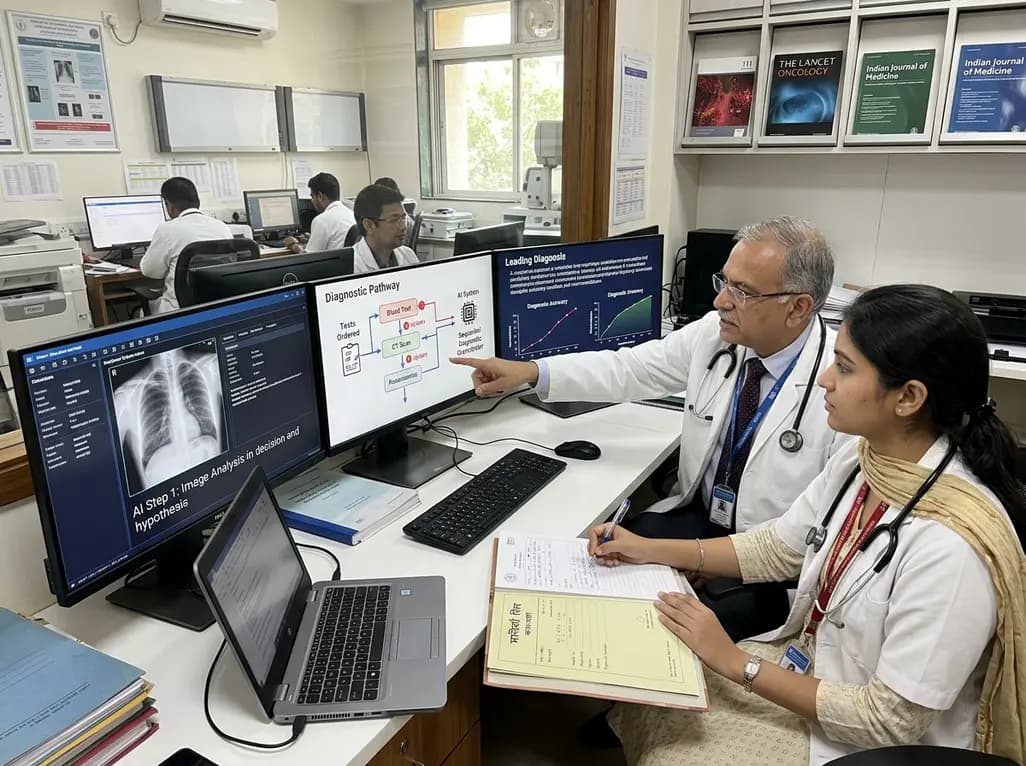
A breakthrough peer-reviewed study demonstrates that a sequential AI diagnosis system can mirror real-world clinical reasoning. By ordering stepwise tests and updating hypotheses dynamically, this multi-agent orchestrator achieved superior diagnostic accuracy while reducing investigative costs.
Today

A prenatal case highlights severe glutaric acidemia type II presenting as bilateral hyperechoic cystic kidneys at 18 weeks. Whole-exome sequencing revealed a novel homozygous ETFDH frameshift variant, demonstrating the power of rapid genetic testing in fetal renal anomalies.
Today

Review how tailored exercise programs benefit frail older patients with heart failure. Explore pathophysiological mechanisms, individualized training prescriptions, and strategies to overcome adherence barriers in clinical practice.
Yesterday

This comparative study evaluates posterior labral tears with and without glenohumeral instability, highlighting distinct demographic patterns, MRI underestimation in stable shoulders, and successful arthroscopic repair outcomes.
Yesterday

A clinical study demonstrates that early intervention with tocilizumab, either as monotherapy or bridged with corticosteroids, achieves significant proptosis reduction and resolves active inflammation in treatment-naive thyroid eye disease.
Yesterday
