.webp&w=384&q=75)

Loading, please wait...
Loading, please wait...
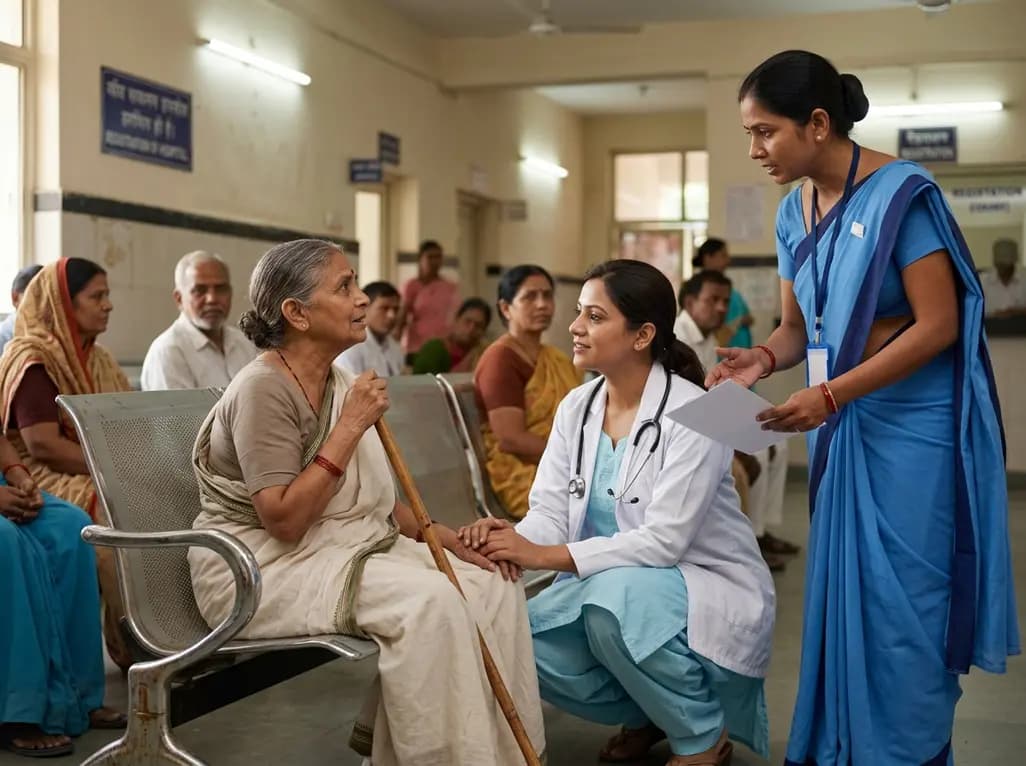
As India experiences a significant demographic shift, the demand for effective elderly community care resources is rising rapidly. Supporting older adults with age-related disabilities requires a robust network of integrated services. A recent scoping review highlights that these resources are often fragmented across healthcare and social sectors. Consequently, clinical practitioners must understand how to navigate these domains to improve patient outcomes and support aging in place.
The research identifies four core domains: healthcare services, home-based supports, behavioral health, and structural resources. Healthcare-based services provide essential medical interventions, while home and community-based services (HCBS) assist with activities of daily living. Furthermore, behavioral health supports address cognitive and mental health challenges. Structural resources focus on environmental adaptations to promote independence. However, the review notes that quality and effectiveness currently receive limited attention in empirical literature. Therefore, integrating these domains remains a critical priority for comprehensive geriatric care.
In India, several structural barriers limit equitable access to elderly community care resources. Workforce shortages and geographic inequities often leave rural populations underserved. Additionally, financial constraints and insurance gaps pose significant challenges for families. Many households rely on untrained domestic help due to a lack of formal geriatric training programs for caregivers. Consequently, medical professionals should advocate for theory-informed frameworks that address the intersecting needs of older adults. Specifically, these frameworks must focus on participation-centered approaches rather than treating health and environmental domains in isolation.
Improving access to integrated community assets is vital for healthy aging. Practitioners should focus on holistic care models that bridge the gap between medical treatment and social support. By effectively leveraging available resources, doctors can better manage chronic conditions and enhance the overall dignity of their elderly patients.
Community resources typically fall into healthcare-based services, home and community-based supports, behavioral health interventions, and environmental or structural resources designed to enhance independence.
The most common barriers include a shortage of trained geriatric healthcare workers, significant geographic disparities between urban and rural sectors, and financial limitations related to out-of-pocket expenses.
Disclaimer: This content is for informational and educational purposes only. It does not constitute medical advice or establish a doctor-patient relationship. Refer to the latest local and national guidelines for clinical practice.
References
1. Shin O et al. Community Resources for Older Adults With Age-Related Disabilities and Chronic Conditions: A Scoping Review. Res Aging. 2026 Jun 11. doi: 10.1177/01640275261458993. PMID: 42273837.
2. Kumar SG, Roy G, Kar SS. Disability and rehabilitation services in India: Issues and challenges. J Family Med Prim Care. 2012;1(1):3-7. doi:10.4103/2249-4863.94442.
3. NITI Aayog. Senior Care Reforms in India: Reimagining the Senior Care Paradigm. Government of India. 2024.

Read summarized clinical updates, watch expert medical content, and earn CME certifications right from your smartphone.
Open your smartphone camera to scan and install.





A scoping review identifies key domains of community resources for older adults with disabilities. It highlights gaps in quality evaluation and accessibility due to workforce and financial barriers. The study calls for integrated, participation-centered approaches to support aging populations effectively.
4 months ago
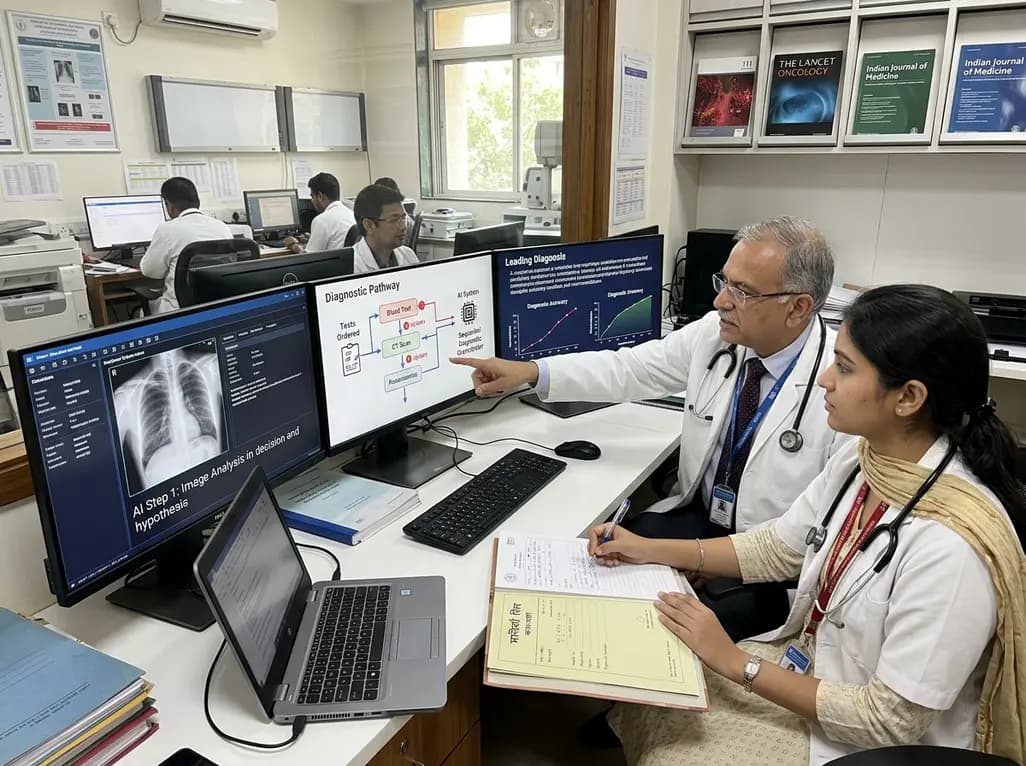
A breakthrough peer-reviewed study demonstrates that a sequential AI diagnosis system can mirror real-world clinical reasoning. By ordering stepwise tests and updating hypotheses dynamically, this multi-agent orchestrator achieved superior diagnostic accuracy while reducing investigative costs.
Today

A prenatal case highlights severe glutaric acidemia type II presenting as bilateral hyperechoic cystic kidneys at 18 weeks. Whole-exome sequencing revealed a novel homozygous ETFDH frameshift variant, demonstrating the power of rapid genetic testing in fetal renal anomalies.
Today

Review how tailored exercise programs benefit frail older patients with heart failure. Explore pathophysiological mechanisms, individualized training prescriptions, and strategies to overcome adherence barriers in clinical practice.
Yesterday

This comparative study evaluates posterior labral tears with and without glenohumeral instability, highlighting distinct demographic patterns, MRI underestimation in stable shoulders, and successful arthroscopic repair outcomes.
Yesterday

A clinical study demonstrates that early intervention with tocilizumab, either as monotherapy or bridged with corticosteroids, achieves significant proptosis reduction and resolves active inflammation in treatment-naive thyroid eye disease.
Yesterday
