.webp&w=384&q=75)

Loading, please wait...
Loading, please wait...

Adolescence represents a critical neurodevelopmental window characterized by profound physiological transitions across sleep architecture and autonomic regulation. Recent pediatric investigations reveal that objective electroencephalographic (EEG) measures of sleep depth and cortical arousal dynamics significantly influence 24-hour cardiac autonomic modulation. Historically, clinicians evaluated adolescent sleep primarily through macroscopic staging and subjective questionnaires. However, novel continuous quantitative biomarkers, such as the odds ratio product (ORP), provide deeper mechanistic insights into neurocardiac coupling. Understanding how disturbed sleep microarchitecture impairs autonomic balance enables clinicians to identify early cardiovascular vulnerability before overt pathology manifests.
The odds ratio product (ORP) is a continuous, validated spectral EEG metric that quantifies sleep depth on a scale from zero (deepest sleep) to 2.5 (full wakefulness). In contrast to conventional macro-sleep staging, ORP captures minute, second-to-second fluctuations in cortical state. Furthermore, ORP evaluated in the nine seconds following cortical arousals (designated as ORP-9) measures immediate post-arousal cortical arousability and sleep fragility. Concurrently, heart rate variability (HRV) serves as a sensitive electrocardiographic surrogate for cardiac autonomic modulation, tracking the dynamic interplay between sympathetic excitation and parasympathetic vagal withdrawal.
Specifically, time-domain HRV indices such as the standard deviation of normal-to-normal intervals (SDNN) and the root mean square of successive differences (RMSSD) reflect general autonomic flexibility and parasympathetic tone. Similarly, frequency-domain markers like low-frequency (LF) power quantify sympathetic and vagal interactions. When cortical arousability rises, it triggers immediate subcortical sympathetic surges. Consequently, persistent micro-arousals disrupt autonomic restoration during restorative non-rapid eye movement (NREM) sleep, elevating long-term cardiovascular burden.
To evaluate these complex neurocardiac relationships across maturation, investigators leveraged longitudinal and cross-sectional data from the landmark Penn State Child Cohort. The researchers evaluated 313 children who underwent baseline polysomnography at a median age of 9 years and completed follow-up assessments after a median interval of 7.4 years. Additionally, the team conducted cross-sectional analyses on 344 adolescents with a median age of 16 years. Each participant underwent comprehensive overnight 9-hour in-laboratory polysomnography alongside continuous 24-hour Holter electrocardiographic monitoring.
The investigators extracted continuous ORP during NREM sleep and ORP-9 post-arousal intervals from digitized EEG channels. Concurrently, they calculated 24-hour time-domain and frequency-domain HRV parameters, stratifying data into distinct daytime and nighttime periods. Multivariable linear regression models accounted for key potential confounders, including age, sex, race, body mass index percentile, metabolic syndrome severity scores, apnea-hypopnea index, insomnia symptoms, actigraphy-derived total sleep time, and baseline childhood HRV indices.
The longitudinal findings demonstrated that developmental shifts in cortical microarchitecture directly shape adolescent autonomic outcomes. Specifically, a greater developmental increase in ORP-9 from childhood to adolescence significantly predicted lower daytime log-transformed LF power, reduced SDNN, and decreased RMSSD in adolescence. Moreover, this heightened cortical arousability correlated with a significantly elevated daytime resting heart rate. These observations indicate that adolescents who experience heightened cortical reactivity after transient sleep arousals fail to sustain healthy daytime vagal tone.
Additionally, an increase in general NREM ORP from childhood to adolescence was associated with lower nighttime log-LF power and reduced nocturnal SDNN. Interestingly, no significant associations between ORP metrics and HRV parameters existed during childhood baseline assessments. Therefore, the physiological coupling between sleep depth biomarkers and cardiac autonomic control emerges specifically during the pubertal transition. Consequently, excessive cortical excitability during sleep serves as a robust early developmental biomarker for subsequent daytime autonomic blunting.
Cross-sectional analyses within the adolescent cohort confirmed that sleep microarchitecture intimately correlates with 24-hour autonomic regulation. Higher NREM ORP values, representing shallower and less restorative sleep depth, were significantly associated with lower daytime and nighttime SDNN, RMSSD, and log-LF power, accompanied by higher 24-hour heart rates. Similarly, elevated adolescent ORP-9 values showed strong inverse associations with both daytime and nighttime autonomic variability indices.
These findings demonstrate that shallower sleep depth acts as a proximal, concurrent determinant of blunted parasympathetic regulation. When adolescents fail to achieve sustained slow-wave depth, the nocturnal cardiovascular dipping phenomenon diminishes. As a result, the autonomic nervous system remains in a sustained state of sympathetic predominance throughout the 24-hour cycle. Consequently, both time-domain and frequency-domain measures of cardiac modulation exhibit marked attenuation across day and night periods.
The identification of sleep-related autonomic dysfunction carries profound prognostic implications for pediatric and adult clinical practice. Autonomic imbalance, characterized by reduced HRV and elevated basal heart rate, represents an established independent risk factor for arterial stiffness, hypertension, metabolic syndrome, and adverse cardiovascular events. Furthermore, adolescence represents a developmental stage where circadian misalignment, late-night academic demands, and digital device use frequently compromise sleep architecture.
Because these novel spectral EEG markers detect autonomic strain before structural cardiac changes occur, they provide a valuable early screening paradigm. Pediatricians and cardiologists must recognize that disrupted sleep microarchitecture exerts systemic cardiovascular penalties extending far beyond perceived daytime tiredness. Accordingly, protecting restorative sleep depth during the teenage years may attenuate the downstream progression of subclinical cardiovascular diseases into adulthood.
Integrating neurocardiac concepts into routine adolescent care requires clinicians to evaluate sleep beyond simple duration. While obtaining full in-lab polysomnography for every adolescent is impractical, clinicians can actively screen for sleep fragmentation, frequent nocturnal awakenings, and unrefreshing sleep. Pediatric practitioners should emphasize healthy sleep hygiene, consistent circadian scheduling, and early intervention for sleep-disordered breathing or behavioral insomnia.
Moreover, future advances in digital health and wearable electroencephalography may soon allow clinicians to track ORP metrics and HRV non-invasively in ambulatory settings. Clinicians should proactively counsel adolescents and families regarding the physiological consequences of chronic sleep disruption. By prioritizing restorative NREM sleep depth, clinicians can safeguard autonomic equilibrium, optimize cardiovascular resilience, and enhance long-term cardiometabolic wellness across pediatric populations.
The odds ratio product is a continuous, automated electroencephalographic metric that quantifies sleep depth on a scale from zero to 2.5. It evaluates spectral power across frequency bands to measure wakefulness propensity. Lower scores indicate deep, restorative sleep, whereas higher scores reflect lighter sleep, cortical instability, and frequent micro-arousals.
Increased cortical arousability, measured through post-arousal EEG power, triggers transient sympathetic surges and persistent vagal withdrawal. Over time, frequent cortical micro-arousals disrupt nocturnal cardiovascular recovery, leading to reduced 24-hour heart rate variability, elevated resting daytime heart rates, and blunted autonomic flexibility during crucial developmental adolescent stages.
Heart rate variability reflects the functional balance between sympathetic and parasympathetic autonomic inputs to the heart. In adolescents, blunted heart rate variability serves as an early subclinical indicator of autonomic dysregulation, predicting future risks of arterial stiffness, essential hypertension, metabolic dysfunction, and premature cardiovascular disease in adult life.
Disclaimer: This content is for informational and educational purposes only and is not intended as medical advice. Always consult a qualified healthcare provider for diagnosis and treatment. The information presented here does not replace professional medical judgment. Refer to the latest local and national guidelines for clinical practice.
References:

Read summarized clinical updates, watch expert medical content, and earn CME certifications right from your smartphone.
Open your smartphone camera to scan and install.





A study from the Penn State Child Cohort reveals that novel EEG sleep biomarkers, including the odds ratio product, predict altered 24-hour cardiac autonomic modulation in adolescents, linking sleep microarchitecture to early cardiovascular risks.
last month

Systemic amyloidosis management is undergoing a therapeutic revolution. This clinical review synthesizes updates from the International Society of Amyloidosis, detailing novel plasma cell therapies, TTR stabilizers, silencers, translational models, and artificial intelligence in drug development.
Today

A retrospective study of 824 patients undergoing over 2,200 intradetrusor onabotulinumtoxinA injections identifies sex- and etiology-specific predictors of 2-week post-void residual, highlighting the influence of baseline residual volumes, toxin dosage, and distinct urodynamic parameters on urinary retention risk.
Today
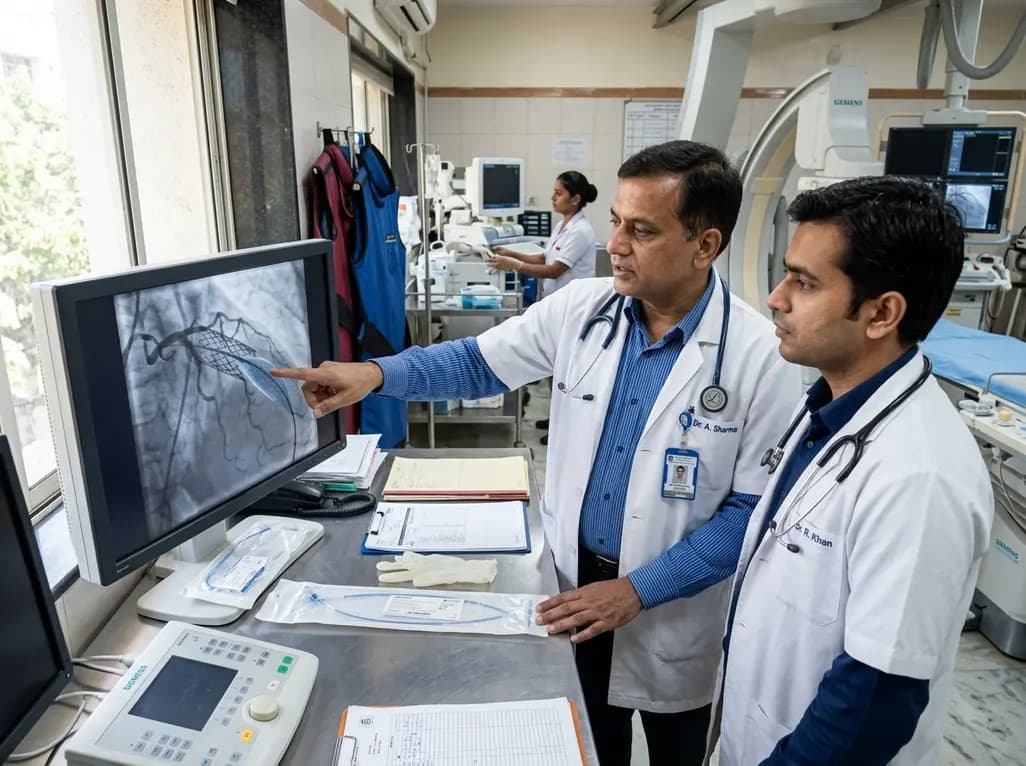
The US FDA has granted approval to the SELUTION SLR drug-eluting balloon for treating coronary in-stent restenosis. This milestone introduces a sustained-release sirolimus platform that eliminates the need for additional permanent metallic stents while maintaining robust vascular healing and luminal patency.
Today

Posttraumatic pisotriquetral instability is a rare wrist injury causing severe hypothenar pain and weakness. Explore clinical examination, imaging, and pisiformectomy.
Today

A comprehensive review analyzes periconceptional GLP-1 receptor agonist exposure, revealing reassuring data on congenital anomalies and adverse perinatal outcomes while emphasizing the need for cautious patient counseling.
Today
