.webp&w=384&q=75)

Loading, please wait...
Loading, please wait...

Researchers have developed an innovative EEG-guided robotic glove hand rehabilitation system designed specifically for the rigorous recovery needs of injured athletes. This technology addresses a critical gap in traditional rehabilitation by offering real-time neural feedback. By integrating advanced machine learning, the system can interpret complex brain signals and translate them into therapeutic hand movements.
The research team analyzed 250 subjects, including 200 injured athletes and 50 healthy controls. Using MATLAB, they processed EEG signals across the alpha and beta frequency bands. Notably, the study focused on power spectral density analysis to identify patterns associated with motor engagement. To classify this engagement into low, medium, or high levels, they tested several machine learning models. These included Linear Discriminant Analysis (LDA), Tuned Neural Network (TNN), and Fine Gaussian Support Vector Machine (SVM).
Results indicated that the Fine Gaussian SVM model was the most effective. It achieved a classification accuracy of 98.6% for healthy individuals and 97.4% for injured athletes. Furthermore, ROC analysis confirmed the system's high sensitivity and specificity in distinguishing neural patterns. Consequently, this technology provides a reliable and uniform method for tracking rehabilitation progress. For clinicians in India, particularly those in sports medicine and orthopedics, such tools could revolutionize post-injury care protocols by providing objective data on motor engagement.
Traditional physiotherapy often lacks real-time feedback on the user's neural engagement. In contrast, this robotic glove uses EEG signals to ensure the athlete is actively attempting motor tasks, which promotes better neuroplasticity and faster recovery.
The study highlights the alpha and beta bands as crucial. These frequency ranges are closely associated with motor planning and execution, making them ideal for monitoring motor engagement in injured athletes.
Yes, the system demonstrated reliable and uniform outcomes during performance evaluations. This consistency makes it suitable for long-term rehabilitation tracking and data-driven clinical decision-making in sports medicine clinics.
Disclaimer: This content is for informational and educational purposes only. It does not constitute medical advice or a formal recommendation for clinical practice. Refer to the latest local and national guidelines for clinical practice.
References

Read summarized clinical updates, watch expert medical content, and earn CME certifications right from your smartphone.
Open your smartphone camera to scan and install.





A study on an EEG-guided robotic glove shows 98.6% accuracy in motor engagement classification for athlete hand rehabilitation using machine learning....
5 months ago

Novel glucose-responsive mPEG-PSA nanocarriers deliver insulin aspart on demand, achieving dual postprandial and basal glycemic control without hypoglycemia in diabetic models. This biomaterial breakthrough offers promising clinical implications for physiologic diabetes management.
Today
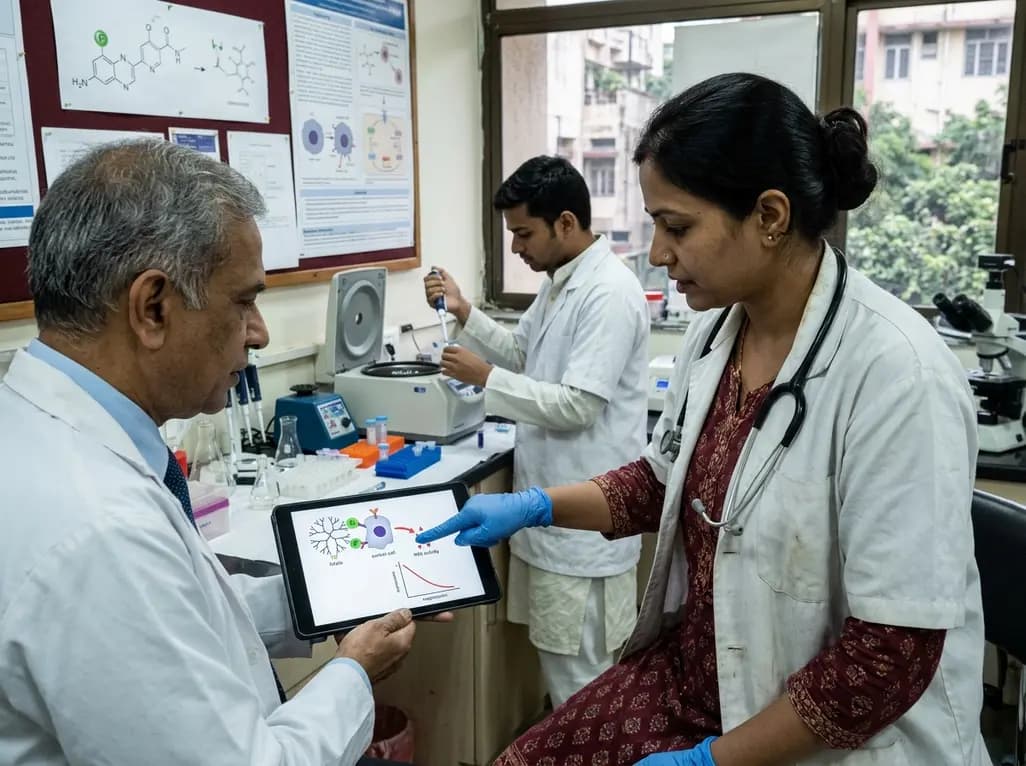
A novel folate-conjugated tecto-dendrimer nanoplatform successfully delivers siRNA to achieve targeted HK2 silencing, disrupting ovarian cancer glycolysis and suppressing lactate output.
Today
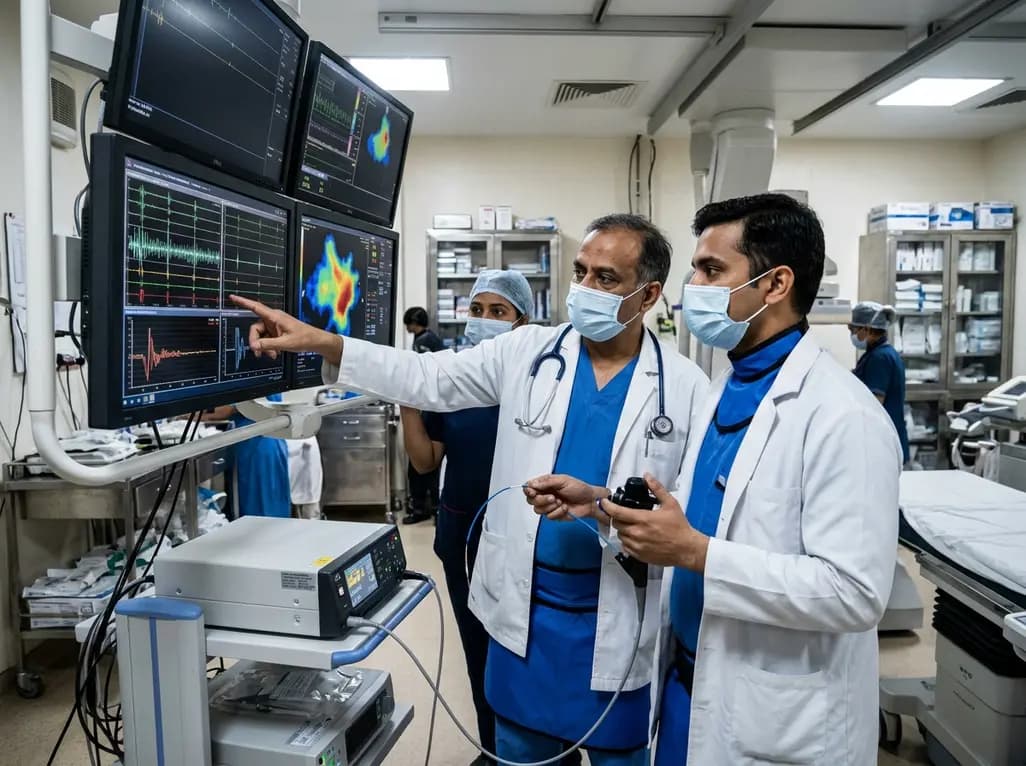
A comparative non-contact study reveals that high-power radiofrequency delivery with the QDOT MICRO catheter induces an artifactual contact force rise. Electrophysiologists must understand this power-dependent thermal and electrical phenomenon to avoid inadvertent catheter withdrawal and ineffective ablation.
Today
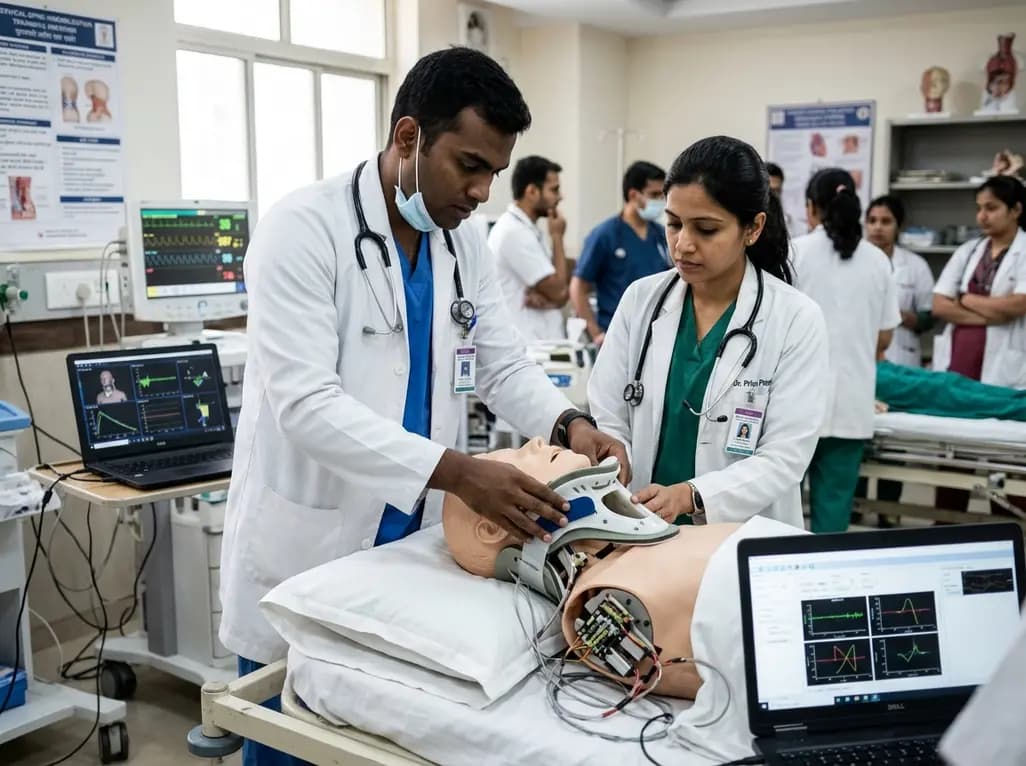
A novel proof-of-concept study presents a six-degree-of-freedom articulated manikin neck equipped with linear potentiometers. The system provides real-time kinematic motion feedback during cervical immobilisation, delivering sub-degree tracking accuracy to improve pre-hospital trauma training and patient safety.
Today

A retrospective comparative cohort study evaluated genitourinary safety in HFpEF between dapagliflozin and empagliflozin over six months. Rates of symptomatic UTI and asymptomatic bacteriuria showed no statistically significant differences, supporting comparable safety profiles across both SGLT2 inhibitors.
Today
