.webp&w=384&q=75)

Loading, please wait...
Loading, please wait...
The escalating public health crisis in Central Africa demands swift action. Consequently, the White House recently submitted a massive supplemental funding request to Congress. This proposal seeks over $1.4 billion to combat the current infectious disease surge. Specifically, this funding will target international humanitarian aid and domestic biodefense. Therefore, analyzing this development provides crucial insights into the global Ebola outbreak response.
To address the widening epidemic, the administration outlined a multifaceted financial plan. First, the largest portion of this request allocates $800 million for humanitarian crisis response. These funds will primarily support containment efforts on the ground in Africa. For instance, the plan proposes building a dedicated quarantine center in Kenya. This facility will safely isolate and treat American citizens exposed to the virus. Additionally, the budget will cover essential medical supplies, treatment protocols, and rigorous contact tracing. Establishing a robust regional logistics network remains a top priority to facilitate rapid resource deployment. Furthermore, the funding aims to reinforce local infection-control practices to protect frontline healthcare workers. By strengthening these core areas, the administration hopes to halt transmission at its source. In addition, these proactive measures could significantly reduce the burden on local health infrastructures. However, some lawmakers remain skeptical about the allocation process. They question whether these funds will reach the most critical areas effectively. Nevertheless, public health experts emphasize that substantial resources are indispensable for containing such highly infectious pathogens. Ultimately, this significant financial commitment underscores the global nature of contemporary biological threats.
In addition to direct humanitarian aid, the proposal allocates $500 million for global health security. U.S. officials argue that this funding is essential to prevent the virus from reaching American soil. Therefore, a large portion of these resources will support robust disease surveillance systems. Furthermore, enhancing laboratory capacity in high-risk regions remains a vital component of the strategy. This capacity enables healthcare providers to diagnose cases quickly and accurately. Consequently, medical teams can isolate infected individuals before they travel across borders. Cross-border coordination also represents a key focus of the prevention initiative. To achieve this, the administration plans to build strong partnerships with multilateral organizations. Moreover, engaging the private sector will likely play a crucial role in developing novel medical countermeasures. Public health analysts believe that proactive containment abroad is far more cost-effective than managing a domestic outbreak. Indeed, previous epidemics demonstrated that weak surveillance systems can lead to rapid global transmission. By investing in global health infrastructure, the United States aims to create a defensive shield. This approach protects both international populations and domestic citizens from infectious threats. Ultimately, global health security relies on collaborative, well-funded scientific efforts.
Beyond healthcare infrastructure, the administration requested $90 million for specialized diplomatic efforts. Specifically, these funds will support the safe evacuation of American citizens who contract the virus. Because Ebola is highly contagious, transporting infected individuals requires highly specialized medical aircraft. Subsequently, these patients must travel to designated biocontainment treatment facilities within the United States. Furthermore, diplomatic channels must remain open to coordinate emergency travel clearances and logistical details. These efforts are crucial for maintaining international trust and collaboration during a crisis. However, executing such complex evacuations involves significant biological and operational risks. Therefore, medical personnel must undergo rigorous training to handle active infections during flight. In addition, the state department must collaborate closely with international aviation authorities. This coordination ensures that transport planes can transit safely through foreign airspace. Meanwhile, diplomatic missions will continue to offer guidance to citizens living in affected areas. By establishing clear evacuation protocols, the government aims to reassure humanitarian workers on the ground. Consequently, these brave professionals can continue their vital work without fearing abandonment. Ultimately, diplomatic readiness remains a cornerstone of comprehensive epidemic management.
To understand the urgency of this request, clinicians must examine the specific viral pathogen. Specifically, the current outbreak in the Democratic Republic of Congo features the rare Bundibugyo strain. While the Zaire strain often dominates headlines, the Bundibugyo species presents unique clinical challenges. For instance, this specific strain typically exhibits a lower case fatality rate than Zaire. However, it still causes severe hemorrhagic fever, intense fatigue, and profound systemic complications. Furthermore, early symptoms frequently mimic other common tropical diseases like malaria and typhoid. Consequently, this symptom overlap can delay accurate clinical diagnosis and trigger rapid community transmission. Within the first month, this outbreak infected more than 1,000 individuals, resulting in 267 fatalities. According to the World Health Organization, this represents the fastest-growing initial phase of any documented Ebola episode. For this reason, medical practitioners worldwide must maintain a high index of suspicion for returning travelers. Additionally, ongoing clinical trials evaluate experimental antibody therapies to treat infected patients. Historically, authorities reserved these drugs strictly for American citizens during previous emergencies. Today, researchers make these experimental therapies available globally to combat the spreading epidemic.
Despite the clear clinical urgency, the funding request faces significant political hurdles in Congress. Many lawmakers express deep frustration regarding how the administration manages foreign assistance. Specifically, some politicians criticize the executive branch for withholding funds previously allocated for international healthcare. For example, recent cuts to the U.S. Agency for International Development hampered initial disease response efforts. Consequently, these financial reductions drew widespread criticism from global health advocates and African public health partners. Some congressional leaders argue that neglecting foreign aid ultimately harms domestic biosecurity. Therefore, they demand a more consistent strategy for global health partnerships. Meanwhile, administrative officials maintain that the proposed quarantine center in Kenya is vital for national safety. However, critics label this facility as controversial and question its overall effectiveness. They suggest that localized containment in affected communities yields better clinical outcomes. To resolve these differences, both parties must negotiate a compromise that prioritizes global disease control. Indeed, failing to act could allow the virus to spread further across international borders. As a result, the outcome of this legislative debate will shape global health policy for years to come.
Q1: What is the main objective of the proposed $1.4 billion Ebola funding request?
The primary goal of this funding request is to address the expanding Ebola outbreak in Central Africa and protect domestic health. Specifically, the plan allocates $800 million for immediate humanitarian assistance on the ground. Additionally, it provides $500 million to strengthen global health security through surveillance, lab capacity, and partnerships. Finally, $90 million supports diplomatic efforts and safe medical evacuations of infected citizens.
Q2: How does the Bundibugyo strain differ clinically from other Ebola virus strains?
The Bundibugyo strain represents a rare species of the Ebola virus that presents distinct diagnostic challenges. Clinically, it typically causes a lower case fatality rate compared to the more common Zaire strain. However, patients still experience severe symptoms like hemorrhagic fever, extreme fatigue, and multi-organ distress. Because early clinical presentations mimic other common tropical infections, medical professionals often face significant hurdles in achieving rapid diagnosis.
Q3: Why is the proposed quarantine center in Kenya considered controversial?
The proposed quarantine center in Kenya sparked significant debate among public health analysts and lawmakers. Proponents argue that the facility is necessary to isolate and treat exposed American citizens safely before returning home. Conversely, critics suggest that concentrating resources on external facilities is less effective than reinforcing healthcare infrastructure directly within affected communities. Additionally, legal and logistical disputes regarding international jurisdiction have further complicated the project.
Disclaimer: This content is for informational and educational purposes only. It does not constitute medical advice or replace professional judgment. Refer to the latest local and national guidelines for clinical practice.
References

Read summarized clinical updates, watch expert medical content, and earn CME certifications right from your smartphone.
Open your smartphone camera to scan and install.





The White House is requesting over $1.4 billion from Congress to address a severe Ebola outbreak in the Democratic Republic of Congo linked to the Bundibugyo strain. This article explores the details of this request, including global health security funding, quarantine centers, and clinical impacts for healthcare professionals.
3 months ago
Recent epidemiological data reveals a dramatic surge in summer heat mortality driven by human-induced climate warming. This analysis explores the pathophysiological impacts on cardiac and renal systems, diagnostic dilemmas in death certification, and essential emergency cooling protocols for acute clinical care.
Today

Odisha has established India's first state-level clinical protocol specifically tailored for pregnant women with sickle cell disease. Developed with NHM and UNICEF, the framework provides structured antenatal screening, crisis mitigation, standardized referral pathways, and specialized interdisciplinary care.
Today

India is advancing preventive healthcare by integrating genomics, artificial intelligence, and quantum technologies. With the SANGAM programme sequencing one million Indian genomes, clinicians can unlock personalized therapies, detect cardiometabolic risks early, and curb the burden of diabetes and heart disease.
Today
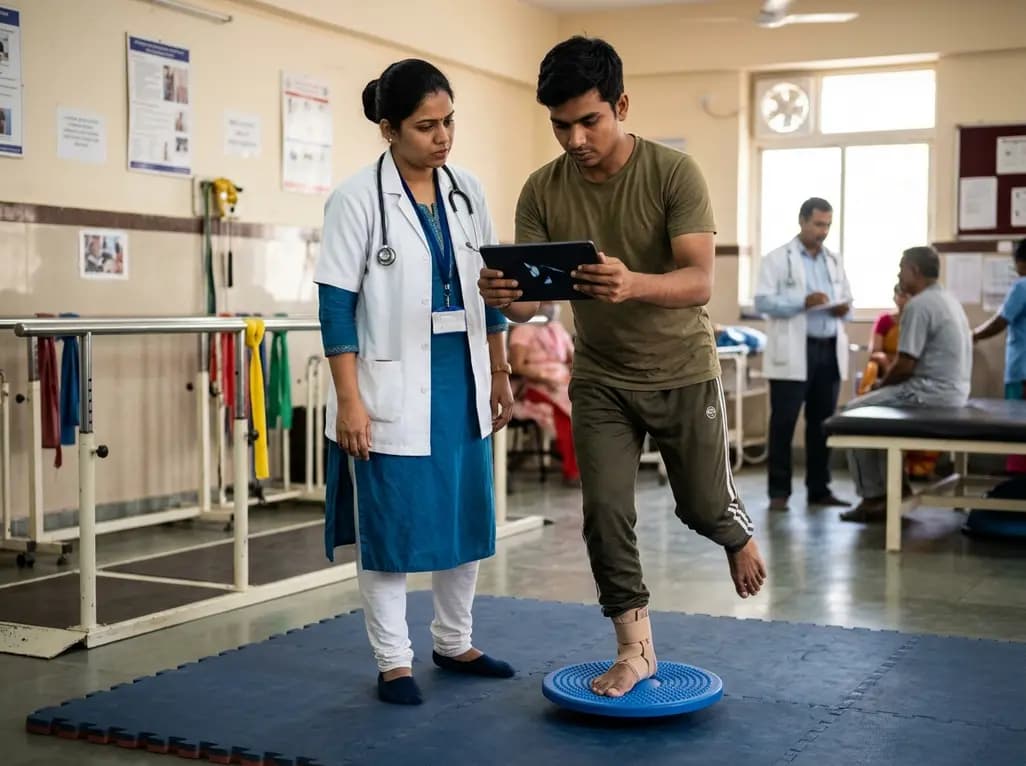
A randomized controlled trial demonstrates that an eight-week dual-task training intervention significantly improves static and dynamic postural control over standard balance exercises in individuals with chronic ankle instability, addressing critical neurocognitive deficits during athletic and daily activities.
Today

A retrospective cohort study of 7,716 ICU patients from the MIMIC-IV database demonstrates that Gradient Boosting Decision Trees significantly outperform traditional SOFA scores in predicting in-hospital mortality among patients with sepsis and diabetes, with SHAP analysis providing clinical interpretability.
Today
