.webp&w=384&q=75)

Loading, please wait...
Loading, please wait...

The World Health Organization (WHO) has upgraded the national risk level of the Ebola outbreak DR Congo to very high. Consequently, medical teams are working urgently to trace contacts and control transmission. This particular crisis presents unique challenges because it involves the rare Bundibugyo ebolavirus strain. Therefore, clinicians must remain vigilant regarding imported cases and febrile illnesses. Meanwhile, global authorities are implementing emergency measures to secure the affected borders.
The WHO upgraded the risk level in the Democratic Republic of Congo from high to very high. However, the agency kept the regional risk level at high and the global risk level at low. This determination reflects the high potential of this virus spreading rapidly within the country. Specifically, the assessment considers human health risks, the risk of rapid international spread, and local healthcare capacity. Furthermore, the disease's early symptoms closely mimic malaria or typhoid, which often delays detection. As a result, the virus has silently circulated in northeastern Ituri province for several weeks. Currently, health officials are pursuing intensive contact tracing to break the chain of transmission.
Unlike the Zaire strain, there are currently no approved vaccines or targeted therapies for the Bundibugyo ebolavirus. Additionally, the existing Ervebo vaccine provides very little cross-protection against this specific pathogen. Consequently, managing the outbreak relies heavily on rapid isolation and rigorous supportive care. In response, the WHO advisory group has prioritized two monoclonal antibodies for urgent clinical trials. These candidates include Regeneron 3479 and MBP134. Moreover, experts recommend evaluating the oral antiviral drug obeldesivir as a post-exposure prophylaxis. This intervention could potentially prevent high-risk contacts from developing severe clinical disease.
The World Health Organization has declared this outbreak a Public Health Emergency of International Concern. In light of this, the Government of India has issued a critical health advisory for its citizens. Specifically, the Ministry of Health advises avoiding non-essential travel to the Democratic Republic of Congo and neighboring Uganda. Additionally, authorities have instructed airport and port health officers to screen travelers coming from affected areas. Healthcare providers should look out for unexplained febrile illness in travelers who recently visited East or Central Africa. Therefore, early recognition and immediate isolation remain the primary defenses against potential domestic introduction.
Q1: Why is the Bundibugyo strain of Ebola particularly concerning?
The Bundibugyo strain is rare and currently lacks any approved vaccines or specific treatments. Additionally, standard Ebola vaccines like Ervebo do not offer cross-protection against it.
Q2: What are the early clinical signs of a Bundibugyo virus infection?
Infected individuals typically experience a silent early phase with symptoms resembling malaria or typhoid. Consequently, this can cause delayed detection and increased risk of transmission.
Q3: What precautions has India taken regarding the Ebola outbreak?
The Government of India has advised citizens against non-essential travel to affected nations. Furthermore, they have intensified screening protocols at points of entry for travelers exhibiting febrile illnesses.
Disclaimer: This content is for informational and educational purposes only. It does not constitute medical advice or replace professional judgment. Refer to the latest local and national guidelines for clinical practice.
References

Read summarized clinical updates, watch expert medical content, and earn CME certifications right from your smartphone.
Open your smartphone camera to scan and install.





The WHO has raised the Ebola outbreak risk in DR Congo to very high. Discover details on the Bundibugyo strain, current trials, and advisory updates....
4 months ago
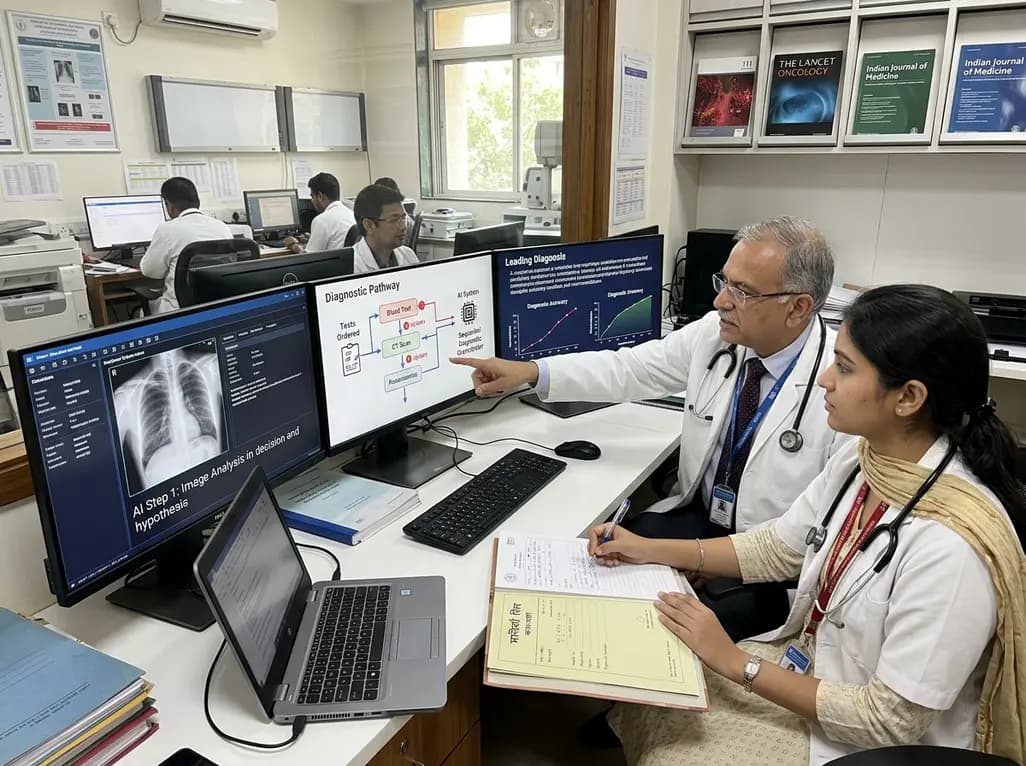
A breakthrough peer-reviewed study demonstrates that a sequential AI diagnosis system can mirror real-world clinical reasoning. By ordering stepwise tests and updating hypotheses dynamically, this multi-agent orchestrator achieved superior diagnostic accuracy while reducing investigative costs.
Today

A prenatal case highlights severe glutaric acidemia type II presenting as bilateral hyperechoic cystic kidneys at 18 weeks. Whole-exome sequencing revealed a novel homozygous ETFDH frameshift variant, demonstrating the power of rapid genetic testing in fetal renal anomalies.
Today

Review how tailored exercise programs benefit frail older patients with heart failure. Explore pathophysiological mechanisms, individualized training prescriptions, and strategies to overcome adherence barriers in clinical practice.
Yesterday

This comparative study evaluates posterior labral tears with and without glenohumeral instability, highlighting distinct demographic patterns, MRI underestimation in stable shoulders, and successful arthroscopic repair outcomes.
Yesterday

A clinical study demonstrates that early intervention with tocilizumab, either as monotherapy or bridged with corticosteroids, achieves significant proptosis reduction and resolves active inflammation in treatment-naive thyroid eye disease.
Yesterday
