.webp&w=384&q=75)

Loading, please wait...
Loading, please wait...
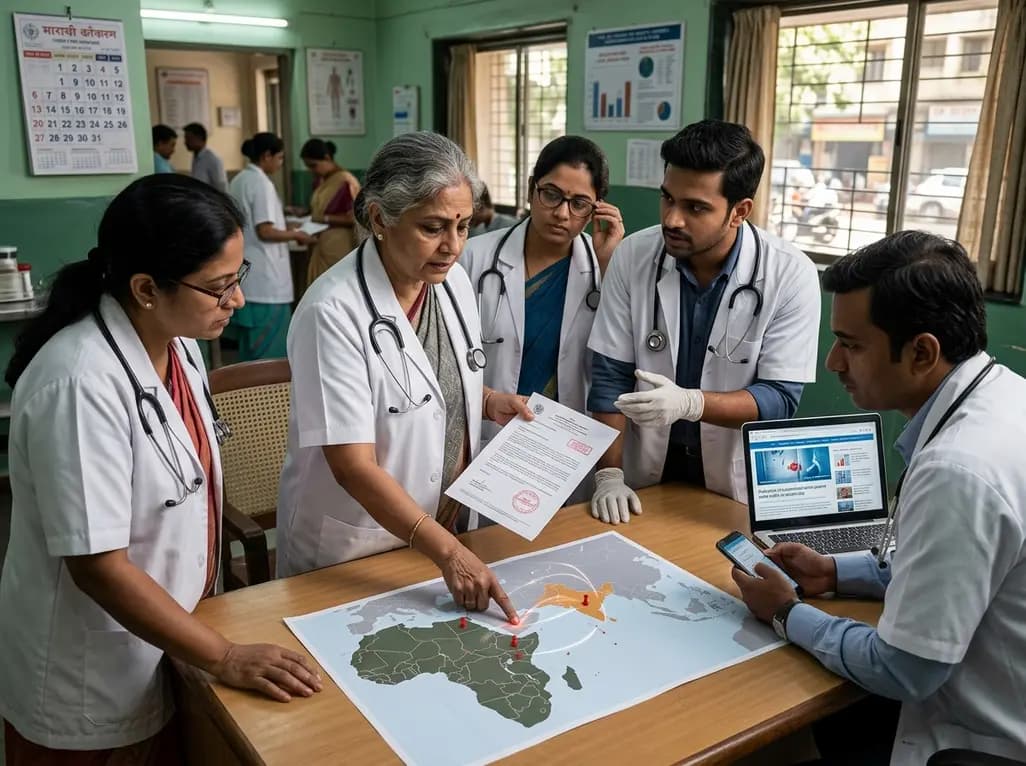
The Ministry of Health and Family Welfare recently issued a crucial Ebola health advisory for India. Additionally, authorities have not detected any cases of the virus within the country. However, the government urges citizens and healthcare providers to remain highly vigilant. Early reporting of symptoms remains critical to saving lives and preventing transmission. Consequently, clinicians must familiarize themselves with the active screening protocols at all entry points.
This Ebola health advisory responds to a fresh outbreak of the virus in parts of Africa. Specifically, the WHO declared the outbreak of the Bundibugyo strain a public health emergency. Therefore, international airports have stepped up screening for passengers from high-risk countries. These countries include the Democratic Republic of Congo, Uganda, and South Sudan. Additionally, the government has postponed bilateral summits to prioritize public health safety.
The Ebola virus causes a severe and often fatal illness in humans. Indeed, previous outbreaks show mortality rates ranging from 25% to 90%. Thus, prompt identification of suspected cases is absolutely vital. Travelers from affected regions must monitor their health for a full 21 days. Furthermore, if they develop fever, headache, muscle pain, vomiting, or unexplained bleeding, they must isolate immediately. Alternatively, they should contact the government's 24/7 helpline at 1075 for assistance.
Medical professionals play a key role in preventing localized outbreaks. First, they must identify suspected cases based on travel history and symptoms. Second, they must implement immediate isolation protocols for high-risk individuals. Finally, doctors should report any suspected cases to local health authorities. As a result, rapid clinical action remains our best defense against the spread of this deadly virus.
Q1: What are the primary symptoms of Ebola?
The primary symptoms include sudden fever, headache, muscle pain, vomiting, diarrhea, and unexplained bleeding.
Q2: What is the maximum incubation period for the virus?
The maximum known incubation period is 21 days, which is why travelers must monitor their health for this duration.
Q3: What helpline number should individuals contact for assistance?
Individuals can contact the government's 24/7 National Health Helpline at 1075 for guidance and support.
Disclaimer: This content is for informational and educational purposes only. It does not constitute medical advice or replace professional judgment. Refer to the latest local and national guidelines for clinical practice.
References

Read summarized clinical updates, watch expert medical content, and earn CME certifications right from your smartphone.
Open your smartphone camera to scan and install.





The Union Health Ministry has issued an alert on Ebola disease, emphasizing surveillance at entry points, early reporting, and strict self-isolation....
4 months ago
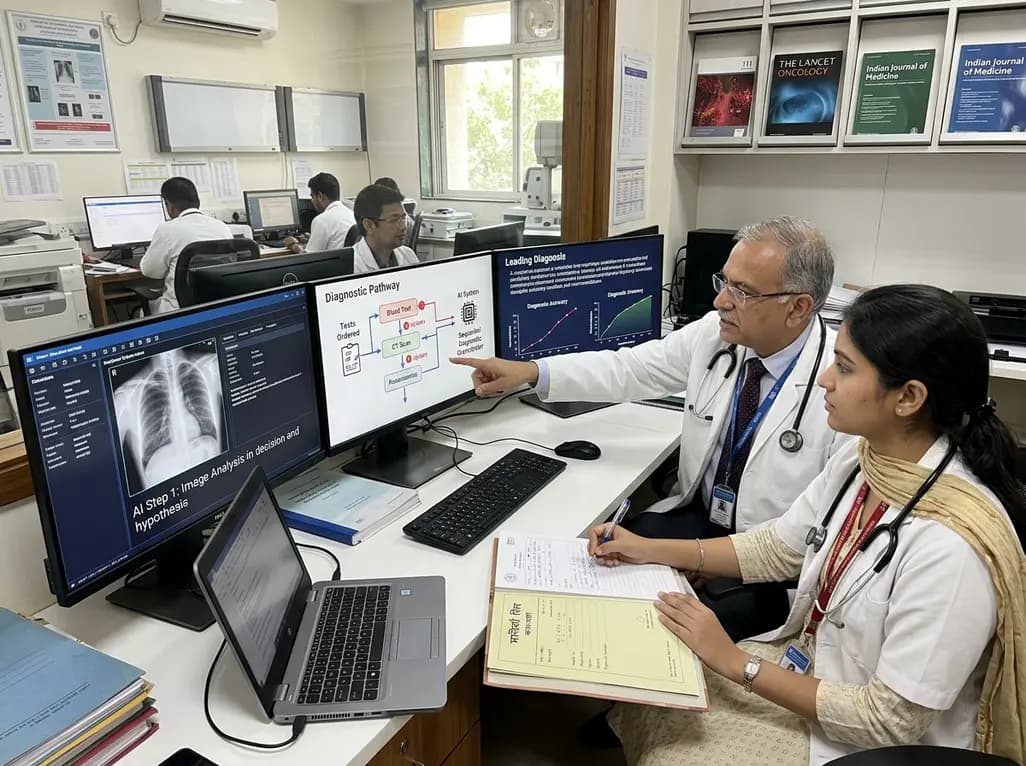
A breakthrough peer-reviewed study demonstrates that a sequential AI diagnosis system can mirror real-world clinical reasoning. By ordering stepwise tests and updating hypotheses dynamically, this multi-agent orchestrator achieved superior diagnostic accuracy while reducing investigative costs.
Today

A prenatal case highlights severe glutaric acidemia type II presenting as bilateral hyperechoic cystic kidneys at 18 weeks. Whole-exome sequencing revealed a novel homozygous ETFDH frameshift variant, demonstrating the power of rapid genetic testing in fetal renal anomalies.
Today

Review how tailored exercise programs benefit frail older patients with heart failure. Explore pathophysiological mechanisms, individualized training prescriptions, and strategies to overcome adherence barriers in clinical practice.
Yesterday

This comparative study evaluates posterior labral tears with and without glenohumeral instability, highlighting distinct demographic patterns, MRI underestimation in stable shoulders, and successful arthroscopic repair outcomes.
Yesterday

A clinical study demonstrates that early intervention with tocilizumab, either as monotherapy or bridged with corticosteroids, achieves significant proptosis reduction and resolves active inflammation in treatment-naive thyroid eye disease.
Yesterday
