

Loading, please wait...
Loading, please wait...

Major depressive episodes occurring in adolescents and transition-age youth present unique diagnostic and therapeutic challenges for modern clinicians. Historically, treating youth depression yields modest remission rates and carries considerable risk of chronic relapse. Therefore, identifying reliable clinical markers that forecast early treatment response has become an urgent clinical priority. A landmark prospective study by Wang and colleagues evaluated 218 hospitalized adolescents and young adults aged 13 to 25 years. The authors discovered that baseline symptom severity and formal thought disturbance dictate initial therapeutic trajectories. Consequently, understanding these early predictors allows clinicians to anticipate treatment resistance and tailor acute psychopharmacological management effectively.
Evaluating therapeutic efficacy during the initial two weeks of pharmacotherapy offers decisive clinical utility. Traditionally, practitioners waited four to eight weeks before modifying antidepressant regimens in depressed youth. However, contemporary psychiatric evidence confirms that two-week symptom trajectories strongly predict downstream clinical remission. In this cohort of hospitalized youth, investigators utilized the 17-item Hamilton Depression Rating Scale to quantify therapeutic changes. Notably, early improvement significantly lowered long-term morbidity and decreased hospitalization duration. Furthermore, prompt recognition of poor initial response prevents prolonged exposure to ineffective psychopharmacological agents. In Indian clinical settings, where inpatient psychiatric beds face substantial demand, early response evaluation optimizes resource allocation. Clinicians can swiftly distinguish patients who will recover on monotherapy from those requiring prompt multi-modal intensification. Therefore, monitoring two-week symptom trajectories provides an actionable benchmark for daily clinical practice. Systematic clinical rating scales empower care teams to make objective, data-driven pharmacological adjustments during critical acute phases.
Interestingly, the investigation demonstrated that higher baseline depression severity correlated with a greater likelihood of early response. Specifically, the baseline 17-item Hamilton Depression Rating Scale total score yielded an odds ratio of 1.10. Clinicians frequently assume that individuals with severe symptoms exhibit poorer initial trajectories. However, statistical and clinical factors explain this observed phenomenon. First, patients exhibiting severe vegetative, affective, and cognitive symptoms possess substantial room for rapid numerical score reduction upon entering structured care. Second, acute hospitalization provides immediate environmental relief, continuous nursing observation, and rigorous medication compliance. Consequently, structured inpatient milieus often trigger prompt initial symptom relief in severely distressed adolescents. Furthermore, severe biological depression often responds briskly to targeted neurochemical restoration compared to chronic low-grade dysthymia. Nonetheless, physicians must not mistake rapid early score reductions for complete functional recovery. Instead, practitioners should view initial symptom drops as a critical therapeutic window to consolidate pharmacological and psychosocial interventions.
In contrast to depressive severity, elevated thought disorder symptoms emerged as a potent negative predictor of early recovery. Specifically, thought disorder factor scores on the Brief Psychiatric Rating Scale produced an odds ratio of 0.79. Therefore, each point increase in thought pathology reduced the odds of achieving two-week response by twenty-one percent. Thought disturbance in youth mood episodes includes conceptual disorganization, suspiciousness, hallucinations, and idiosyncratic cognitive processing. Notably, these psychotic and sub-psychotic features reflect profound neurobiological disruption across fronto-striatal circuits. Antidepressant monotherapy rarely resolves these complex neurocognitive symptoms within brief initial windows. Moreover, disorganized thinking impairs a patient's capacity to engage in supportive psychotherapy and adhere to hospital routines. Consequently, the presence of baseline thought disturbance heralds an atypical, highly refractory illness subtype. Practitioners who overlook subtle cognitive slippage risk persisting with futile monotherapies. Recognizing thought dysfunction early enables targeted algorithms that incorporate mood stabilizers and second-generation antipsychotics.
Understanding why thought dysfunction impedes early recovery requires examining underlying neurobiological mechanisms. Current psychiatric neuroscience indicates that psychotic depression involves dysregulated dopamine signaling alongside severe hypothalamic-pituitary-adrenal axis hyperactivity. Consequently, standard serotonergic and noradrenergic antidepressants fail to correct these extensive neuroendocrine disturbances rapidly. Furthermore, emerging evidence suggests that thought disorder features in youth often indicate an underlying bipolar diathesis rather than unipolar pathology. When clinicians treat unrecognized bipolar depression with antidepressant monotherapy, clinical destabilization and persistent cognitive disruption frequently occur. In addition, neuroinflammatory processes and altered neuroplasticity in the prefrontal cortex undermine rapid cellular recovery. Therefore, baseline thought disorder identifies a biologically distinct cohort requiring broader neurochemical modulation. Similarly, severe cognitive disorganization disrupts executive functioning and impairs stress resilience during acute hospitalization. Clinicians must integrate neurobiological insights with empirical rating scales to deliver comprehensive, stratified interventions that directly address complex illness presentations.
Translating these empirical findings into routine clinical practice in India requires concrete assessment protocols. First, clinicians must mandate standardized baseline psychometric screening using validated tools like the Hamilton Depression Rating Scale. Second, practitioners should meticulously examine adolescents for subtle cognitive distortions, paranoia, and conceptual disorganization upon initial presentation. If prominent thought disorder symptoms exist, clinicians must avoid relying solely on selective serotonin reuptake inhibitor monotherapy. Instead, combining evidence-based second-generation antipsychotics, such as quetiapine, with mood stabilizers or antidepressants offers superior symptom control. Third, teams must schedule formal response assessments at day fourteen of treatment. If a patient fails to show meaningful score reductions by week two, physicians should promptly modify the treatment plan. Such modifications include dose optimization, switching pharmacological classes, or augmenting with psychotherapy. In Indian psychiatric settings, family psychoeducation regarding realistic recovery timelines enhances patient retention and treatment adherence. Ultimately, proactive therapeutic adjustments guided by early objective markers improve long-term functional recovery.
Evaluating symptom trajectory at two weeks provides reliable prognostic insight into final clinical remission. Patients who fail to show early improvement rarely achieve remission with continued unchanged therapy. Therefore, early assessment prevents months of ineffective treatment and allows timely pharmacological adjustments, minimizing prolonged psychosocial and educational impairment in vulnerable youth.
Higher baseline depressive severity often correlates with greater initial score reductions during structured inpatient care. Severely symptomatic patients benefit quickly from immediate environmental safety, continuous nursing observation, and rigorous medication adherence. Consequently, significant neurochemical and symptomatic gains occur rapidly, though clinicians must maintain vigilance to prevent subsequent post-discharge relapses.
When baseline thought disturbance is identified, clinicians should avoid antidepressant monotherapy alone. Instead, practitioners should consider an underlying bipolar diathesis and promptly initiate second-generation antipsychotics or mood stabilizers. Additionally, teams must provide structured cognitive support, conduct thorough differential diagnostics, and reassess therapeutic response rigorously within two weeks of initiation.
Disclaimer: This content is for informational and educational purposes only and does not constitute medical advice, diagnosis, or treatment. Healthcare professionals should exercise their independent clinical judgment when interpreting or applying this information. Clinical decisions must always be tailored to the individual circumstances of each patient. Neither the author nor the publisher accepts responsibility for any adverse outcomes arising from the use of this material. Refer to the latest local and national guidelines for clinical practice.
References

Read summarized clinical updates, watch expert medical content, and earn CME certifications right from your smartphone.
Open your smartphone camera to scan and install.





In youth with major depressive episodes, baseline depression severity predicts early treatment response, while thought disorder symptoms significantly lower response likelihood. Early 2-week monitoring and tailored interventions are essential for clinical recovery.
Today

Standardizing continuous physiological waveforms in EHRs has long challenged clinical teams. The novel TIDE framework leverages HL7 FHIR R4 to decouple queryable clinical metadata from massive raw signal repositories, unlocking scalable telemetry exchange for bedside care and predictive research.
Today

A secondary analysis of the MOMS clinical trial reveals that infant sex does not influence neonatal opioid withdrawal syndrome severity in buprenorphine-exposed newborns. Maternal co-exposures and clinical factors drive outcomes, highlighting the need for objective assessment and supportive breastfeeding.
Today
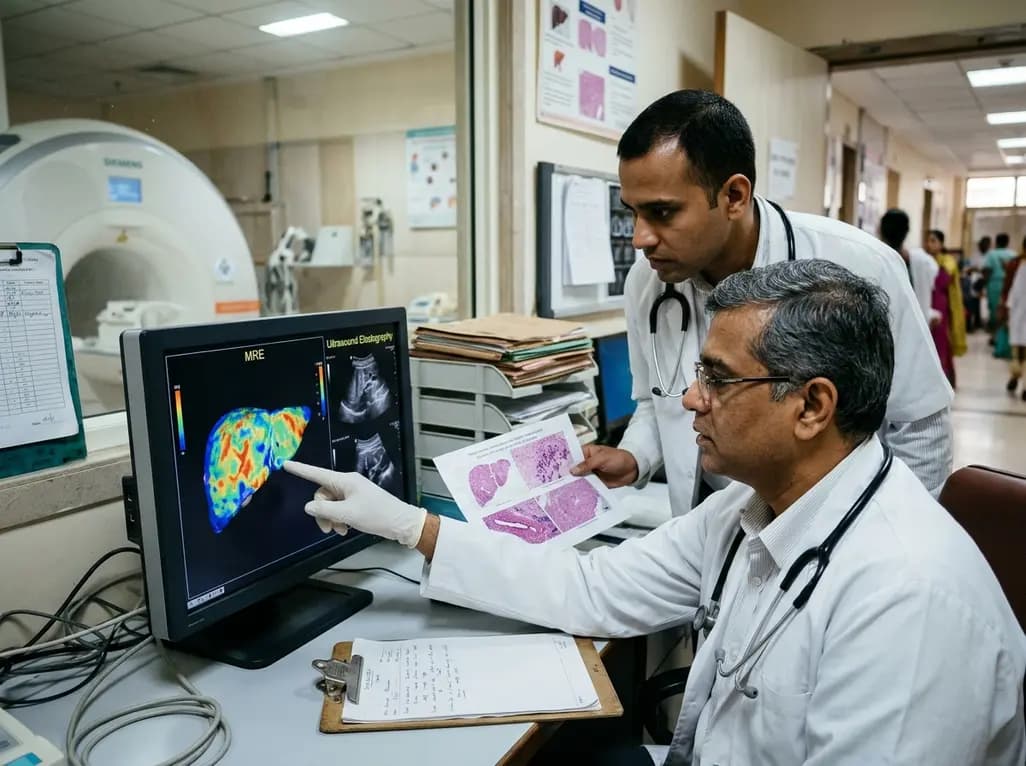
A comparative study reveals magnetic resonance elastography outperforms ultrasound elastography in assessing liver fibrosis in Fontan-associated liver disease, demonstrating stronger histological agreement and superior discrimination.
Today

A systematic review and meta-analysis highlights the substantial impact of plyometric jump training on jump performance, reactive strength, and landing kinematics in female team-sport athletes, providing evidence-based programming guidelines for sports medicine and orthopedics.
Today

A comprehensive review of the role of growth hormone in diabetic kidney disease and podocytopathy. Learn how elevated GH activates ZEB2, Notch, and TGF-beta1, driving podocyte loss and glomerulosclerosis, and explore novel targeted therapeutic approaches.
Today
