.webp&w=384&q=75)

Loading, please wait...
Loading, please wait...

Caregivers of patients with chronic kidney disease (CKD) often experience significant psychological distress. Addressing CKD caregiver mental health is vital for the long-term management of the disease. However, access to scalable and tailored psychological support remains limited. A recent semistructured interview study explored how e-mental health interventions can be better tailored to meet their needs. Findings highlight specific preferences for design, content, and dissemination.
Intervention design should actively involve caregivers and other stakeholders through a co-design approach. Furthermore, participants preferred platforms that offer peer support alongside professional guidance. This ensures that the tools are both acceptable and feasible for daily use. Consequently, the development process must prioritize user experience to enhance engagement. Specifically, the study identified four key categories for intervention optimization: design, content, support, and dissemination.
Content preferences showed that caregivers value practical information about CKD and resources for self-care. Additionally, providing support that accommodates individual schedules is essential. Moreover, dissemination strategies should use trusted sources and accessible communication to reach more caregivers. Therefore, future digital health solutions must be comprehensive and user-friendly. Thus, integrating these preferences can significantly improve caregiver wellbeing and patient care outcomes.
Informal caregivers of CKD patients often face chronic stress, anxiety, and social isolation. Providing mental health support helps prevent burnout and ensures they can continue providing high-quality care to their loved ones.
Caregivers prefer platforms that are co-designed with users, offer peer support, and provide disease-specific education. They also value resources that accommodate their personal preferences and busy schedules.
Peer support allows caregivers to connect with others facing similar challenges. This reduces feelings of isolation, provides emotional validation, and allows for the sharing of practical coping strategies.
Disclaimer: This content is for informational and educational purposes only. It does not constitute professional medical advice, diagnosis, or treatment. Always seek the advice of your physician or other qualified health provider with any questions you may have regarding a medical condition. Refer to the latest local and national guidelines for clinical practice.
References
Coumoundouros C et al. e-Mental Health Intervention Preferences Among Informal Caregivers of Adults Living with Chronic Kidney Disease: Semistructured Interview Study. JMIR Hum Factors. 2026 Apr 07. doi: 10.2196/80962. PMID: 41945902.
Awasthi A, et al. Caregiver burden in chronic kidney disease: A systematic review. Indian J Nephrol. 2020;30(5):311-318.
Dyer E, et al. Mobile applications and internet-based approaches for supporting non-professional caregivers: a systematic review. VA Evidence-based Synthesis Program. 2012.

Read summarized clinical updates, watch expert medical content, and earn CME certifications right from your smartphone.
Open your smartphone camera to scan and install.





This study identifies design, content, and dissemination preferences for e-mental health interventions among informal caregivers of adults with chronic kidn...
6 months ago
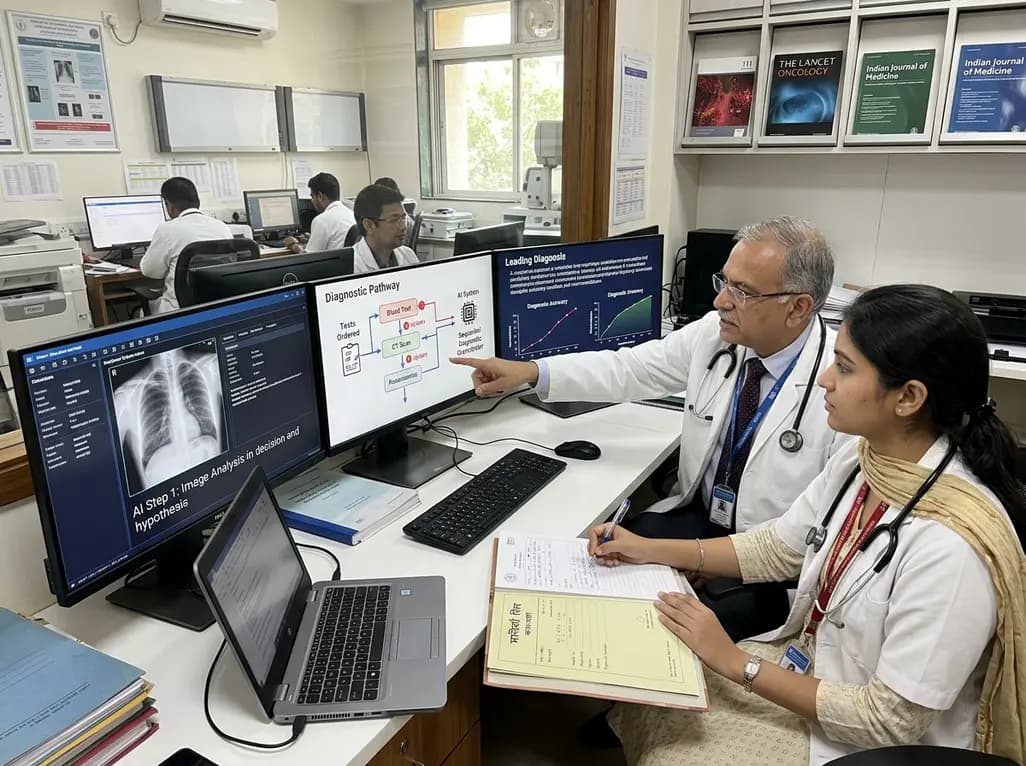
A breakthrough peer-reviewed study demonstrates that a sequential AI diagnosis system can mirror real-world clinical reasoning. By ordering stepwise tests and updating hypotheses dynamically, this multi-agent orchestrator achieved superior diagnostic accuracy while reducing investigative costs.
Today

A prenatal case highlights severe glutaric acidemia type II presenting as bilateral hyperechoic cystic kidneys at 18 weeks. Whole-exome sequencing revealed a novel homozygous ETFDH frameshift variant, demonstrating the power of rapid genetic testing in fetal renal anomalies.
Today

Review how tailored exercise programs benefit frail older patients with heart failure. Explore pathophysiological mechanisms, individualized training prescriptions, and strategies to overcome adherence barriers in clinical practice.
Yesterday

This comparative study evaluates posterior labral tears with and without glenohumeral instability, highlighting distinct demographic patterns, MRI underestimation in stable shoulders, and successful arthroscopic repair outcomes.
Yesterday

A clinical study demonstrates that early intervention with tocilizumab, either as monotherapy or bridged with corticosteroids, achieves significant proptosis reduction and resolves active inflammation in treatment-naive thyroid eye disease.
Yesterday
