.webp&w=384&q=75)

Loading, please wait...
Loading, please wait...

Dysmenorrhea, characterized by painful uterine contractions during menstruation, is one of the most pervasive gynecological conditions worldwide. Estimates suggest that it affects between 20% and 90% of women of reproductive age. In the Indian clinical landscape, the prevalence is particularly striking, with studies reporting that up to 80% of adolescent girls and young women experience significant menstrual pain. Despite its prevalence, dysmenorrhea is often underreported and inadequately managed. Consequently, there is a critical need for objective tools like the Dysmenorrhea Symptoms Interference Scale (DSI) to quantify the impact of pain on a patient's functional status. Traditionally, clinicians have relied on simple visual analog scales to measure pain intensity. However, intensity alone does not capture how symptoms disrupt daily life, education, or employment. Therefore, the introduction of a multidimensional scale that assesses symptom interference represents a significant advancement in women's healthcare.
Furthermore, the clinical burden of dysmenorrhea extends beyond physical discomfort. It often correlates with psychological distress, school absenteeism, and reduced social participation. Specifically, in high-pressure academic environments, such as medical and health sciences universities, the interference caused by these symptoms can hinder professional development. By utilizing the Dysmenorrhea Symptoms Interference Scale, healthcare providers can move beyond a binary diagnosis of pain. Instead, they can obtain a nuanced understanding of how menstruation affects the patient's holistic well-being. This shift towards patient-reported outcome measures is essential for developing personalized treatment plans that address both the physiological and psychosocial aspects of the condition.
The Dysmenorrhea Symptoms Interference Scale was originally developed to provide a psychometrically sound instrument specifically tailored to cyclic menstrual pain. Unlike generic pain interference scales that target chronic, non-cyclic conditions, the DSI focuses on the unique patterns of dysmenorrhea. The scale typically assesses how menstrual pain and associated gastrointestinal symptoms interfere with various domains of life, including physical activity, sleep, work, and social interactions. By focusing on these specific areas, the scale offers a more relevant assessment for young women who may not identify with questions designed for older populations with chronic back pain or arthritis. Consequently, the DSI has gained international recognition as a reliable tool for both clinical research and routine practice.
Moreover, the construction of the DSI involved qualitative input from patients, ensuring that the items reflect the actual lived experiences of women. This content validity is crucial because it ensures the scale measures what it intends to measure. For example, it captures the subtle ways pain might prevent a student from concentrating in a lecture or cause a professional to avoid social commitments. Additionally, the scale's brevity makes it highly practical for busy clinical settings. Clinicians can quickly administer the questionnaire, allowing for immediate scoring and discussion during a consultation. Therefore, the DSI serves as a bridge between the patient's subjective experience and the physician's need for objective data to guide therapeutic decisions.
A recent study focused on the translation and cultural adaptation of the Dysmenorrhea Symptoms Interference Scale for the Serbian-speaking population. This research included 350 female students attending health sciences at the University of Pristina. The participants all reported symptoms of primary dysmenorrhea within the last 12 months. To ensure a rigorous validation process, the researchers followed established guidelines for the cultural adaptation of medical questionnaires. This involved forward and back-translation, expert committee reviews, and pre-testing to ensure linguistic and conceptual equivalence. Furthermore, the study integrated other validated tools, such as the Depression, Anxiety and Stress Scale-21 (DASS-21), to test for convergent validity. Such comprehensive methodology is vital for ensuring that the translated tool retains the psychometric integrity of the original version.
The results of the validation were exceptionally positive. The Cronbach's alpha coefficient for the entire scale was 0.928, which indicates excellent internal consistency. Additionally, the McDonald's omega coefficient was 0.951, further reinforcing the scale's reliability. The study found that every item on the scale contributed significantly to the overall score, with item-total correlation coefficients staying above 0.40. Notably, exploratory factor analysis confirmed a one-factor structure, meaning the scale effectively measures a single, cohesive construct of symptom interference. This statistical robustness confirms that the Serbian version of the Dysmenorrhea Symptoms Interference Scale is a highly accurate instrument. Consequently, it can be confidently used to evaluate the severity of dysmenorrhea in clinical and research settings alike.
Psychometric evaluation is a cornerstone of modern medical education and diagnostic tool development. In the Serbian study, the researchers demonstrated that the Dysmenorrhea Symptoms Interference Scale possesses high discriminant validity. This means the scale could successfully distinguish between students who experienced mild symptoms and those who suffered from severe dysmenorrhea. Such a distinction is vital for clinicians when triaging patients or deciding on the aggressiveness of pharmacological interventions. Furthermore, the confirmatory factor analysis showed adequate values of fit indices, with a goodness of fit score of 0.998. These metrics provide a high degree of confidence that the scale's structure is statistically sound and replicable across different samples.
Moreover, the study highlighted the importance of convergent validity by showing a significant correlation between DSI scores and DASS-21 scores. Specifically, as the interference from dysmenorrhea increased, so did levels of depression, anxiety, and stress. This finding underscores the fact that menstrual pain is not an isolated physical event but a condition with deep psychological implications. Therefore, using the Dysmenorrhea Symptoms Interference Scale allows physicians to identify patients who may require additional psychological support or lifestyle counseling. Ultimately, the high statistical significance of these correlations validates the scale as a comprehensive measure of a woman's health status during her menstrual cycle. It provides a level of detail that traditional pain intensity scores simply cannot match.
For medical practitioners in India, where the prevalence of dysmenorrhea remains a significant public health challenge, the adoption of validated tools like the Dysmenorrhea Symptoms Interference Scale is highly beneficial. In many parts of India, menstrual health is still shrouded in social taboos, which often prevents women from seeking timely medical advice. Consequently, many patients present only when their symptoms become debilitating. By incorporating the DSI into routine gynecological screenings, doctors can proactively identify those whose quality of life is being severely compromised. This objective data can also help in educating patients and their families about the legitimacy of menstrual pain as a medical condition requiring professional care.
Additionally, the DSI can be used to monitor the effectiveness of various treatments, ranging from NSAIDs and hormonal contraceptives to complementary therapies like Yoga or dietary modifications. By comparing DSI scores before and after an intervention, clinicians can objectively track improvements in a patient's ability to function. This approach aligns with the growing trend of evidence-based practice in India, where patient-reported outcomes are increasingly used to justify clinical decisions. Furthermore, the successful validation of the DSI in diverse languages like Serbian suggests that similar adaptations could be made for Indian regional languages. This would further enhance the accessibility and accuracy of menstrual health assessments across the country's varied demographic landscape.
The validation of the Dysmenorrhea Symptoms Interference Scale marks an important step toward more holistic care for women. The study's findings regarding the link between symptom interference and mental health are particularly telling. They suggest that treating dysmenorrhea should not be limited to pain relief alone. Instead, a multidisciplinary approach that includes pain management, psychological support, and lifestyle interventions is often necessary. Consequently, the DSI acts as an early warning system, helping clinicians identify those at risk for chronic pain syndromes or mental health challenges associated with their menstrual cycle. As healthcare systems globally move toward more integrated models of care, tools like the DSI will play a central role in bridging different medical specialties.
Ultimately, the goal of using the Dysmenorrhea Symptoms Interference Scale is to improve the quality of life for millions of women. By providing a clear, standardized way to measure the impact of symptoms, we can reduce the stigma associated with dysmenorrhea and ensure that patients receive the care they deserve. Future research should continue to explore the use of the DSI in longitudinal studies to understand how symptom interference changes over a woman's reproductive lifespan. Furthermore, integrating these scales into digital health platforms could allow for real-time monitoring and more responsive clinical management. By prioritizing the validation and use of such instruments, the medical community can take a significant leap forward in addressing the often-overlooked burden of menstrual pain.
The DSI measures the extent to which menstrual pain and associated symptoms, such as gastrointestinal distress, interfere with a woman\'s daily activities. This includes physical functioning, mental health, social interactions, and academic or professional performance. It provides a more comprehensive view of the patient\'s burden than simple pain intensity scores.
Yes, the Serbian version demonstrated excellent psychometric properties. With a Cronbach\'s alpha of 0.928 and a McDonald\'s omega of 0.951, the scale shows high internal consistency. Exploratory and confirmatory factor analyses further confirmed its validity, making it a robust tool for both research and clinical applications in Serbian-speaking populations.
The correlation exists because severe menstrual pain often leads to increased levels of psychological distress, including anxiety and stress. When dysmenorrhea significantly interferes with daily life, it can negatively impact a woman\'s emotional well-being. Using the DSI alongside the DASS-21 helps clinicians identify and address these interconnected physical and mental health issues.
Disclaimer: This content is for informational and educational purposes only and does not constitute medical advice, diagnosis, or treatment. Always seek the advice of your physician or other qualified health provider with any questions you may have regarding a medical condition. Refer to the latest local and national guidelines for clinical practice.
References
1. Mihajlovic D et al. Dysmenorrhea Symptoms Interference Scale (DSI) in Serbian - Translation and psychometric properties evaluation. PLoS One. 2026. doi: 10.1371/journal.pone.0353688. PMID: 42461801.
2. Chen CX, Murphy T, Ofner S, Yahng L, Krombach P, LaPradd M, Bakoyannis G, Carpenter JS. Development and Testing of the Dysmenorrhea Symptom Interference (DSI) Scale. West J Nurs Res. 2021. doi: 10.1177/0193945920977467.
3. Singh A, Kiran D, Singh H, Nel B, Singh P, Tiwari P. Prevalence and severity of dysmenorrhea: a problem related to menstruation, among first and second year female medical students. Indian J Physiol Pharmacol. 2008;52(4):389-97.
"
Read summarized clinical updates, watch expert medical content, and earn CME certifications right from your smartphone.
Open your smartphone camera to scan and install.





A new study validates the Serbian version of the Dysmenorrhea Symptoms Interference Scale (DSI), confirming its high reliability and validity for assessing how menstrual pain impacts daily activities, social life, and mental health in female students.
3 months ago
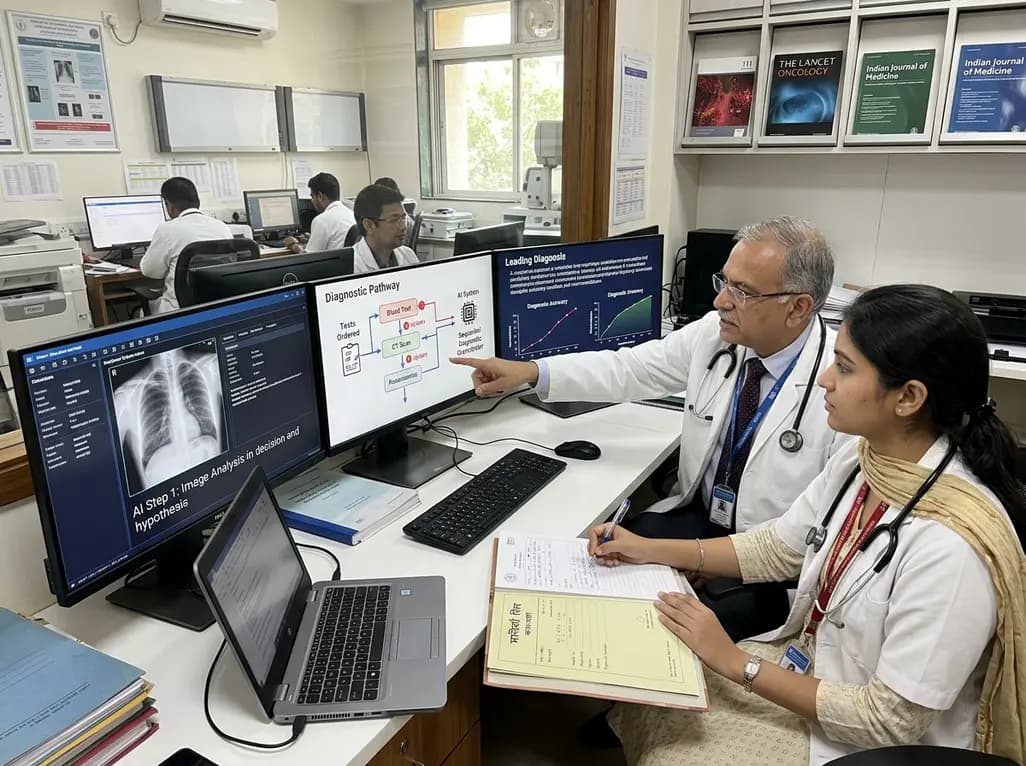
A breakthrough peer-reviewed study demonstrates that a sequential AI diagnosis system can mirror real-world clinical reasoning. By ordering stepwise tests and updating hypotheses dynamically, this multi-agent orchestrator achieved superior diagnostic accuracy while reducing investigative costs.
Today

A prenatal case highlights severe glutaric acidemia type II presenting as bilateral hyperechoic cystic kidneys at 18 weeks. Whole-exome sequencing revealed a novel homozygous ETFDH frameshift variant, demonstrating the power of rapid genetic testing in fetal renal anomalies.
Today

Review how tailored exercise programs benefit frail older patients with heart failure. Explore pathophysiological mechanisms, individualized training prescriptions, and strategies to overcome adherence barriers in clinical practice.
Yesterday

This comparative study evaluates posterior labral tears with and without glenohumeral instability, highlighting distinct demographic patterns, MRI underestimation in stable shoulders, and successful arthroscopic repair outcomes.
Yesterday

A clinical study demonstrates that early intervention with tocilizumab, either as monotherapy or bridged with corticosteroids, achieves significant proptosis reduction and resolves active inflammation in treatment-naive thyroid eye disease.
Yesterday
