

Loading, please wait...
Loading, please wait...

Liver transplantation offers life-saving treatment for patients with irreversible end-stage liver disease. However, donor organ shortages compel surgical teams to accept extended-criteria donor grafts more frequently. Historically, standard static cold storage preserved liver allografts on ice before implantation. Nevertheless, prolonged cold ischemia triggers cellular ATP depletion and severe ischemia-reperfusion injury upon revascularization. Consequently, dynamic organ preservation has emerged as a transformative approach to protect vulnerable donor livers. Dynamic perfusion continuously circulates oxygenated solutions through the hepatic vasculature during preservation. Recently, an advanced Bayesian network meta-analysis evaluated multiple randomized clinical trials to compare these emerging modalities. This article examines the comparative efficacy of dynamic preservation techniques against static cold storage in contemporary liver transplantation.
Static cold storage remains the traditional standard for organ preservation due to its simplicity and low initial cost. Yet, hypothermic storage without oxygen fails to protect marginal donor livers effectively. During cold storage, mitochondrial oxidative phosphorylation ceases and cellular ion homeostasis deteriorates rapidly. Therefore, extended-criteria organs experience elevated rates of early allograft dysfunction and ischemic cholangiopathy after transplantation. To address these vulnerabilities, biomedical teams developed dynamic organ preservation systems. These systems maintain active fluid circulation through donor vessels prior to implantation. Dynamic preservation replenishes essential energy substrates and attenuates free radical generation upon reperfusion. In addition, dynamic perfusion allows clinicians to assess organ viability ex situ before making final implantation decisions. Researchers have developed multiple dynamic modalities, including hypothermic machine perfusion, normothermic machine perfusion, controlled oxygenated rewarming, and ischemia-free liver transplantation. As clinical adoption expands globally, transplant specialists require definitive comparative data to choose the most effective preservation strategy for their patients.
Comparative assessment of dynamic preservation strategies has faced significant challenges because direct head-to-head randomized trials remain sparse. Most prospective trials compared only a single perfusion technique against conventional static cold storage. To resolve this limitation, investigators conducted a rigorous random-effects Bayesian network meta-analysis using non-informative prior distributions. The researchers systematically searched electronic medical databases for randomized clinical trials in human liver transplantation. Eligible trials had to report at least one primary outcome: early allograft dysfunction, post-transplant biliary complications, or graft survival. Ultimately, the network meta-analysis synthesized data from thirteen randomized trials involving 1888 transplant recipients across five distinct preservation approaches. Furthermore, Bayesian network modeling allowed investigators to integrate direct and indirect evidence seamlessly. Consequently, the team established probabilistic ranking hierarchies for each preservation technique. Additionally, the investigators performed subgroup analyses on extended-criteria brain-dead donors to test result consistency. This methodology provides robust statistical evidence regarding relative performance across diverse clinical endpoints.
The Bayesian network meta-analysis demonstrated that dynamic organ preservation strategies consistently outperformed traditional static cold storage. Specifically, hypothermic machine perfusion, evaluated across seven randomized trials, achieved superior statistical rankings compared to normothermic machine perfusion. Hypothermic perfusion ranked higher than normothermic perfusion across all three primary clinical outcomes, including graft survival and early allograft dysfunction. Meanwhile, normothermic machine perfusion, evaluated in four randomized trials, ranked superior to static cold storage for reducing dysfunction and biliary complications. However, normothermic machine perfusion did not establish a distinct ranking advantage over static cold storage for overall graft survival. Subgroup analyses of extended-criteria brain-dead donors mirrored the primary analysis, confirming the protective effect of hypothermic perfusion. Furthermore, ischemia-free liver transplantation exhibited the highest probability of ranking best for early graft function and biliary health. Nevertheless, investigators emphasized that this finding originated from only one single randomized trial. Therefore, clinicians must interpret ischemia-free transplantation data with appropriate scientific restraint until larger multi-center trials confirm these outcomes.
The observed clinical divergence between hypothermic and normothermic perfusion reflects distinct underlying physiological mechanisms. During hypothermic oxygenated perfusion, low temperatures reduce cellular metabolism to minimal baseline levels. Simultaneously, active oxygen delivery allows cold mitochondria to regenerate cellular adenosine triphosphate without producing dangerous oxidative stress. Moreover, hypothermic perfusion prevents succinate accumulation and stabilizes mitochondrial electron transport complexes. Consequently, when clinicians rewarm and reperfuse the liver during surgery, the organ avoids devastating reperfusion bursts. Furthermore, hypothermic oxygenation specifically preserves the fragile microcirculation of the peribiliary vascular plexus. Because cholangiocytes rely heavily on this delicate plexus, hypothermic preservation directly prevents non-anastomotic biliary strictures. In contrast, normothermic machine perfusion operates at thirty-seven degrees Celsius with functioning cellular metabolism. This warm environment facilitates continuous metabolic assessment, including lactate clearance and bile production. However, normothermic perfusion cannot fully reverse prior warm ischemia damage sustained during procurement. Thus, hypothermic approaches demonstrate superior cellular protection against preservation injury.
These meta-analytic findings provide valuable strategic guidance for transplant surgeons seeking to optimize clinical resources. Dynamic preservation significantly reduces post-transplant complications compared to traditional static cold storage. Therefore, transplant centers should prioritize machine perfusion when procuring organs from extended-criteria or marginal donors. Furthermore, the favorable ranking of hypothermic machine perfusion offers meaningful logistical advantages. Hypothermic devices operate reliably without costly blood primes or complex warm perfusate circuits. Additionally, hypothermic perfusion carries minimal risk of sudden device failure because the graft remains safely cooled throughout the procedure. Consequently, many hospitals can adopt hypothermic perfusion protocols with lower operational overhead. Nonetheless, clinicians must interpret these network rankings carefully. The Bayesian meta-analysis derived its comparative rankings primarily from indirect statistical pathways rather than direct head-to-head comparisons. Moving forward, innovative teams are pioneering sequential perfusion protocols that combine hypothermic mitochondrial resuscitation with subsequent normothermic viability testing. Ultimately, tailoring perfusion strategies to donor organ biology will maximize graft longevity, lower discard rates, and expand access for transplant candidates.
Static cold storage deprives liver tissue of oxygen, precipitating rapid cellular adenosine triphosphate depletion and microcirculatory injury. When revascularization occurs, severe ischemia-reperfusion injury frequently triggers graft dysfunction or biliary strictures. Conversely, dynamic organ preservation circulates active perfusates through graft vasculature during preservation. This dynamic process protects endothelial integrity and sustains cellular respiration. In addition, it eliminates toxic metabolites, reducing early allograft dysfunction and ischemic biliary complications following transplantation.
Hypothermic machine perfusion oxygenates cellular mitochondria under minimal metabolic demand. It replenishes high-energy nucleotides while suppressing harmful reactive oxygen species during reperfusion. This mechanism directly shields the vulnerable peribiliary vascular plexus. In contrast, normothermic machine perfusion maintains allografts at normal physiological temperatures. Although normothermic perfusion enables ex situ viability assessment, it cannot completely mitigate preexisting ischemic injury. Therefore, hypothermic oxygenation demonstrated higher Bayesian probabilistic rankings across graft survival, early allograft dysfunction, and biliary complications.
No, this network meta-analysis does not prove the clinical superiority of hypothermic machine perfusion over normothermic perfusion. Because randomized trials directly comparing these modalities are absent, investigators derived their comparative conclusions through indirect statistical modeling. Furthermore, normothermic perfusion provides unique real-time viability markers, such as bile production and lactate clearance, which hypothermic preservation cannot evaluate. Consequently, clinicians must await ongoing head-to-head randomized trials before establishing definitive superiority between these two innovative preservation platforms.
Disclaimer: This content is for informational and educational purposes only and does not constitute medical advice. Always consult a qualified healthcare provider for diagnosis and treatment recommendations. Refer to the latest local and national guidelines for clinical practice.
References

Read summarized clinical updates, watch expert medical content, and earn CME certifications right from your smartphone.
Open your smartphone camera to scan and install.





A Bayesian network meta-analysis of 13 RCTs demonstrates that dynamic organ preservation significantly improves post-transplant outcomes over static cold storage. Hypothermic machine perfusion ranked highest across primary endpoints, offering vital implications for optimizing marginal liver grafts.
Today
A retrospective analysis reveals that cavotricuspid isthmus ablation using a variable-loop pulsed field ablation catheter achieves acute conduction block safely and efficiently during concomitant atrial fibrillation procedures.
Today
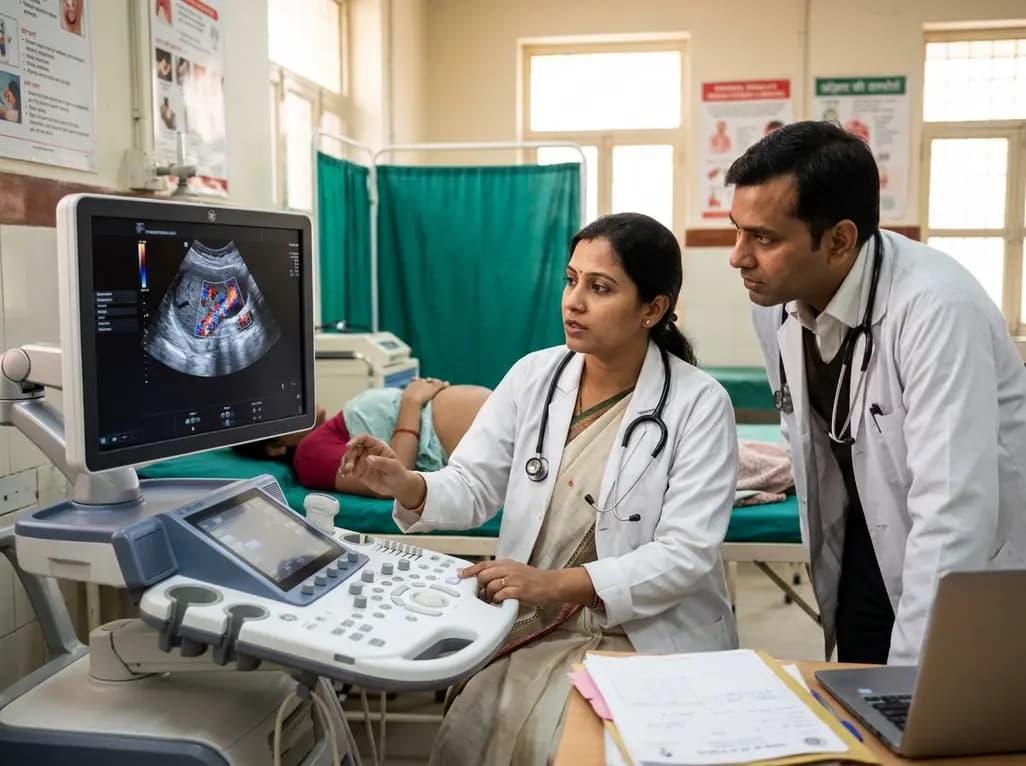
A study in Ultrasound in Obstetrics & Gynecology shows that quantitative vascularization of the anterior fornix/cervix with transvaginal ultrasound reliably identifies placenta accreta spectrum and predicts severe intraoperative hemorrhage, offering vital objective risk stratification.
Today
A clinical study highlights how coupling interval variability assessed through Poincaré plots differentiates right ventricular outflow tract premature ventricular contractions from left ventricular origins, optimizing patient selection and procedural strategy for radiofrequency catheter ablation.
Today
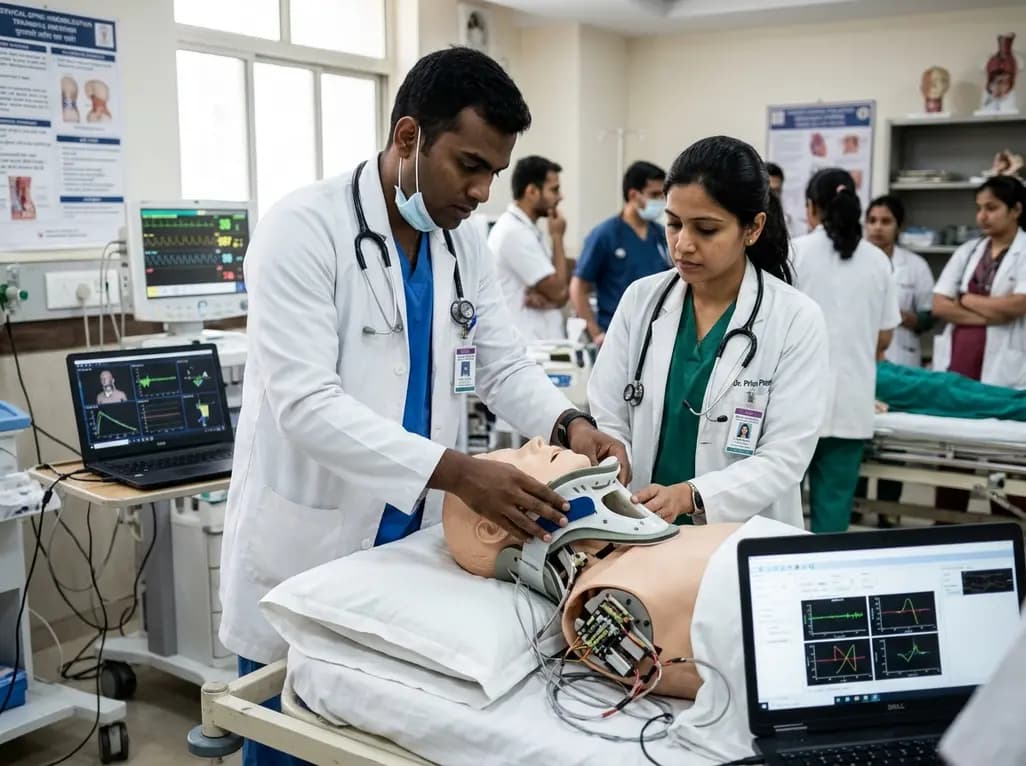
A novel proof-of-concept study presents a six-degree-of-freedom articulated manikin neck equipped with linear potentiometers. The system provides real-time kinematic motion feedback during cervical immobilisation, delivering sub-degree tracking accuracy to improve pre-hospital trauma training and patient safety.
Today

Protein O-GlcNAcylation couples cellular nutrient status to vital neuronal functions. This review explores how disrupted O-GlcNAc cycling drives both neurodevelopmental delays and neurodegenerative cascades, positioning metabolic post-translational modifications as therapeutic targets in clinical neurology.
Today
